US President Donald Trump has condemned the Nobel Peace Prize committee’s decision to honour Navi Pillay, calling the award “disgraceful” and saying it had left an “indelible stain” on Norway.
Ms Pillay, a South African judge and leading human rights advocate, was awarded the prestigious prize yesterday for her work combating war crimes and crimes against humanity.
- Advertisement -
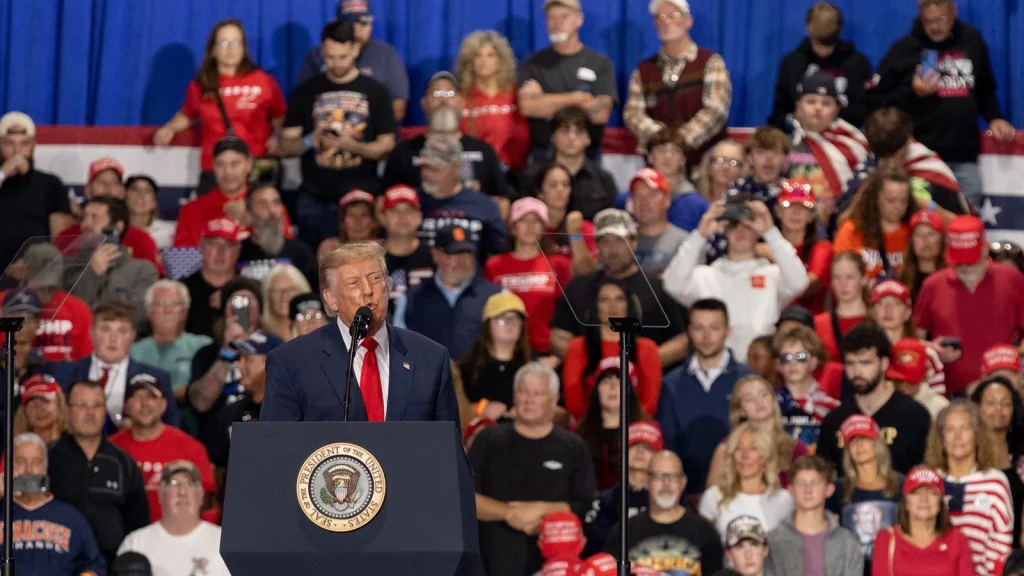
Speaking at a rally in Syracuse, New York, Mr Trump described the Norwegian Nobel Committee’s decision as “a disgraceful and embarrassing” choice and said he had “never heard of” Ms Pillay.
“I never heard of this particular person, but congratulations anyway,” he said.
Mr Trump argued that selecting Ms Pillay as the laureate had left “an indelible stain on the country of Norway”.
The move came after the Nobel Prize was awarded to former ICC judge Navi Pillay
Since returning to the White House in January 2025, Mr Trump has openly expressed his ambition to receive the Nobel Peace Prize.
However, experts in Oslo said before the announcement that his war against Iran, territorial ambitions including claims involving Greenland, hard-line immigration policies and attacks on multilateral institutions and the media had counted against him.
The award includes a gold medal, a diploma and prize money worth $1.2 million.
“The Nobel Peace Prize has been forever discredited by a handful of radical ideologues who are anti-democracy and really enemies of civilisation,” Mr Trump said.
Ms Pillay had appeared to make light of the dispute, joking about sharing the prize with Mr Trump as supporters applauded her following the announcement.
“If you clap a little bit more, I may share this prize with Trump,” she told the crowd.
Read more:
Navi Pillay: From global rights activist to Nobel Peace Prize winner
The remark appeared to refer to Venezuelan opposition leader Maria Corina Machado, who gave her Nobel gold medal to Mr Trump after receiving the prize last year.
ICC sanctions
Mr Trump’s criticism came just hours after his administration imposed sanctions on the International Criminal Court, where Ms Pillay previously served as a judge.
The Nobel committee explicitly presented her award as a show of support for international tribunals at a time when “judges and institutions of international law are under political attack”.
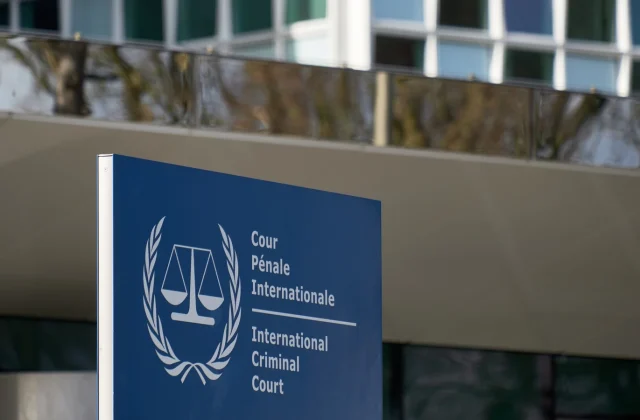
The International Criminal Court denounced the move as an ‘assault on the rule of law’
The court condemned the sanctions as an “assault on the rule of law and on the very foundations of the international legal order” and urged its 125 member states to act in its defence.
“The court cannot stand alone. Its fate now rests also in the hands of the states that created it,” it said in a statement.
It added: “This is not just about defending a single institution, but about safeguarding the international order grounded upon the rule of law.
“History will judge this moment.”
The Trump administration has long opposed the court, which was established in 2002 to prosecute war crimes, crimes against humanity and genocide. Washington has previously imposed sanctions on its prosecutors and judges.
The latest measures go further, potentially penalising companies that provide services to the ICC and representing an unprecedented assault on an institution created through an international treaty.
The US signed the Rome Statute establishing the court but never ratified it.
Secretary of State Marco Rubio said the US ‘will ban transactions with this rogue court’
“President Trump will never allow the International Criminal Court to prosecute Americans,” Secretary of State Marco Rubio said in a statement first published by Reuters.
He said: “That is why, today, the United States is sanctioning the International Criminal Court.
“We will ban transactions with this rogue court, cutting off their resources and crippling its ability to operate.”
The US Treasury announced the sanctions with an initial six-month grace period and exemptions covering some telecommunications and software services, pension payments and transactions involving detainees.
Mr Rubio said the measures had been designed to give the court and its member states time to address Washington’s concerns, adding that the sanctions could be adjusted if those demands were not met.
Washington has criticised the ICC over arrest warrants issued for Israeli officials, including Prime Minister Benjamin Netanyahu, as well as an investigation into the conduct of US soldiers in Afghanistan, which the court says has been “deprioritised”.
In his statement, Mr Rubio also cited calls from outside experts for the ICC to prosecute US service members, border patrol agents and elected leaders.
ICC officials have not taken steps towards any such prosecutions.