
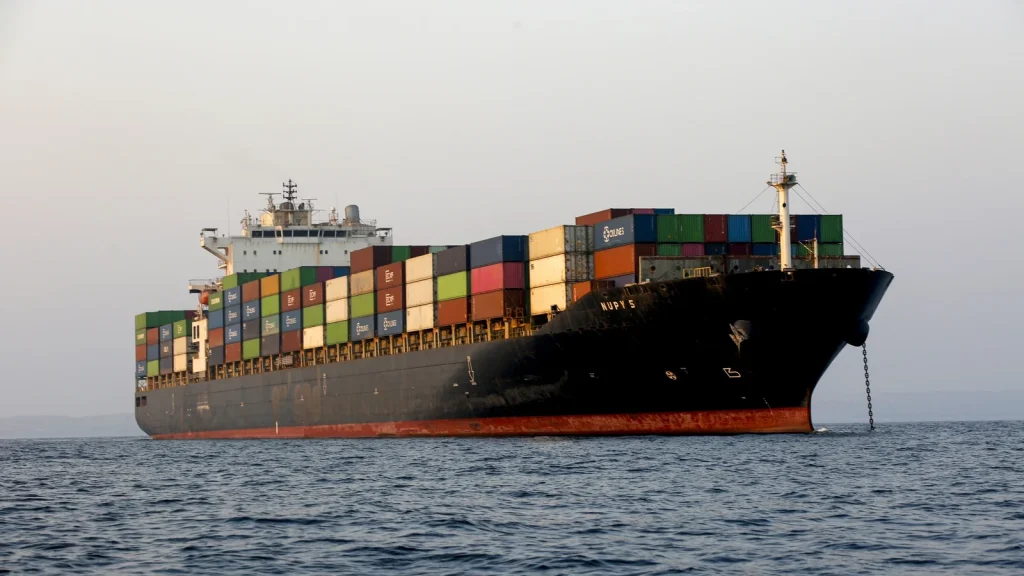
Iran has offered the United States a potential route out of the war, saying it would reopen the Strait of Hormuz within seven days if Washington accepts a series of conditions, Foreign Minister Abbas Araghchi told reporters in New York.
“If certain conditions are met, the strait will be open within seven days and talks will start,” Mr Araghchi said while in the United States for the UN General Assembly.
- Advertisement -
Japanese news agency Kyodo first reported the proposal on Tuesday, citing a senior Iranian official.
Iranian media outlets have since rejected the report, while authorities in Tehran have yet to publicly clarify their position.
Iran has previously outlined seven conditions for ending the war and restoring passage through the strategically vital waterway.
Mr Araghchi said the latest proposal would require a seven-day halt to hostilities across the Middle East, including in Lebanon.
Tehran is also demanding the release of frozen Iranian assets valued at least $12 billion (€10.5bn), the removal of sanctions on Iranian oil and an end to the US naval blockade of Iran.
Under the plan, Iran would reopen the Strait of Hormuz on the seventh day of the truce.
Mr Araghchi said Tehran was awaiting Washington’s response and claimed China backed the proposal.
Chinese President Xi Jinping is visiting the United States this week for talks with Trump.
Hossein Mohebi, a spokesman for Iran’s Revolutionary Guards, the ideological branch of the country’s military, said Tehran also wanted an end to hostilities in Yemen.
The United States and Iran signed a memorandum of understanding in June intended to end the war, reopen the strait and begin negotiations over Iran’s nuclear programme.
That agreement collapsed soon afterwards after Iran fired on commercial vessels in Hormuz, accusing them of leaving an approved route through the waterway.
Iran says ships must secure authorisation before entering the strait, citing concerns over security and sovereignty.
Vessels that refuse to comply are frequently targeted, while the United States has periodically bombed Iran’s coastal areas in retaliation.
Photo from Houthi Media Center shows fighters of Yemen’s Houthi fight against the Saudi-backed forces
Allies rally behind Saudi Arabia as Houthi attacks intensify
Meanwhile, Saudi Arabia, Turkey and Pakistan are preparing an urgent high-level meeting under a joint defence pact to consider ways of supporting the kingdom as attacks by Yemen’s Iran-aligned Houthis increase. Tehran, meanwhile, sought to distance itself from the rapid advance of its Houthi allies.
The Houthis have attacked Yemen’s Saudi-backed government and repeatedly launched strikes into Saudi Arabia, threatening oil shipments from the world’s largest energy exporter. The violence forms part of a broader Middle East war that began with US and Israeli strikes on Iran in February.
The Houthis said they had launched dozens of missiles and drones at Saudi targets yesterday. Saudi authorities said they had intercepted six ballistic missiles fired by Houthi fighters.
Saudi Arabia had earlier issued emergency alerts covering areas including the holy city of Mecca, Jeddah and Yanbu, the country’s main oil port on the Red Sea.
Saudi Arabia’s highest religious authority urged the kingdom’s soldiers to be prepared to sacrifice their lives in the fight against the Houthis until the group is removed from power, according to a statement published by the Saudi state news agency.
Read more Middle East stories
As the fighting continued, the Saudi, Pakistani and Turkish foreign ministers met under the Mecca Joint Defence Agreement, according to a statement from Saudi Arabia’s foreign ministry. The ministers condemned attacks on Mecca and other civilian locations while affirming Saudi Arabia’s right to defend itself, the statement said.
“The ministers also discussed arrangements for holding an urgent meeting of the chiefs of staff of the three countries to discuss ways to support Saudi Arabia under the Mecca Joint Defence Agreement, which stipulates that an attack against any one of the parties constitutes an attack against all parties,” the statement said.
The announcement came soon after Iranian President Masoud Pezeshkian tried to distance Tehran from the Houthis during an American television interview yesterday.
“The Houthis are responsible for their own actions,” Mr Pezeshkian told Fox News programme “Special Report with Bret Baier”, one day after addressing the UN General Assembly in New York.
Mr Pezeshkian’s interview and speech came during a pause in direct fighting between the United States and Iran, alongside a short-lived diplomatic effort in New York with Qatar acting as an intermediary.
Iran’s Foreign Minister Abbas Araqchi told reporters yesterday that Tehran had passed a proposal to the United States through intermediaries. Under its terms, Iran would reopen the Strait of Hormuz if its demands were accepted.
The proposal calls for fighting to stop on every front, including Lebanon, within seven days. Washington would also lift its blockade of Iranian ports, release frozen Iranian funds and waive sanctions on the country’s oil exports, he said.
“The Strait of Hormuz will be reopened on the last day,” Mr Araqchi said, adding that negotiations with the United States on other matters, including Iran’s nuclear programme, would follow.
A senior Iranian official told Reuters on Wednesday that Tehran was examining Washington’s response to its peace proposals.
The war, launched by US President Donald Trump alongside Israel in February, has killed thousands and disrupted global energy supplies, driving oil prices higher.
Although the United States and Iran have largely stepped back from direct combat, their regional allies remain active. Hezbollah is confronting Israel in Lebanon, while the Houthis continue their advance in Yemen.
Iran and its allies have placed heavy pressure on Saudi Arabia’s oil exports. Saudi Arabia is a US ally. Houthi attacks have disrupted shipping near the entrance to the Red Sea, while Iran has effectively restricted tanker traffic through the Strait of Hormuz, a route that carried 20% of global oil exports before the war began.
An assault by Iranian-backed militias in Iraq also temporarily forced Saudi Arabia’s East-West Pipeline out of service.
Security experts have disagreed over the extent of Iran’s direct control over the Houthis, a Shia Islamist movement that grew from a local insurgency into a powerful armed group controlling much of northern Yemen.
Yemeni government officials, Iranian sources and regional figures have nevertheless said the Houthis’ push along Yemen’s Red Sea coast was conducted with direct guidance from Iran’s Islamic Revolutionary Guard Corps.
With the US-Israeli war against Iran largely stalemated on the battlefield for months, Washington has said it is changing tactics by expanding financial sanctions to companies in third countries that conduct business with Iranian firms. The policy is known as “secondary sanctions”.
Iranian airlines were barred from neighbouring countries including the UAE and Oman yesterday following new US sanctions. It was the first major effect of Washington’s expanded effort to target third-country companies doing business with Iran.
If maintained, the flight ban could further isolate Iran and intensify the country’s economic crisis, which is already being worsened by a US blockade of its seaports.
“We are living in an open-air prison,” a retired teacher in Tehran told Reuters by text message, asking that her name not be used.