Vladimir Putin’s United Russia party was heading for a commanding victory in Russia’s parliamentary elections, according to state media, as cyberattacks disrupted voting and Ukrainian drones struck Moscow and the surrounding region.
The election, which fills every seat in the lower-house State Duma, is the first held since Moscow launched its full-scale invasion of Ukraine in 2022.
- Advertisement -
No party opposed to the war was permitted to contest the vote. Weeks before polling began, Russia’s Supreme Court removed the anti-war Yabloko party from the ballot.
Ballots were also cast in Ukrainian territories occupied and annexed by Russia.
Most of the ballots have been counted in Russia’s parliamentary elections
With slightly more than 71% of ballots counted, Russian news agencies reported United Russia had secured 57.5% of the vote.
The Communist Party followed with 14%, while the nationalist LDPR stood at 8.7%.
Projections from the state-run TASS news agency indicated that United Russia was on track to preserve its two-thirds majority in the 450-seat State Duma, giving it enough votes to amend the constitution.
The first official results and turnout figures were expected this morning.
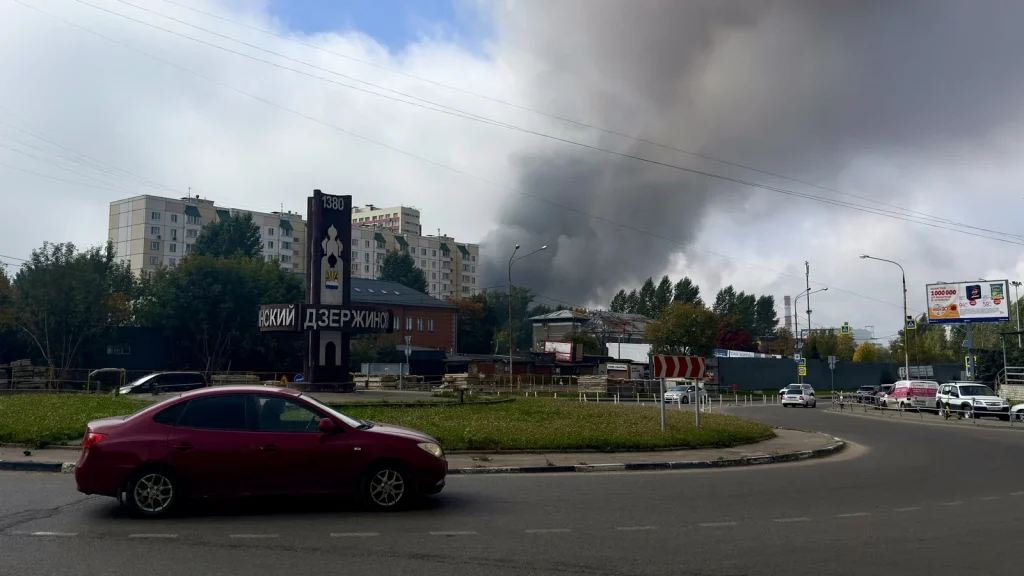
On the final day of voting yesterday, Ukraine launched waves of drones at Moscow and the surrounding region. Officials said two people were killed and an oil refinery was set on fire.
Russia responded by threatening to “intensify” its attacks on Kyiv. The defence ministry accused Ukraine of trying to “disrupt the democratic will of Russian citizens”.
An exit poll released by a state-run polling organisation placed United Russia on 49.4% of the vote, broadly in line with its result in the previous election.
“In response to the Kyiv regime’s attacks on civilian targets within Russia, the Russian army will continue and intensify its high accuracy strikes against military targets in Kyiv,” the Russian defence ministry said.
Wave of Ukrainian drones
According to Moscow Mayor Sergei Sobyanin, the Ukrainian operation was the largest drone assault on Moscow since the war began. Around 1,600 drones were involved, with 450 directed at the capital.
Images showed a large breach in the side of a multi-storey apartment block on Moscow’s outskirts. Other footage showed thick black smoke rising from what appeared to be an oil refinery.
Ukrainian President Volodymyr Zelensky welcomed the strikes, saying that “our long-range responses had a very significant impact in the Moscow region last night”.
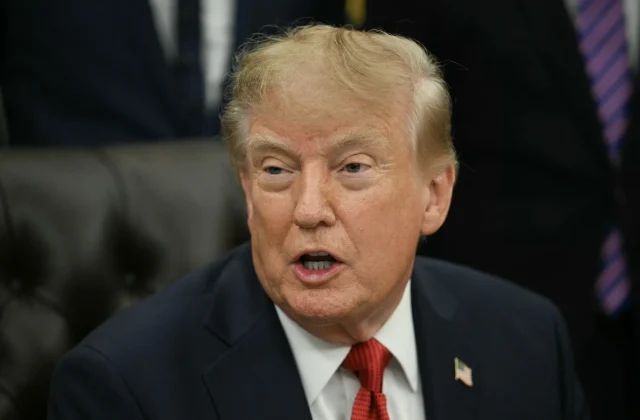
Diplomatic attempts to end the war have failed to halt an escalation in attacks by both sides in recent months. Mr Zelensky nevertheless spoke by phone with US President Donald Trump, who has urged Kyiv in recent days to stop targeting Russian refineries.
The two leaders are expected to meet in New York in the coming days.
Watch: Ukraine launches drone attacks on Moscow
Two people were killed at separate locations, Moscow regional Governor Andrey Vorobyov said. The victims were identified as a 44-year-old woman and an elderly man.
A drone that crashed into a 21-storey building sparked a fire and prompted the evacuation of 400 people, Mr Vorobyov said.
Throughout the war, Ukraine has used drones to strike Russian infrastructure in retaliation for Moscow’s bombardment of Ukrainian towns and cities.
Yabloko, a liberal party that had demanded an end to the fighting, was barred by Russia’s Supreme Court from running its federal list. Its candidates, however, remained on the ballot in some single-mandate constituencies.
Mr Putin had called on Russians to take part in the poll
Mr Putin had urged Russians to participate, portraying the election as an expression of support for Moscow’s troops and an “answer to those who want to weaken Russia”.
The Kremlin’s leading political opponents have been forced into exile, while Mr Putin’s chief rival, Alexei Navalny, died in an Arctic prison in 2024.
Navalny’s widow, Yulia Navalnaya, called on anti-war Russians to cast their ballots collectively at noon yesterday, repeating a tactic that attracted crowds during the 2024 presidential election.
In Berlin and London, AFP reporters saw dozens of opposition supporters gather outside Russian embassy buildings to protest against the vote.
Cyberattacks
As voting entered its final day, Russia’s top election official said the country’s electoral infrastructure had come under a sustained wave of cyberattacks.
Ella Pamfilova, chair of Russia’s Central Election Commission, did not identify those responsible.
She said the attacks appeared to have been conducted by “highly professional, well-coordinated groups using artificial intelligence tools”.
“Over the past period, more than 1,000 waves of DDoS attacks have been recorded against infrastructure in Russia that is specifically involved in the electoral process,” Ms Pamfilova was quoted as saying by Russian news agencies.
DDoS, or distributed denial-of-service, attacks flood a system with internet traffic, preventing it from operating normally.
Ms Pamfilova also warned on Saturday that saboteurs had cut communication lines in Russia’s far east, apparently seeking to disrupt the voting process.