Somalia entered a period of political uncertainty in April and May 2026, when the formal mandates of the Federal Parliament and the Presidency respectively expired. Seeking to prevent a constitutional vacuum, parliament approved a resolution extending both mandates by one year. Opposition coalitions rejected the move vehemently, triggering tensions that included brief public protests and attempts to move the dispute from political institutions onto the streets. The developments stunned a public that had hoped the era of resolving political disagreements through violence was firmly in the past.
Disputes over Somalia’s electoral model are, fundamentally, domestic matters. In diplomatic language, they may be described as disagreements over “modalities,” “procedures” and leadership at Villa Somalia. Yet when political forces clash over control of the country’s highest office, the conduct of the competing sides—and the broader political theatre—deserves close attention.
- Advertisement -
In established democracies, opposition groups confronting what they regard as an uneven balance of power often consider their options with patience and discipline. They may choose restraint, pursue their grievances directly with their political opponents and accept short-term reversals as part of a longer struggle. At present, some Somali actors across the political spectrum are showing such restraint, while others appear willing to place immediate political advantage ahead of wider strategic interests.
Other forces pursue quick gains at the expense of long-term objectives. Their campaigns can expand beyond domestic opponents to include international partners, with accusations aimed at generating diplomatic pressure and encouraging outside intervention.
That approach may produce swift international attention, but it also places Somalia’s future at risk. Strategic partners and prospective investors watch how a country’s political class behaves, looking for maturity, foresight and responsibility. Durable international relationships depend on the belief that a nation’s leaders, regardless of who holds office, will protect core national interests rather than pursue temporary partisan victories.
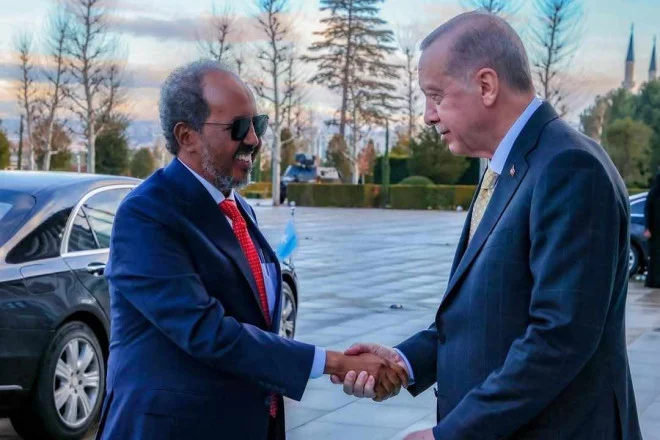
Set aside political loyalties and emotion, and few of Somalia’s international partners match Türkiye in historic importance, visibility, impact and public resonance. Türkiye’s contribution to Somalia’s development has been extraordinary. Before 2011, much of the international community viewed Somalia primarily through the prism of containment and abandonment. That changed in August 2011, when President, then Prime Minister, Erdoğan travelled to Mogadishu with his family, cabinet and business leaders. The visit represented bold humanitarian, political and economic leadership—and compelled the world to re-engage with Somalia.
Since that landmark visit, Türkiye’s assistance has left a clear mark across several areas of Somali life:
Security: Türkiye fully financed, constructed and operated Somalia’s largest police and military academy through Turkish security specialists. The institution has trained and equipped thousands of elite members of the Somali Police Force and the National Army, strengthening the country’s security capacity.
Healthcare and Infrastructure: The rebuilding of tarmac roads and the creation of modern medical institutions—including the world-class University of Health Science, Erdoğan General Hospital and the specialised mother-and-child Yardimeli Hospital in Mogadishu—stand among the most significant examples of critical infrastructure. These facilities have saved thousands of lives and helped raise the standard of public healthcare.
Education & Youth: Somali students from across the country have also received fully funded scholarships at leading Turkish public and private universities, supporting efforts to rebuild national institutions.
Other international partners have, of course, carried out important development work in Somalia. Many stepped forward with commendable projects after Türkiye’s early leadership. Even so, few partnerships have been as visible to, or as deeply experienced by, the Somali people as the relationship with Türkiye.
Türkiye’s ties with Somalia rest on significant sacrifice and sustained support for state-building. They are not, and should never be portrayed as, an arrangement with the incumbent administration. During the previous government, similar claims were directed at Qatar, another major Somali partner. Qatar’s fraternal relationship with Somalia endured the electoral crisis of 2022. In the same way, the Somali-Turkish bond should not merely withstand the current political noise; it should grow stronger, consistent with Somalia’s longstanding tradition of protecting relationships with friends, neighbours and allies while keeping disputes between the parties directly concerned.
The principle of friendship—and of limiting disagreements to those directly involved—is captured in the work of the renowned Somali poet Abwaan Maxamed Xaashi Dhamac “Gaarriye”. An English translation can convey the poem’s meaning, but its full spirit remains rooted in the original Somali.
Waxaa Geed Lala Kacaa, (You should rise in a council only)
Gankaad Tahay Erey La Da’ Ah, (for a word that matches your true stature)
Gefkana Bashar Baad U Tahee, (You are simply a human to err)
Hadaad Ka Garowdo Khalad, (Yet to acknowledge a fault you made)
Gob Bay Caadadeeda Tahay (is the practice of the noble one)
Waxaan Godobtiisu Hadhin (yet a lasting grievance is left)
Gar Aad Leedahuu Ogyahay (by he who knows the justice you are owed)
Nin Kaaga Masuugay Gole. (yet stingily denies you in a council of justice)
Haddaad Gorod Diidan Tahay (if you disagree with Gorod)
Ku Koob Dirirtaada Gorod (confine your attacks to Gorod)
Afkaagana Godob Ka Dhowr (guard your tongue from causing grievance ‘to the relationships’)
Mar Baa Jirta Gumuc La Riday (for a bullet fired recklessly)
Gelaaftaa Ninkii Ridee (strikes the very one who fired it)
Nin iin Lahow Daa’ Gujada (therefore, let him who carries flaws stop poking others).
Criticising Türkiye’s role in Somalia—an ally that stood with the country during its hour of greatest need—does not diminish a domestic political opponent. It damages Somalia as a whole. Genuine diplomacy requires political leaders to give their words the weight and stature they carry, demonstrating to Somalis and the wider world that, when national security, stability and historic strategic partnerships are at stake, they can rise above partisan impulses. Until that happens, Somali intellectuals and the public know the difference between a genuine ally and a political actor.
______________________
Abdinasir Ali Mohamed[email protected]