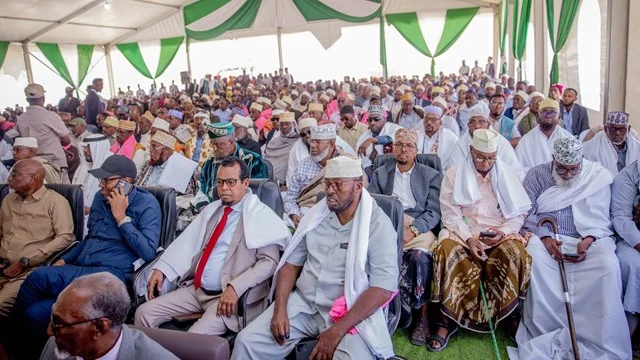

Somalia’s electoral process has passed through major stages and transformations since the country gained independence. The republic established in 1960 held direct elections based on one person, one vote, including local council elections in 1963 and parliamentary elections held in 1964 and 1969 (Samatar 2015). The democratic era came to an abrupt end when the military coup led by Mohamed Siad Barre took place in 1969, ushering in an authoritarian regime that lasted until the collapse of the central government in 1991. Since that collapse, Somalia has still not succeeded in holding a national election in which citizens directly cast their votes.
The central debates surrounding Somalia’s elections reveal deep differences of opinion that have persisted for a long time. On one side is the international community (IC), which has consistently insisted on implementing a one-person, one-vote system; on the other are Somali politicians, who have tended to favor systems based on clan power-sharing. Somali leaders repeatedly argue that the electoral system cannot be separated from local political realities, the country’s historical experience, and customary rules used to manage conflicts. This disagreement is not limited solely to voting procedures or the structure of constitutional institutions. It is rooted in fundamental questions about who has the right to political power, which legal framework should be followed, and how national sovereignty, partnership, ownership of decision-making, and power-sharing should be negotiated in Somalia’s state-building process.
The selection of an electoral system provides a clear lens through which to examine how power and decision-making are negotiated between the international community (IC) and the Federal Government of Somalia. Understanding this profound debate requires moving beyond current political disputes and examining the country’s historical circumstances. Lewis’s (1961) perspective on pastoral democracy provides an important foundation for understanding the origins of Somalia’s political system and the continuing influence of clan structures on state governance. Lewis described precolonial Somali society as possessing a form of local governance based on continuous negotiation, collective decision-making, compromise, and dispersed power shared among different clans. In that context, political legitimacy was not built on formal state institutions, but was rooted in customary law, kinship ties, and agreements among clan chiefs and elders (Lewis 1961). Although this perspective has been criticized for overlooking social inequality and exaggerating nomadic culture, it remains highly influential in interpreting the strong role of clan politics in the construction of the Somali state.
Accordingly, clan-based electoral agreements cannot be interpreted solely as signs of institutional weakness or democratic failure. They are rooted in a long history of a social system that existed before colonialism and the emergence of the modern state (Lewis 1961). Following the collapse of the central government in 1991, at a time when functioning national institutions and a stable constitutional framework were absent, clan structures became the pillar that preserved social cohesion, resolved disputes, and opened avenues for political dialogue (Gundel 2006). For many Somali politicians, clan agreements are not merely temporary solutions imposed by circumstances. They view them as a functioning system with legitimacy in many contexts, through which competition for power can be managed within a deeply divided political arena.
At the same time, the international community (IC) has consistently pushed for a gradual transition to an electoral system based on one person, one vote. Since the establishment of the federal member states and their interim administrations in the early 2000s, particularly after the adoption of the Federal Constitution in 2012, direct elections have been presented as a tool for strengthening political accountability and government legitimacy, expanding public participation, and eliminating the influence of clan identity in politics. This position has been shaped by the principles of liberal peacebuilding and free-market governance, which have guided international interventions in many countries recovering from conflict (Sharp 2018). These approaches hold that lasting peace and development can be achieved through democratic institutions, free and fair elections, free-market economic reforms, and legal mechanisms for holding leaders accountable (Sharp 2018; De Coning 2007). From this perspective, one person, one vote is both a symbol and a key to democratic transformation. However, these assumptions often underestimate the complexity of the country’s political realities and may create the risk that externally imported governance models will be prioritized over forms of legitimacy that have emerged from local experience.
Ideas concerning partnership and local ownership of decision-making lie at the heart of the dispute surrounding Somalia’s elections. These two principles have long guided development and aid programs. Since the early 2000s, international institutions have repeatedly emphasized that every political step should be locally owned, so that external support is legitimate and sustainable. In theory, local ownership means that domestic actors lead decision-making while international partners provide assistance only (Crawford 2003). Partnership likewise implies a relationship based on mutual respect, shared objectives, and collective responsibility. However, such attractive rhetoric does not always reflect the reality of relations between donors and the government, where administrative weakness and a significant disparity in financial power persist (Abrahamsen 2004).
In practice, the assumptions of partnership and local ownership have become avenues through which different actors pursue their particular interests in Somalia’s electoral process. The international community (IC) invokes these principles to legitimize its intervention and demonstrate its commitment to internationally recognized development approaches. At the same time, it has the ability to determine the substance, timing, and direction of electoral reform through financial support, technical expertise, diplomatic pressure, and conditions attached to the provision of electoral assistance. This situation creates an obvious contradiction: local ownership of decision-making is promoted within a relationship in which the international community (IC) wields considerable power. The Federal Government of Somalia, meanwhile, is not merely a passive recipient of what is offered. It actively exercises its decision-making authority when negotiating the electoral timetable, interpreting constitutional provisions, mediating competing interests among domestic groups, and citing the security challenges posed by Al-Shabaab. These factors can directly alter the pace and direction of the electoral process.
Somali politicians also invoke national sovereignty and local ownership to defend the continuation of clan-based elections, which they view as possessing far greater domestic legitimacy than the externally promoted one-person, one-vote system. Such arguments are not universally accepted within Somalia. Some members of society regard the clan-based system as necessary for security and political stability, while others argue that it reproduces systems that concentrate power in the hands of particular groups and excludes the rights and meaningful participation of women, marginalized clans, youth, and other vulnerable groups. This ongoing tension demonstrates that the struggle for power is not limited to the international community (IC) and the Federal Government of Somalia; it also exists strongly within Somalia’s political institutions and society. Power does not