GENEVA – Somalia’s judiciary has been thrust into a constitutional crisis after UN experts* condemned the Government’s removal of Chief Justice Bashe Yusuf Ahmed on 4 November 2026 and the swearing-in of an alleged successor three days later.
“We strongly condemn this blatant interference with the independence
of the judiciary,” the experts said. “The unilateral dismissal of the
Chief Justice by Presidential decree did not follow constitutional
procedures, including approval by Parliament or a proposal from the
Judicial Services Commission. His quick replacement, within days and
without following legal procedures, undermines the rule of law.”
The dismissal of Chief Justice Ahmed came on the eve of a Supreme
Court decision on the legality of recent measures that extended the
mandates of the President and Parliament from four to five years.
On 5 November 2026, five judges proceeded with the case and found
that the extensions were unlawful, ruling that the terms of both
Parliament and the President had expired. The Court ordered elections to
be held within 90 days. The judges further held that the Chief
Justice’s removal was unconstitutional and was intended to obstruct the
Court’s review of the presidential and parliamentary term extensions.
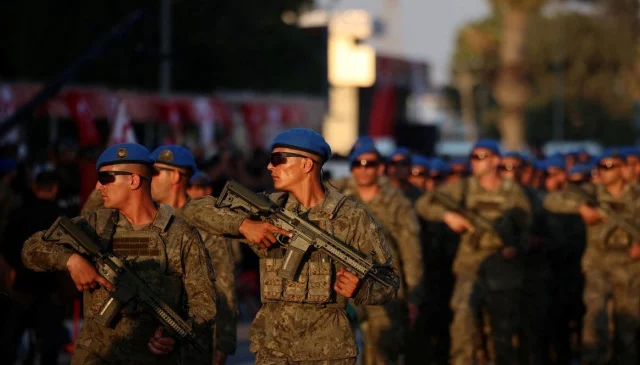
The Government did not comply with the rulings. Instead, hundreds of
security personnel were deployed to the Supreme Court in what the
experts described as an effort to disrupt and intimidate the Court.
Personal security protection was withdrawn from seven Supreme Court
judges, despite risks to their safety, and the judges have been barred
from travelling.
On 7 November, Ibrahim Idle Suleiman was sworn in during a ceremony
as the purported new Chief Justice. The President attended the event.
“We condemn the attempted intimidation of judges and serious threats
to their security – their personal protection must be urgently
reinstated,” the experts said. “We call on security forces to stand
down.”
“International, African and national law require all countries to
ensure the independence of the judiciary, including when deciding
political disputes, as an essential guarantee of the rule of law and
democracy.”
Judges must be able to rule on cases without improper influence, pressure, threats
or interference, and the judicial process must be protected from
inappropriate or unwarranted intervention. Judges may be suspended or
removed only on grounds of incapacity or conduct that makes them unfit
to perform their duties. Any proceedings must be fair, apply established
standards of judicial conduct and provide for independent review.
The safeguards governing how judges are selected and appointed are set out in the Principles for Judicial Appointments.
Concerns had already been raised that ‘irregular and contested processes of constitutional reform’ and
‘the lack of an independent judiciary’ could weaken the country’s
counter-terrorism and stabilisation efforts, as Somalia faces grave
danger from Al Shabaab.
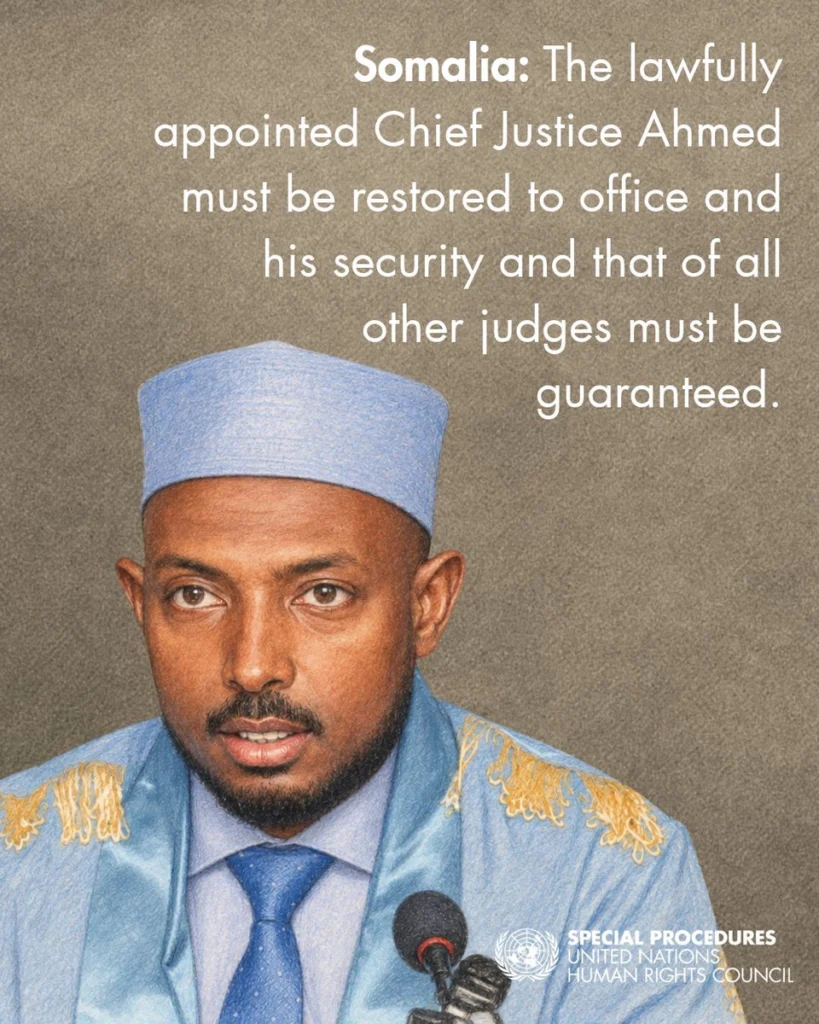
“The lawfully appointed Chief Justice Ahmed must be restored to
office and his security and that of all other judges must be
guaranteed,” the experts said.
Source: UN Human Rights Office