
Baidoa (AX) — Forces loyal to former South West State President Abdiaziz Hassan Mohamed Laftagareen have received reinforcements and additional troops in recent weeks, as the Federal Government of Somalia expands its military presence in the cities of Baidoa and Barawe.
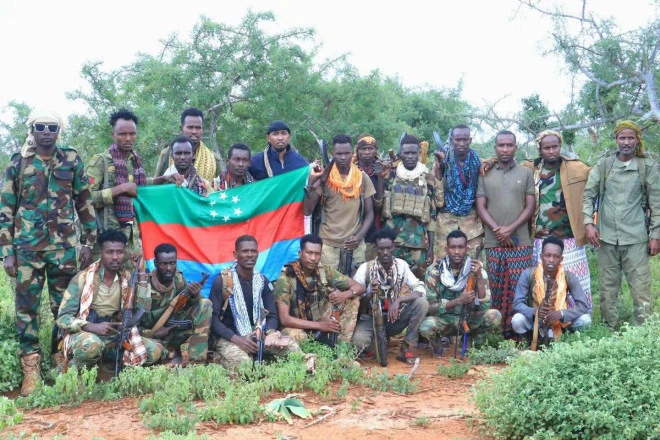
The Laftagareen faction confirmed that hundreds of soldiers joined its ranks in October and November, some of whom had previously served in the Somali National Army and operated in other regions of the country.
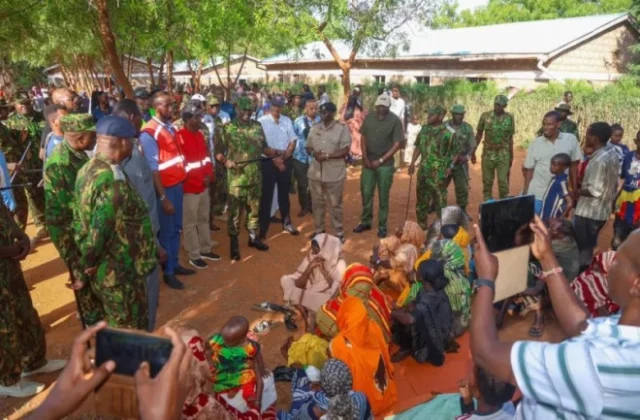
On Saturday, officials loyal to the former president welcomed new military units reportedly dispatched from the regions of Hiiraan, Galgaduud and Middle Shabelle.
Hassan Abdulkadir, a security official affiliated with the Laftagareen faction, said the troops originally came from South West State and had responded to a call by the former president for soldiers from the national army to return to their home region.
“These troops responded to President Laftagareen’s call for soldiers from South West State serving in the armed forces to return to their areas of origin,” Abdulkadir said.
No independent source has so far verified the exact number of troops that arrived in the region on Saturday. It is also unclear whether the soldiers have officially left their duties in the Somali National Army.
The latest troops to arrive in the region are part of a broader mobilization that Laftagareen supporters have carried out in recent weeks, aimed at strengthening their military power in Bay region.
On November 8, Ugaas Hassan, a former South West State information minister and now spokesperson for the Laftagareen group, welcomed another batch of soldiers who had decided to join the former president’s forces.
The intensified mobilization follows the takeover by Laftagareen-aligned forces in October of strategic towns in Bay region, including Buurhakaba, Qansaxdheere, Berdale, Diinsoor and Awdiinle.
Buurhakaba, located on the main road linking Mogadishu and Baidoa, fell to Laftagareen’s forces on October 15 after heavy fighting between federal government troops and forces from the current South West State administration.
Those territorial gains have placed considerable pressure on the federal-backed administration led by Sheikh Adan Mohamed Nur Madobe, which controls Baidoa and other areas under government control.
Meanwhile, the federal government has deployed additional troops and military equipment to Baidoa and Barawe, with the aim of strengthening security and protecting key bases.
On Saturday, Madobe visited Somali National Army units responsible for security in Barawe, the official capital of South West State, and urged the soldiers to maintain discipline and protect civilians.
During the inspection, Madobe stressed the importance of protecting public and private property, calling for respect for local residents and stronger cooperation between the security forces and the community.
He emphasized that cooperation between local residents and the security forces is the foundation of lasting peace and stability in Barawe and its surrounding areas.
Federal forces have significantly increased their presence in Barawe in recent weeks amid the political dispute in South West State and the drawdown of African Union forces stationed in Somalia.
These escalating military movements stem from the intense power struggle between Laftagareen and the administration backed by the government led by President Hassan Sheikh Mohamud.
Laftagareen was removed from office in March following a major dispute with the federal government over constitutional amendments and the administration’s electoral process. Since then, he has sought to regain control of South West State, while his forces have fought federal and local troops several times on the outskirts of Baidoa.
In October, Laftagareen called for federal government troops to withdraw from Bay, Bakool and Lower Shabelle regions, accusing the Mogadishu government of using military force to impose its preferred leadership on the administration.
Federal government officials have defended their security operations and accused the Laftagareen faction of undermining stability and security in the region.
Although traditional elders and civil society groups have sought to resolve the crisis, the conflict continues in parts of the affected areas.
The latest military movements have heightened fears of renewed fighting as both sides continue to strengthen their forces inside and around the strategic towns.