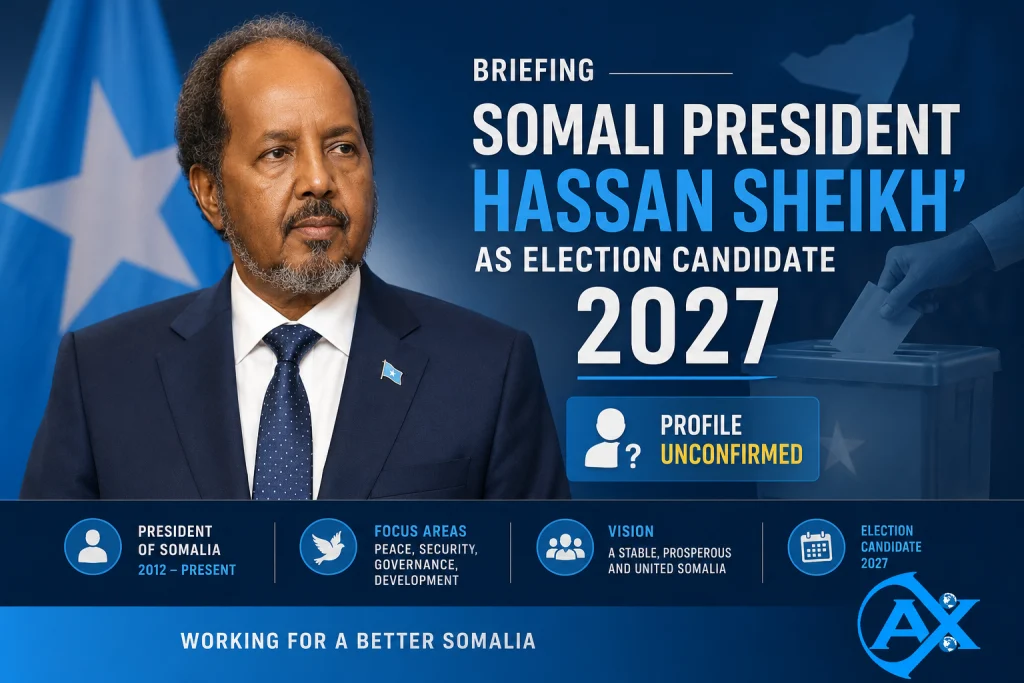
MOGADISHU — Somalia’s election timetable remains under pressure as the federal government, opposition groups and regional actors continue to dispute the timing, legal basis and management of the country’s planned transition toward direct elections.
The latest developments show two tracks moving at the same time: regional one-person, one-vote elections are advancing in some areas, while the broader national election roadmap remains contested after constitutional changes and stalled political talks.
- Advertisement -
What Happened
Somalia’s parliament approved constitutional changes in March 2026 that could extend the terms of the president and lawmakers from four years to five years, pushing back elections that had been expected in May 2026. Opposition leaders rejected the amendments and called for elections to be held under a consensus-based framework.
President Hassan Sheikh Mohamud’s government says the reforms are intended to move Somalia toward universal suffrage and away from the long-standing indirect, clan-based selection system. Opposition groups and some federal member states say major electoral changes require broader political agreement before implementation.
In June 2026, the federal government said the announcement of a federal election timetable had been delayed to allow more political dialogue. International partners also urged Somali leaders to resume talks and reach consensus on an election roadmap.
Latest Updates on Somalia’s Election Delay
-
- Federal election timetable: No fully agreed national election calendar has been accepted by all major political actors.
-
- Constitutional dispute: Parliament-backed amendments have created disagreement over whether the current federal mandate extends to 2027.
-
- Galmudug vote: Local council and state parliamentary elections in Galmudug were delayed to July 30, 2026, after requests for more preparation time.
-
- Hirshabelle schedule: The electoral commission set August 20, 2026, for Hirshabelle local council and regional assembly elections.
-
- Opposition position: The Somali Future Council and other opposition figures have proposed alternative electoral models and called for a negotiated settlement.
-
- International position: Somalia’s partners have urged dialogue, restraint and a consensus-based roadmap.
Why It Matters
The election delay matters because Somalia is trying to move from indirect power-sharing arrangements toward broader public voting after decades of conflict, weak institutions and repeated electoral disputes.
A credible roadmap could strengthen the legitimacy of federal and regional institutions. A disputed process could deepen political divisions between Mogadishu, opposition groups and federal member states.
The delay also comes as Somalia faces major security challenges from al-Shabaab, which still controls parts of the countryside and carries out attacks. Election planning therefore depends not only on political agreement but also on security, logistics and public trust.
Key Facts
-
- Somalia’s parliament approved constitutional changes in March 2026 that may extend federal terms from four to five years.
-
- The opposition says the amendments and electoral process lack sufficient consensus.
-
- The federal government says it remains committed to one-person, one-vote elections.
-
- Galmudug elections were moved to July 30, 2026, after the electoral commission cited preparation needs and party requests.
-
- More than 270,000 registered voters were expected to take part in Galmudug’s July 30 local and parliamentary elections.
-
- Hirshabelle elections are scheduled for August 20, 2026.
-
- International partners have called for Somali-led dialogue and a clear election roadmap.
Background: Somalia’s Electoral Dispute
Somalia has not held a nationwide one-person, one-vote federal election for decades. Federal leaders have repeatedly pledged to move toward direct elections, but the process has been slowed by political disagreement, insecurity, administrative weaknesses and disputes over federal-state relations.
For years, Somalia used indirect models in which clan elders, delegates and lawmakers played central roles in selecting representatives and presidents. The federal government argues that direct elections would give citizens a stronger voice. Critics say the transition must be agreed by all major stakeholders to avoid another political crisis.
The current dispute reflects deeper questions over Somalia’s constitutional order, the role of federal member states, the powers of the electoral commission and the timing of national leadership elections.
Regional Elections Continue Despite National Dispute
While the national election calendar remains contested, the electoral commission has continued rolling out regional and local elections in selected areas.
Galmudug’s delayed vote was presented as part of Somalia’s gradual expansion of direct voting. The commission said the delay allowed political organizations and election officials more time to complete preparations.
Hirshabelle is the next major test. Its elections are scheduled for August 20, 2026, with preparations including candidate registration, voter documentation and polling-station arrangements.
Political Positions
The federal government says Somalia has entered a historic phase toward universal suffrage and that elections should be conducted under the constitution and electoral laws.
Opposition groups say the government has moved too quickly and without sufficient agreement. They have called for independent mediation, a broader political settlement and changes to the way the electoral process is managed.
Civil society groups have also urged compromise, including interim models designed to break the deadlock and prevent the election dispute from escalating.
What Happens Next
The immediate focus is on whether the Hirshabelle vote proceeds on August 20, 2026, as scheduled. The larger question is whether federal leaders, opposition groups and member states can agree on a national roadmap for parliamentary and presidential elections.
Without consensus, Somalia’s election delay is likely to remain a central political issue. With a negotiated roadmap, the country could move closer to a direct voting system that has wider public and political acceptance.
Three Questions
1. Has Somalia officially delayed the 2026 election?
The federal election timetable has not been implemented as originally expected. Constitutional changes and political disagreements have pushed the national process into a disputed transition period, while regional elections continue in some states.
2. Why are opposition groups rejecting the current roadmap?
Opposition groups say the electoral and constitutional changes were not based on broad national consensus. They are calling for a negotiated framework, stronger safeguards and a more inclusive process.
3. Are one-person, one-vote elections still planned?
Yes. The federal government and electoral commission continue to support direct elections. However, the timing, structure and political legitimacy of the national process remain disputed.
Bottom Line
Somalia’s election delay is not a single scheduling issue. It is part of a wider struggle over constitutional reform, political legitimacy and the transition from indirect selection to direct voting.
Regional elections are moving ahead in some areas, but a broadly accepted national election roadmap has not yet been secured. The next phase will depend on whether Somali leaders can reach a political agreement that balances reform, inclusion, security and credibility.