Saturday July 25, 2026
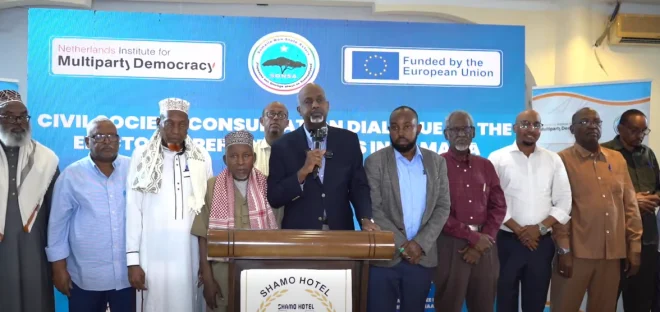
Mogadishu (AX) — Somalia Non-State Actors (SONSA) has put forward an interim electoral framework aimed at breaking the political impasse surrounding Somalia’s elections.
The civil society network said organizations across Somalia have been seeking common ground between the federal government and opposition groups amid the continuing dispute over the electoral process.
As part of the initiative, civil society groups examined election models presented by opposition political stakeholders, among them the Somali Future Council, Nabad iyo Nolol and the National Unity Council.
After consulting community leaders, SONSA recommended what it called a Transitional Constituency-Based Multiparty Electoral Model.
The plan would allow citizens to directly choose members of the House of the People in agreed electoral constituencies.
Although candidates would run under registered political parties, voters would select individual parliamentary contenders directly instead of choosing only from closed party lists drawn up by political organizations.
SONSA said temporary protections would be needed during the transition to secure inclusive representation and ensure that no community or group feels shut out of the political process.
The network said federal member states should have a meaningful role in carrying out the election, including coordinating arrangements for electoral security.
It further urged the creation of an independent, credible mechanism to handle election complaints and settle disputes.
According to SONSA, voter registration, balloting, vote counting and the declaration of results must follow transparent procedures agreed by all sides.
The organization also sought safeguards for political rights and broad representation, particularly for women and communities that have historically faced political exclusion.
Those measures, it said, should include protections tied to the 4.5 power-sharing system, alongside clear, enforceable provisions to improve the political representation of persons with disabilities.
SONSA additionally called for domestic and international election observers, including monitors from civil society organizations.
The network warned that no electoral system can command credibility or legitimacy without adequate political consensus and public trust.
It said an election’s authority rests not merely on the technical system selected, but also on the breadth of political agreement and the Somali public’s confidence in the process.
SONSA stressed that any electoral framework should emerge from a broadly supported political accord involving the federal government, federal member states and opposition political stakeholders.
Somali civil society, it added, should maintain a visible presence by observing the process, supporting dialogue and tracking implementation of any eventual agreement.
The group urged political stakeholders to look beyond rival election plans and embrace responsible compromise, arguing that an agreed transitional framework must protect inclusive representation and secure federal consensus.
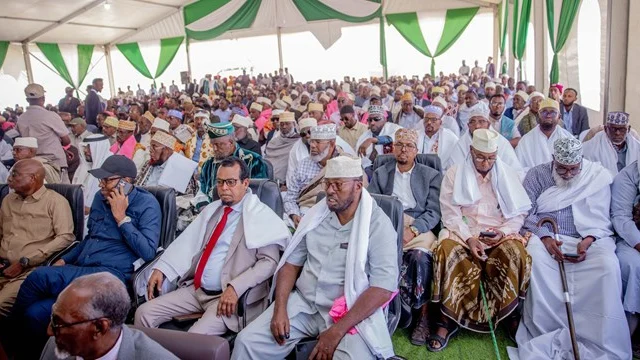
The proposal emerged as the second round of Somalia’s electoral negotiations resumed in Mogadishu on Monday, with the federal government and opposition groups trying to reach consensus on elections and contested constitutional amendments.
Turkey organized the talks, which brought together representatives of the federal government, the Somali Salvation Forum and Nabad iyo Nolol, along with delegates from Turkey, the United States, the United Kingdom, the European Union and the United Nations.
Sources said mediators met the parties separately, holding individual sessions with each opposition group and representatives of the federal government.
During the first round, each side submitted its preferred electoral model. The second round is centered on reviewing and comparing the competing proposals.
Four electoral models have been presented to the mediators, according to sources familiar with the discussions.
The parties have yet to reach an agreement, leaving the choice of electoral model among the central issues dividing them.