Author and food advocate Sophie Morris has recalled the fear and confusion of being swept into a fast-moving wildfire emergency in southern France, describing the ordeal as “terrifying”.
The blaze, which broke out near the town of Biscarrosse, led to the evacuation of 23,000 people.
Speaking on RTÉ’s News at One, Ms Morris said she was staying at the Mayotte Vacances campsite with her husband, her mother and her two young sons when the fire began.
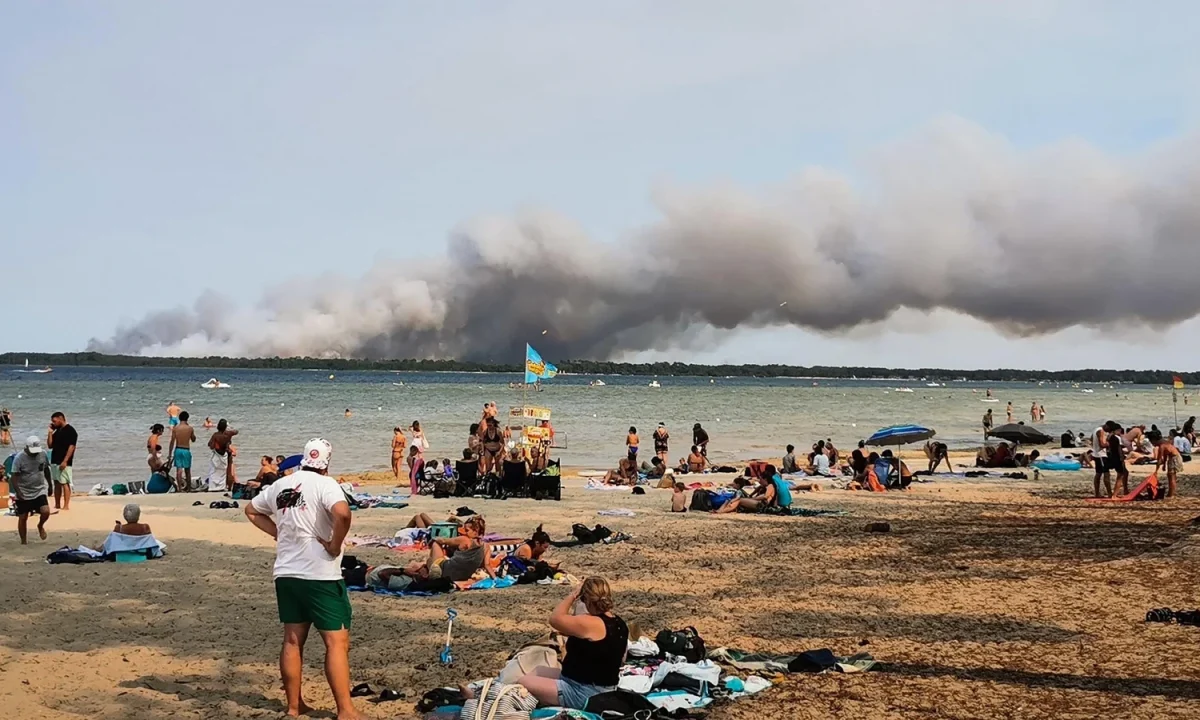
The family had only just reached the campsite and were spending time at a nearby lake beach when she spotted a heavy plume of black smoke rising into the sky.
Ms Morris said staff at the campsite first told holidaymakers not to worry, explaining that it was a small vehicle fire and that it would be contained.
As the afternoon wore on, however, the smoke thickened and the flames pushed into the forest around them.
“It was originally a van that went on fire on the side of the road … so I guess it just got the ground and then just spread into the forest and it just spread so quickly.”
By evening, water-bombing aircraft were circling low overhead as crews battled to slow the fire’s advance.
Smoke rising from the wildfire near Biscarrosse (Pic: Sophie Morris)
“There were planes flying really low to the ground… and they were just dropping water, so we were watching all this.”
Holidaymakers were instructed to remain where they were and avoid blocking access routes needed by emergency services, but Ms Morris said the atmosphere was deeply unsettling.
“It was very scary because it seemed so close with the amount of smoke.”
The family eventually went to bed, only to be jolted awake at around 3am by alarms ringing across the campsite.
“I’ll never forget that noise … just the sirens; it was just like: ‘I can’t believe this is actually happening’.”
Residents look at smoke rising behind houses during a wildfire near Lege-Cap-Ferret yesterday, which is located across the Arcachon Bay from Bicarosse in southwestern France
Her seven-year-old son, she said, was “absolutely terrified” as the family rushed to prepare for evacuation.
Guests were first advised to leave on foot and make their way towards a nearby lake, but Ms Morris said her family ultimately followed others who were getting out by car.
“There was like lines of cars and we were thinking ‘what do we do? Do we go on our cars? Do we go on foot?’, so we just decided ‘let’s get in the car’.”
She said getting into the car brought some reassurance, while people without vehicles were left waiting by the lake.
The family then joined a slow crawl of traffic, with the glow of flames visible between the trees.
“You could see the flames, we were literally sitting in standstill traffic looking at the flames through the forest and you could actually see ash falling around the car, it looked like snow in the headlights.”
What should have been a 10-minute drive stretched to almost two hours before they finally reached the beach.
Sophie Morris won Book of the Year at the Book Awards last year
Ms Morris said local residents stepped in to support those forced from the campsite, with one café offering free tea, coffee, breakfast and fire blankets.
“They were amazing … there were people there from 4am and they were giving out free teas and coffees, fire blankets for people if they needed them and breakfast if we needed it.”
By then, she said, it was becoming obvious that a return to the campsite would not be possible.
“I literally had three hours sleep, so it was very hard to think straight and you’re running on adrenaline.”
Ms Morris said the campsite company later helped the family secure alternative accommodation further south.
“They were really amazing. I just told them the situation and they found us a place about 90 minutes south, which we were able to access.”