
Mogadishu (AX) — The African Union Peace and Security Council has approved a plan to gradually reduce its peacekeeping forces in Somalia through December 2027, while warning that an uncoordinated withdrawal driven by funding shortages could hand strategic cities and key supply routes to al-Shabaab.
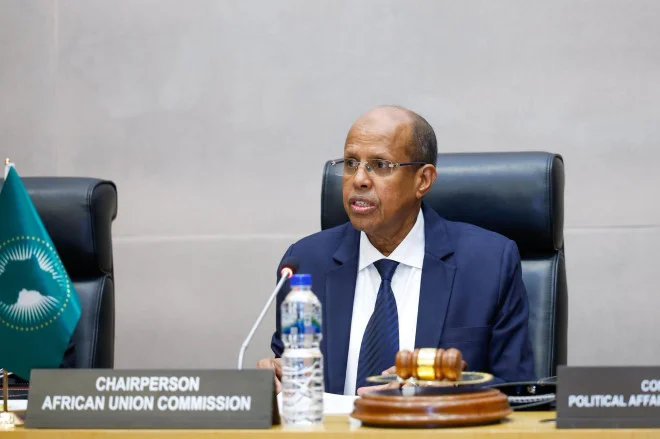
In a communiqué issued after its 1,380th meeting, held on Nov. 25 and published Friday, the council approved the first two phases of a joint security transition plan prepared by the African Union and the Federal Government of Somalia.
The plan is based on three phases: November to December 2026, January to December 2027, and a third phase beginning after 2027.
The council approved the first two phases but called for additional political and strategic consultations to determine the most appropriate approach to counterterrorism in Somalia after 2027.
The decision comes as the mandates of the African Union Support and Stabilization Mission in Somalia (AUSSOM) and the United Nations Support Office in Somalia (UNSOS) are nearing their expiration on Dec. 31.
The African Union stressed that the withdrawal of troops must be fully coordinated with Somalia’s security forces to prevent militants from exploiting areas vacated by mission personnel.
“A withdrawal driven by financial constraints rather than the actual security situation could give al-Shabaab an opportunity to retake key cities and major supply routes, undermining the military gains made in recent years,” the council added.
It also emphasized that the pace of troop reductions must correspond to security conditions on the ground and the capacity of Somalia’s forces to take over areas currently held by African Union troops.
The council instructed the African Union Commission to establish clear guidance on the future of AUSSOM personnel, in consultation with the Federal Government of Somalia and troop-contributing countries.
It also requested the creation of a clear operational mechanism to ensure that military bases are systematically handed over to Somalia’s security institutions or other designated partners.
As part of the transition measures, the African Union Commission was instructed to conduct a joint strategic assessment with the Somali government and AUSSOM in September 2027, examining the security situation and progress in transferring security responsibilities to Somali forces.
The council also called for urgent diplomatic efforts to secure an extension of UNSOS’s mandate through Dec. 31, 2027, while ensuring adequate funding to support the transition plan.
UNSOS provides logistical and operational services to African Union forces and eligible units of Somalia’s security forces, serving as a backbone for military operations.
“We call on the United Nations Security Council, the European Union, AU member states, bilateral partners and the international community to provide both financial and logistical support to AUSSOM in its efforts to defeat al-Shabaab in Somalia,” the statement said.
The African Union also called for a contingency logistics plan for the period after December 2027, as Somalia prepares to assume greater responsibility for protecting its security.
The council stressed that troop-contributing countries must participate fully in decisions concerning the mission’s future, particularly security plans beginning after 2027.
Meanwhile, the council praised the achievements of Somalia’s armed forces, AUSSOM personnel and international partners in the fight against al-Shabaab.
It cited joint operations known as Silent Storm and Rolling Thunder, as well as the handover of five military bases, including former operational bases transferred to Somalia’s security forces.
The council said these steps demonstrated progress in transferring security responsibilities between African Union forces and Somalia’s national forces.
It encouraged Somali forces and their international partners to sustain military operations against al-Shabaab and maintain control of areas cleared of the group.
Beyond security issues, the council urged Somalia’s political leaders to maintain dialogue and seek broad-based consensus in support of nation-building.
It welcomed President Hassan Sheikh Mohamud’s talks with political parties, civil society and other stakeholders ahead of the national elections planned for 2027.
The council also reaffirmed its support for Somalia’s sovereignty, unity and territorial integrity, rejecting any foreign interference that could undermine the country’s stability.
“We once again reaffirm the African Union’s respect for the sovereignty, unity, independence and territorial integrity of the Federal Republic of Somalia, and reject interference by external powers that undermines the peace, security, independence and territorial integrity of the Federal Republic of Somalia,” the statement said.
The statement comes amid ongoing political disputes between Somalia’s federal government and opposition groups over constitutional amendments, the electoral process and the terms of constitutional institutions.
The African Union did not specifically identify the foreign governments it was warning against interference.
The council also expressed concern about humanitarian problems that could result from the El Niño phenomenon in Somalia, urging the international community to increase aid to vulnerable people.
AUSSOM, which officially replaced the African Union Transition Mission in Somalia on Jan. 1, 2025, assists Somalia’s security forces in fighting al-Shabaab and preparing for the transfer of security responsibilities to government institutions.
The latest African Union decision lays the groundwork for reducing the mission’s forces in Somalia through 2027. However, its implementation will depend on assessments of security conditions, cooperation from troop-contributing countries and financial support from the international community.