
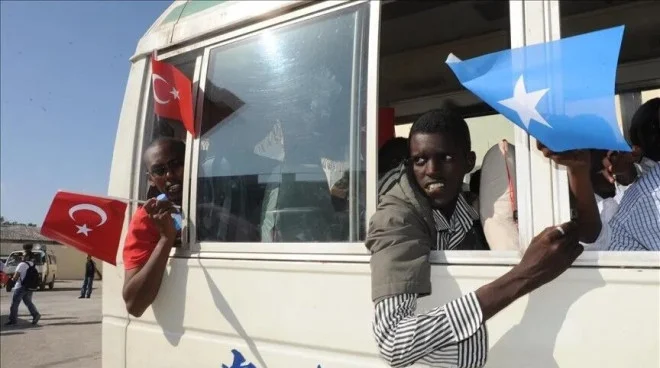
For years, Somalia has been defined internationally by war, terrorism, humanitarian emergencies, and fragile state institutions. That perception has shaped an external response dominated by emergency aid, short-term stabilization efforts, and limited security support. Although such measures have helped address urgent needs, they have seldom built the institutions required for lasting resilience. Türkiye has taken a different path. Ankara has brought humanitarian assistance, development, security, and economic cooperation together in a broad partnership intended to expand Somalia’s sovereign capacity across a range of sectors.
Since 2011, Türkiye-Somalia relations have moved steadily from humanitarian solidarity toward strategic institutional cooperation. Hospitals, schools, military academies, infrastructure, maritime initiatives, and—more recently—energy exploration are not isolated undertakings. Taken together, they represent a state-building framework focused on stronger institutions, better public services, improved security, and wider economic opportunity. Türkiye’s influence in Somalia is therefore defined less by the size of any single project than by the coherence of the broader model. Its central aim is to build capacity within Somalia, not foster permanent dependence. That layered, institution-focused strategy has become a defining feature of Türkiye’s engagement.
- Advertisement -
Building sovereign capacity through integrated cooperationThe relationship reached a critical juncture during Somalia’s devastating 2011 famine. Türkiye’s response extended beyond immediate relief. Recep Tayyip Erdogan, then Türkiye’s prime minister and now president, traveled to Mogadishu, signaling that Ankara intended to remain involved after the emergency passed. Humanitarian assistance helped establish public trust, while later initiatives converted that confidence into cooperation in healthcare, education, infrastructure, trade, and security. The sustained nature of this engagement sets Türkiye apart from many outside actors whose involvement has often shifted with political priorities or security conditions.
Healthcare offers one of the clearest examples of that long-term commitment. Mogadishu’s Recep Tayyip Erdogan Training and Research Hospital is not simply a place where patients receive treatment. It also supports medical training, institutional management, and public confidence in government services. Thousands of Somali healthcare workers have taken part in training programs, and millions of patients have accessed modern medical care. In fragile countries, reliable public services help establish state legitimacy. By expanding Somalia’s healthcare capabilities, Türkiye is supporting better health outcomes while also helping restore citizens’ faith in public institutions.
Education reflects the same principle. Turkish scholarships, the Turkish Maarif Foundation, vocational training, and academic exchanges are building Somalia’s future human capital. These programs do more than transfer expertise: they help prepare civil servants, diplomats, engineers, healthcare workers, entrepreneurs, and academics who can sustain the country’s institutional progress. Their lasting importance lies not only in the number of graduates they produce, but also in the administrative and professional expertise they add to Somalia’s national capacity.
Security cooperation, meanwhile, goes beyond the provision of military assistance. Through the Türkiye-Somalia Military Training Base TURKSOM and the training of the Gorgor Special Forces and Haramcad Police units, Türkiye is helping professionalize Somalia’s security institutions. The emphasis is on enabling Somalia to protect itself rather than substituting foreign forces for national capabilities. Training in military education, command, operational planning, logistics, and institutional discipline strengthens the country’s sovereign security structures. In this framework, security is treated as a core element of state-building, not as a separate military goal.
The Turkish model: From sectoral projects to a state-capacity ecosystemTürkiye’s approach stands out because its initiatives are designed to support one another. Humanitarian diplomacy builds trust; trust opens the way for educational cooperation; education strengthens public administration; and stronger institutions improve security governance. Greater security can encourage investment, while infrastructure facilitates trade. Maritime security, in turn, supports the blue economy and offshore energy development. These are not disconnected interventions but linked parts of a wider institutional ecosystem.
That model differs sharply from development approaches that separate humanitarian aid, security assistance, and economic cooperation into distinct compartments. Türkiye’s experience in Somalia suggests that military action alone cannot produce durable stability, just as development cannot advance sustainably without capable institutions. Lasting progress requires coordinated investment in several sectors at once, with each reinforcing the others.
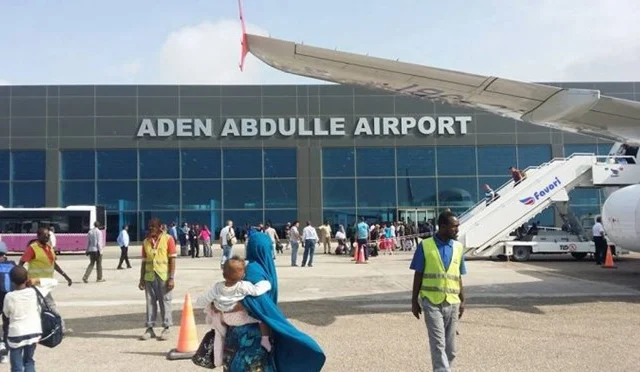
Economic cooperation makes this connection especially visible. The modernization of Mogadishu Port, improvements to Aden Adde International Airport, Turkish Airlines’ direct flight service, financial cooperation, and growing private-sector investment are reconnecting Somalia to regional and international markets. These efforts create jobs and support commerce, but they also help expand state revenue, improve public income collection, and strengthen governance. Economic infrastructure consequently serves not only as a driver of growth but also as a tool for building state capacity.
The same approach is now reaching newer strategic fields. Maritime security, offshore energy exploration, fisheries management, and the wider blue economy represent the latest phase of bilateral cooperation. Türkiye’s energy partnership is not framed solely around extracting resources. It also seeks to help Somalia manage its maritime assets through legal frameworks, technical knowledge, regulatory institutions, and improved maritime security. That work has direct implications for Somalia’s economic sovereignty and long-term development.
The next frontier: Strategic communication and institutional resilienceAs Somalia continues to consolidate its institutions, the information environment is emerging as another crucial dimension of state capacity. Modern governance depends on more than roads, ports, and security bodies. Governments must communicate clearly with citizens, preserve institutional credibility, and respond quickly to disinformation that can erode public trust.
Türkiye has in recent years expanded its own institutional communication capabilities, including strategic communication, public diplomacy, crisis messaging, and organized efforts to counter disinformation. Developed under the coordination of the Presidency of the Republic of Türkiye’s Communications Directorate, this experience offers another potential field for Türkiye-Somalia cooperation. The objective would not be to impose a Turkish template, but to share institutional knowledge that Somalia could adapt to its own political, cultural, and administrative circumstances.
Possible areas of future cooperation include training for government communication offices, professional media development, strategic communication planning, crisis-response systems, digital literacy, and institutional tools for confronting disinformation while promoting transparency and public confidence. These efforts would add an important dimension to existing cooperation in healthcare, education, and security by strengthening a central pillar of contemporary governance: resilient public communication.
In Somalia’s changing political landscape, misinformation can deepen polarization, disrupt democratic processes, and weaken confidence in state institutions. Building communication capacity is therefore also an investment in institutional resilience. Professional journalism, responsible government messaging, and effective public diplomacy can help create a healthier information environment—one that supports democratic governance as well as national stability.
ConclusionTürkiye’s role in Somalia now reaches far beyond conventional humanitarian assistance, development aid, and security cooperation. Over the past 15 years, these fields have gradually become part of a comprehensive partnership focused on expanding Somalia’s sovereign capacity. Rather than responding only to individual crises, Türkiye has worked to support institutions capable of delivering security, public services, economic opportunity, and effective governance over the long term.
As Somalia enters a new period of political and economic change, the durability of the partnership will depend increasingly on deeper institutions, not simply on launching more projects. Alongside healthcare, education, security, maritime affairs, and economic development, strategic communication and institutional resilience could become the next major areas of bilateral cooperation. Türkiye’s comparative strength in Somalia ultimately rests not just on the infrastructure it constructs or the assistance it delivers, but on its sustained effort to help Somalia develop the institutional capabilities needed to determine its own future.
*Opinions expressed in this article are the author’s own and do not necessarily reflect the editorial policy of Axadle.
Anadolu Agency
By, Abdulfattah Kasim Mohamud, the Minister of Information, Culture and Tourism of the Federal Government of Somalia.