
US President Donald Trump said he had instructed the Pentagon to scale back “inappropriate and hostile” military drills with South Korea, just hours before the annual exercises were due to begin.
Mr Trump pointed to his “good relationship” with North Korean leader Kim Jong-un and said he was dissatisfied with exercises intended to prepare for a potential attack by Pyongyang.
- Advertisement -
South Korea’s defence ministry, however, said the annual exercise would proceed “as previously notified and scheduled”, despite several warnings issued by North Korea the previous week.
“Based on my very good relationship with Kim Jong-un, of North Korea, I am not happy with the fact that the United States has, long ago, agreed to participate in Joint Military Exercises with South Korea,” Mr Trump wrote on his Truth Social platform.
With too little time remaining to cancel the drills, Mr Trump said he had directed Defense Secretary Pete Hegseth to “substantially reduce” their scale.
The annual Ulchi Freedom Shield exercises are scheduled to continue until 27 August and involve about 18,000 South Korean military personnel.
Mr Trump has repeatedly pressed for the military exercises with South Korea to be ended or reduced, while also disputing with Seoul how much it should pay toward the cost of stationing 28,500 US troops in the country and their wider regional security role.
North Korea, which remains technically at war with the South, regularly condemns the US-South Korean drills as rehearsals for an invasion. Pyongyang last week launched a ballistic missile from its eastern coast towards the Sea of Japan, according to South Korean and Japanese militaries, days after another short-range ballistic missile test.
The relationship between Mr Trump and Mr Kim has shifted dramatically over the years.
Mr Trump once derided the North Korean leader as “little rocket man” and threatened Pyongyang with “fire and fury”. Mr Kim responded by saying he would “tame the mentally deranged US dotard with fire.”
Despite the hostility, the two men held three summits. Mr Trump later said “we fell in love” after exchanging letters with Mr Kim. The diplomatic efforts, however, produced no change in North Korea’s nuclear weapons programme or ballistic missile development.
Although Mr Trump adopted a warm tone towards North Korea in his Truth Social post, he also referred to South Korea’s position on the US-Israeli conflict with Iran.
“While somewhat unrelated (?), I recently asked the President of South Korea if they would like to join us in the Denuclearization of the Islamic Republic of Iran, and they said, ‘No thanks!’” Mr Trump wrote.
It remains unclear what form any reduction in the drills would take. In recent years, the exercises have moved away from live-fire training and increasingly relied on computer simulations involving missile and cyberattacks.
Colonel Ryan Donald, a spokesman for the US and South Korean Combined Forces Command, had said the exercises would rehearse combat against North Korean forces hardened by their deployment in the Russia-Ukraine war.
The US maintains roughly 28,500 troops in South Korea to reinforce the country’s defences against threats from Pyongyang. Their presence dates back to the 1950-53 Korean War, which ended in an armistice rather than a peace treaty.
Mr Trump has nevertheless repeatedly questioned long-standing alliances, including NATO, while criticising Western partners for declining to support his war against Iran.
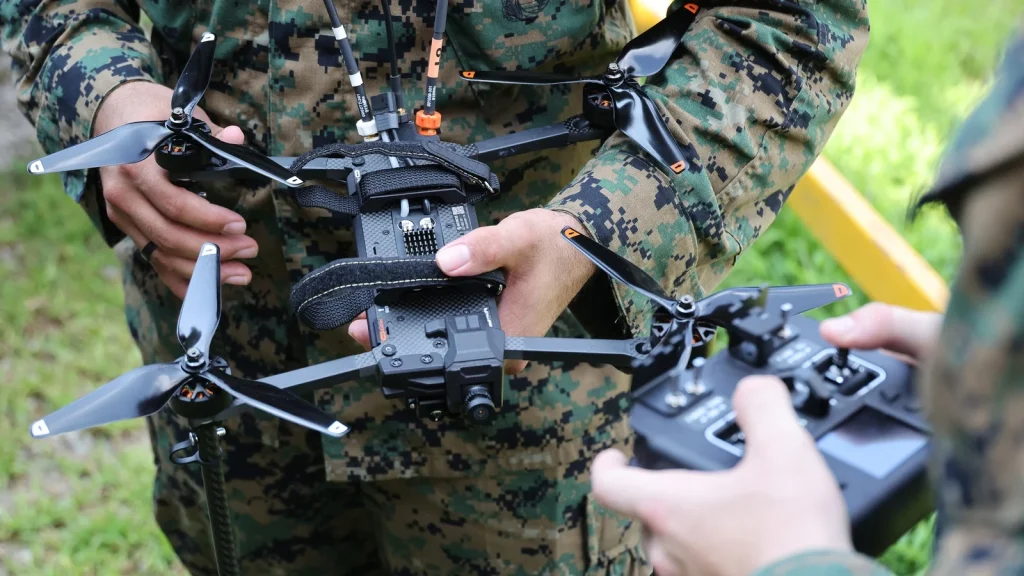
The exercises were also set to place greater emphasis on drone warfare, GPS disruption and the use of cyber attacks, Colonel Donald had said.
Experts say North Korea has strengthened its nuclear and missile capabilities since the collapse of Mr Trump’s negotiations with Mr Kim, whom he last met face to face in 2019.
Analysts say North Korea has also supplied troops and munitions for Moscow’s war in Ukraine, receiving financial assistance, food, energy and military technology in return.
Ukraine recently claimed that as many as 50,000 North Korean troops were expected to deploy to Russia, but offered no evidence or timetable to support the assertion.
Ukrainian President Volodymyr Zelensky made the claim while asking South Korea to provide air defence systems to shield Ukraine from Russian missile attacks. Seoul has not answered the request.
Since taking office in June 2025, South Korean President Lee Jae Myung has reversed his predecessor’s approach, offering Pyongyang talks without preconditions and proposing that the Korean War be formally brought to an end.
North Korea’s leadership, however, has so far promised only to speed up its military build-up, with Mr Kim describing the South as the “most hostile state”.