
A desperate rescue effort was under way in southern Japan after a 7.1-magnitude earthquake struck near Kumamoto, killing at least 13 people and leaving others feared trapped beneath shattered buildings, Prime Minister Sanae Takaichi said.
“Even now, there are people waiting to be rescued, and this is a race against time. We will marshal all available resources on the ground to save and rescue as many people as possible,” Ms Takaichi told reporters at her office in Tokyo a day after the quake hit, as officials raised the death toll from an earlier figure of three.
The powerful tremor cut electricity to thousands of households and split roads across the region, complicating the work of emergency crews.
At a partly collapsed shopping mall near Kumamoto, rescuers pulled eight people from the wreckage after an apparent explosion tore through the building about an hour after the earthquake. Two of those recovered were women in their 20s who had died.
The Aeon shopping centre in Kumamoto was shaken by an explosion after the earthquake
Fire rescue units, police officers and army personnel concentrated their search on sections of the building where cries and calls for help had been reported.
The scale of the damage was still emerging.
Public broadcaster NHK said around 20 to 30 workers remained unaccounted for yesterday.
Seven people were also missing after a chimney came down at a Nippon Paper Industries factory, while four others suffered serious injuries, according to a local government official.
Hospitals across the area were said to be caring for dozens of injured patients.
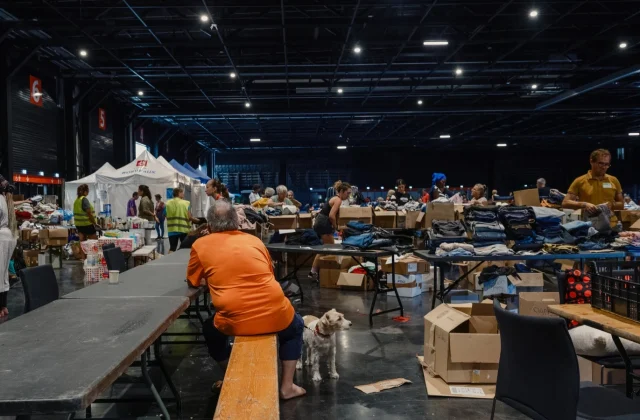
Authorities said roughly 260,000 people across the prefecture, which was also struck by a deadly earthquake 10 years ago, had been ordered to evacuate to shelters.
The epicentre was located about 20km south of Kumamoto City, the largest city in central Kyushu, home to around 700,000 people.
Officials urged residents in the hardest-hit areas to remain vigilant for more strong tremors over the next week and warned that loosened hillsides could trigger landslides.
People gather in a park after leaving buildings in the wake of the earthquake in Kumamoto City
With more than 36,000 homes still without power, authorities were also bracing for the danger of heat stroke as temperatures climbed to about 34 degrees Celsius.
Hospitals struggle under pressure
A hospital in Uki City, close to the epicentre, said an earthquake-related power cut had left it unable to operate properly.
“It’s become like a field hospital,” the head of the administrative department told NHK.
Another hospital in the city said it had stopped accepting new admissions after taking in 86 people injured in the quake, including three with serious injuries, and could no longer cope with additional emergency cases.
Operators said several passengers travelling on high-speed trains when the quake struck were also hurt.
Footage from the Aeon shopping centre, which contains about 200 stores, showed one side of the complex ripped open by the blast, with steel beams exposed and debris scattered across a car park.
A damaged car is pictured near the Aeon Mall Kumamoto
Aeon shares dropped 1.9% in early Tokyo trading, while the benchmark index gained 0.8%.
Several major companies with facilities in the region, among them semiconductor equipment maker Tokyo Electron and Honda, said they would halt operations at their plants today.
TSMC, the world’s largest contract chipmaker, evacuated employees from its local plant as a precaution after the earthquake, but said it had started bringing operations back online late on Tuesday.
Japan sits on the “Ring of Fire”, the arc of volcanoes and oceanic trenches that partly circles the Pacific Basin, and accounts for about 20% of the world’s earthquakes measuring magnitude 6.0 or above.
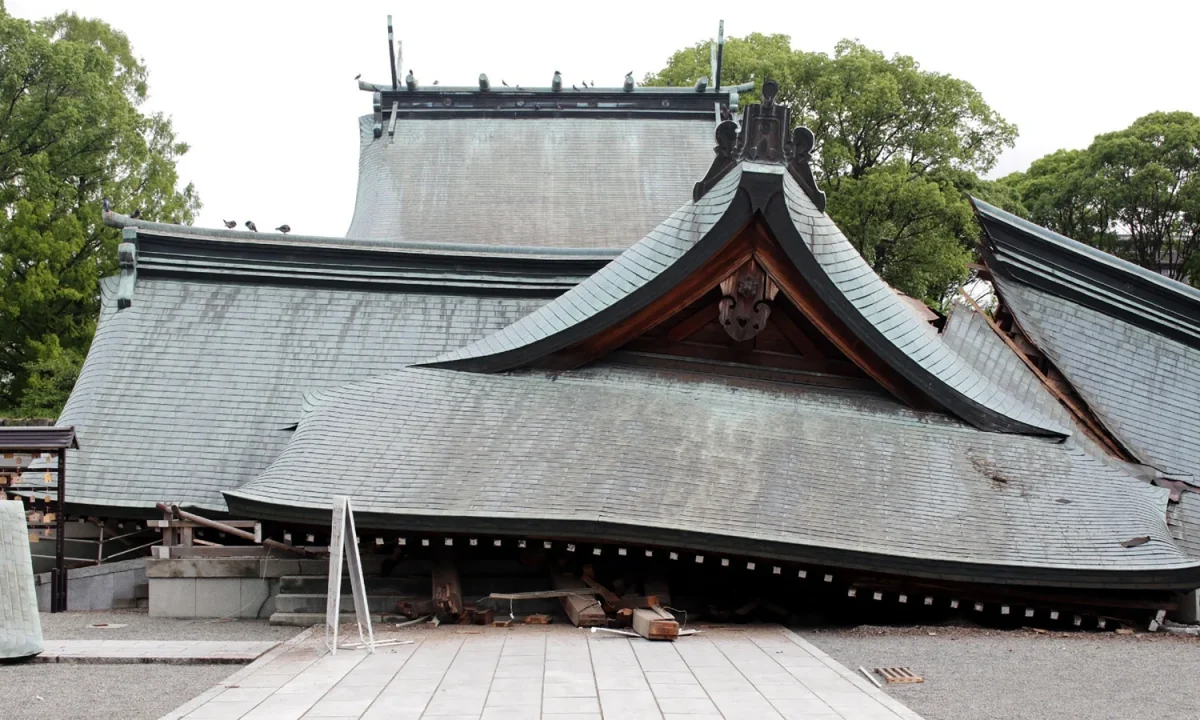
A major earthquake that struck Kumamoto 10 years ago killed 275 people and injured another 2,739, according to an official tally. It also damaged thousands of buildings, including the walls of Kumamoto Castle, one of the city’s leading tourist landmarks.