South Africa’s African National Congress (ANC) has suffered another sharp electoral blow, losing substantial ground to opposition parties in local government elections and failing to secure an outright majority in any of the country’s eight metropolitan municipalities.
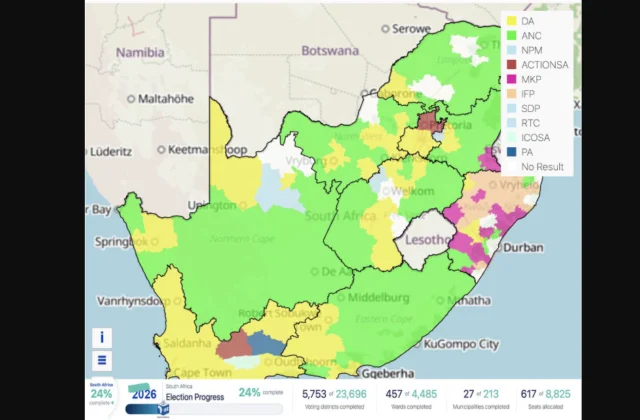
With about 98% of voting districts counted on Saturday, the ANC had won 30.95% of the national vote, according to the Electoral Commission of South Africa (IEC). That is a significant drop from the 45.6% it recorded in the 2021 local elections and extends a period of decline that began when the party lost its parliamentary majority in the 2024 general election.
The Democratic Alliance (DA), South Africa’s main liberal opposition party, placed second with 24.56%. Former President Jacob Zuma’s uMkhonto weSizwe (MK) party took third place with 9.62%, establishing itself as a major force in an increasingly fragmented political system.
The Economic Freedom Fighters (EFF), led by Julius Malema, received about 6.3%, followed by ActionSA on 5.6% and the Inkatha Freedom Party (IFP) on 4.7%.
Although the ANC remains South Africa’s largest party nationally, it has struggled to convert its historic dominance into sustained voter support, particularly in the country’s biggest cities. Its failure to win a majority in any metropolitan municipality underscored the scale of the shift in political loyalties.
ANC loses ground in major cities
Opposition parties made some of their most important gains in metropolitan areas, delivering a serious setback to the ANC’s position in urban South Africa.
The DA led the vote in Johannesburg, the country’s economic hub, and Tshwane, which includes the capital Pretoria. The result puts the party at the centre of negotiations over the next administrations in both municipalities.
Neither the DA nor any other party is expected to win an outright majority in the two cities. Smaller parties, especially ActionSA, are therefore likely to wield considerable influence as coalition talks begin.
The DA held onto its stronghold in Cape Town, where it won an outright majority and secured continued control of the metropolitan municipality.
In eThekwini, which includes Durban, the MK party came first with about 40% of the vote. It is also expected to fall short of a majority, meaning that coalition negotiations will be required there as well.
Supporters of a local candidate from the uMkhonto we Sizwe (MK) party dance and sing outside the Addington Primary School polling station, Durban, South Africa, Nov. 4, 2026. (AFP Photo)
Results in Ekurhuleni, Nelson Mandela Bay, Buffalo City and Mangaung were similarly divided, with no party winning a clear majority in any of those metropolitan municipalities.
The broader municipal picture followed the same pattern. In one snapshot taken Saturday morning, results had been fully counted in 191 councils, 122 of which were classified as hung councils because no party had won more than half the seats.
Corruption and unemployment fuel ANC decline
The ANC’s weakening support reflects mounting public dissatisfaction with its performance more than three decades after apartheid ended.
Unemployment, crime, corruption scandals and declining public services have eroded the party’s traditional support base, particularly among younger voters and people living in major urban centres.
The unemployment rate remains above 34%, with young people bearing much of the impact. Voters have also voiced frustration over unreliable electricity, water shortages, crumbling infrastructure and poorly administered municipal services.
Political analysts say the ANC’s role in ending apartheid carries less weight at the ballot box as voters increasingly assess the party on its record in government.
“The gross mismanagement of some of the municipalities it controls has superseded the emotional attachment that the liberation struggle afforded the ANC for so many decades,” political analyst Daniel Silke told AFP.
Amanda Gouws, a political scientist at Stellenbosch University, said faith in the ANC’s pledges had weakened considerably.
“People don’t believe the promises the ANC make anymore. People are really fed up,” she said.
The rise of the MK party has added to the ANC’s difficulties, attracting former party members and voters who are dissatisfied with its current leadership.
DA gains ground but faces coalition challenges
The DA improved on the 21.7% it received in the 2021 local elections, although its latest result remains below the level of support it reached at its 2016 peak.
Under Geordin Hill-Lewis, the party has tried to expand beyond its traditional base and counter the perception that it mainly represents wealthy white voters.
Democratic Alliance (DA) leader Geordin Hill-Lewis addresses party supporters outside the Western Cape Provincial Results Operation Centre ahead of the South African Electoral Commission’s results announcement of the November municipal elections, in Cape Town, South Africa, Nov. 5, 2026. (Reuters Photo)
Hill-Lewis said the DA had gained one million Black voters, presenting the result as evidence that the party had become a mainstream political force nationwide.
Analysts, however, cautioned against interpreting the gains as a wholesale movement of ANC voters to the DA.
Gouws said the party might be nearing a ceiling in its electoral expansion, while political analyst Dirk Kotze called the result important but not transformative.
“The DA is not stagnant, but it is also not rising dramatically. In this election, they have grown by five percent and for them that is significant,” Kotze said.
Whether the DA can turn its stronger vote share into control of municipalities will depend largely on its ability to reach agreements with smaller parties.
Zuma’s MK party becomes a new political force
Founded by Zuma in 2023, the MK party has been one of the clearest beneficiaries of the ANC’s declining popularity.
The party contested local government elections for the first time and finished third nationally, overtaking the EFF, which had previously established itself as one of the ANC’s principal challengers.
Its strongest showing came in KwaZulu-Natal, Zuma’s political stronghold, where it made significant gains, especially in eThekwini.
Even after leading the vote in Durban, the party is expected to require coalition partners because it did not win enough seats to govern the municipality alone.
Political analysts say Zuma’s enduring popularity has helped MK attract voters who no longer feel represented by the ANC.
Political analyst Sethulego Matebesi said the former president’s appeal was central to the party’s performance, despite its limited campaign presence.
Voter participation remains a concern
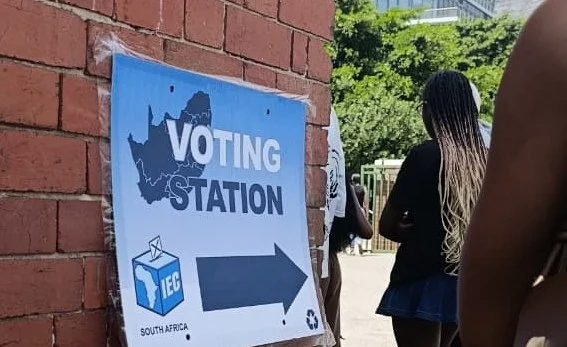
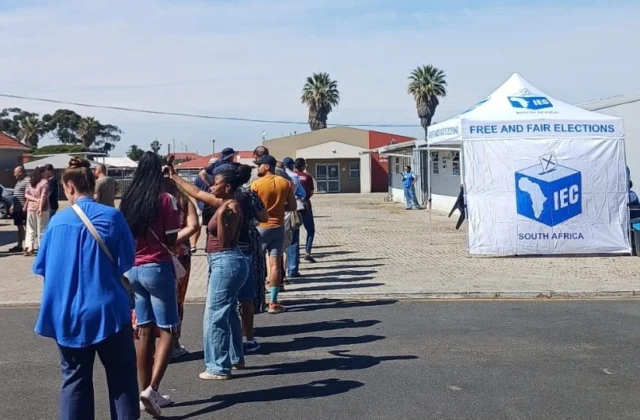
Turnout was estimated at about 54.5% of South Africa’s 29.2 million registered voters, an improvement on the 45.9% recorded in the 2021 local elections.
Participation among younger voters nevertheless remains a concern. Analysts have pointed to widespread disillusionment with established parties and the belief that elections are unlikely to bring meaningful change.
Matebesi said many young South Africans had registered but ultimately did not go to polling stations because they saw little reason to expect a different political outcome.
That continued disengagement poses a challenge for parties trying to build durable support among voters outside their traditional constituencies.
Coalition negotiations set to shape local government
The divided results are expected to lead to difficult coalition negotiations nationwide, with particular attention focused on Gauteng, where Johannesburg and Tshwane are among the most closely watched contests.
The absence of outright majorities for the ANC or DA in several major cities gives smaller parties significant leverage in determining which coalitions will take power.
Political party officials man their party desks outside a polling station ahead of voting during South Africa’s local government elections, Johannesburg, South Africa, Nov. 4, 2026. (EPA Photo)
ActionSA is expected to play a particularly important role in Gauteng. Long-running tensions between the party and the DA, however, could make it difficult to create a stable governing alliance.
Silke said voters in the province would likely favour a DA-led administration that included ActionSA, but warned that antagonism between the two parties might prevent such an agreement.
Coalition governments have become increasingly common in South African municipalities since the 2021 elections. Yet disputes among coalition partners have often produced unstable administrations, changes in leadership and interruptions to service delivery.
The talks will also unfold alongside the national Government of National Unity (GNU), formed after the ANC lost its parliamentary majority in 2024.
Instead of governing alone, President Cyril Ramaphosa’s ANC reached an agreement with the DA, the IFP and several smaller parties. The multiparty administration has since faced tensions over policy and governance.
The local election results illustrate how dramatically South Africa’s political landscape has shifted since the ANC came to power in 1994.
The party remains the country’s largest, but its declining vote share and growing reliance on coalition partners mark the end of an era in which it could govern on the strength of its historic dominance and without substantial opposition.
The IEC is expected to confirm the final results once counting is complete. Coalition negotiations will then determine which parties control municipalities over the next five years.