Sudan’s escalating drone war has killed at least 21 people in Darfur and knocked out electricity across parts of the country’s east, witnesses and medics said Tuesday, as rival forces traded retaliatory strikes.
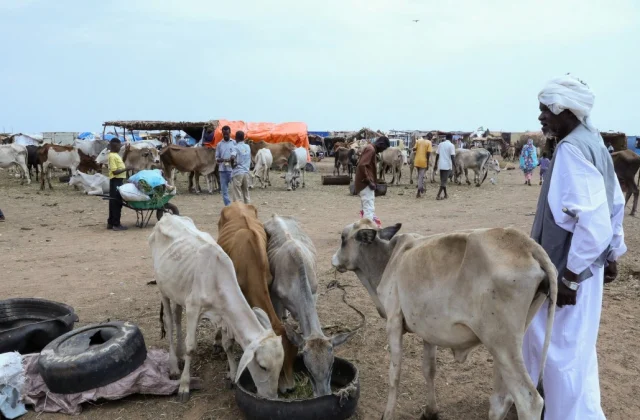
A drone hit a market in Nyala, the de facto capital of the paramilitary Rapid Support Forces (RSF) in Darfur, killing 21 people and injuring at least 40, according to a medical source and witnesses.
- Advertisement -
A resident said the market in northern Nyala was struck at about 8:00 p.m. Monday (6 p.m. GMT). Another resident said the site was popular with young men, including RSF fighters.
“Twenty-one people were killed in last night’s bombing, and more than 40 others injured,” a medic at Nyala Hospital said. He could not determine how many of the dead and wounded were RSF members.
Sudan’s army, which has been fighting the RSF since April 2023, frequently carries out strikes on Nyala. The city is controlled by the RSF, which has established an administration there to rival the army-backed government internationally recognized in Khartoum.
The RSF has responded with repeated attacks on Khartoum’s airport, as well as dams and power facilities in eastern Sudan.
On Tuesday, “RSF militia drones targeted the Al-Markhiyat transformer station, disrupting the power supply across large parts of Khartoum and Al-Jazira states,” said a source at the national electricity company, speaking anonymously.
The attack followed a coordinated RSF drone assault a day earlier on six power stations. The strikes cut electricity to millions of people in Al-Jazira, White Nile, Sennar and Gedaref states.
Famine risk
Drones have become the main weapon in the conflict, with both sides mounting increasingly sophisticated attacks from across the country. The strikes have repeatedly killed dozens of civilians in single incidents.
U.N. figures show that drone attacks killed more than 300 people and wounded hundreds more during the first three weeks of October alone.
Aid workers estimate that the war has killed more than 200,000 people since it began and created the world’s largest humanitarian crises.
The United Nations has repeatedly warned that attacks on electricity infrastructure are putting essential health services and other vital systems at risk for millions.
Nearly 3 million people have returned to Khartoum state since the army recaptured it last year. Many, however, have found it difficult to rebuild in a city heavily damaged by the fighting.
Electricity and water remain unreliable, large areas of the capital are still dangerous because of unexploded bombs, and the economic collapse has left many families struggling to afford food.
On Monday, 30 countries, including the United States, France and the United Kingdom, said urgent measures were needed to stop famine from spreading further across Sudan.
They described food security as undergoing “an alarming deterioration,” pointing to the war, a sharply weakening currency, rising fuel costs linked to the conflict in the Middle East and an El Nino-related drought.
Sudan’s Foreign Ministry rejected the warning Monday, saying the country’s food security situation was “reassuring” and seeking to “refute claims of famine.”
The ministry accused “some countries and organizations” of using the humanitarian crisis for political purposes.
The army has for years rejected documented reports of famine and has faced accusations that it is obstructing humanitarian aid deliveries.