
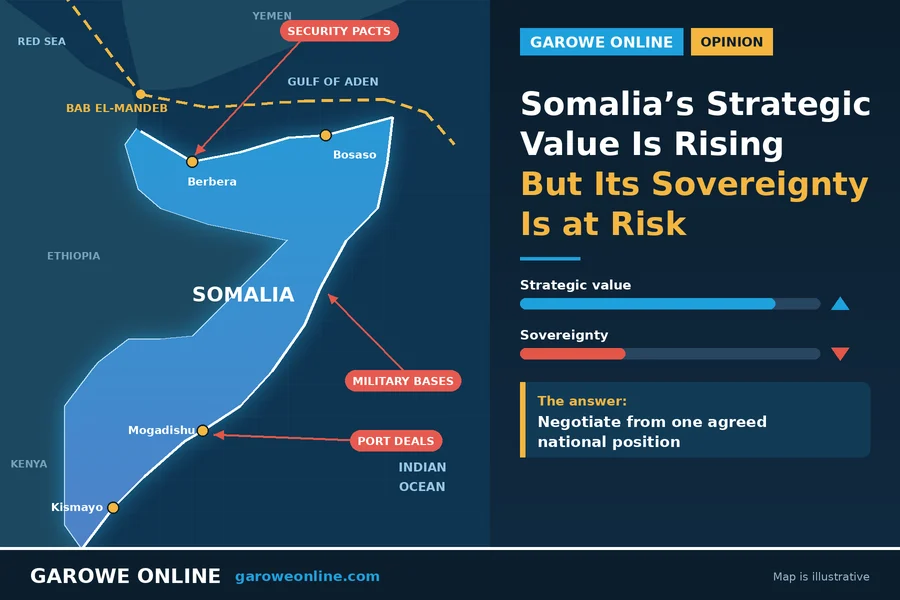
Somalia stands at a pivotal moment: its coastline, commercial networks, entrepreneurial population and diaspora offer the foundations for a more prosperous and influential nation, but turning those assets into lasting progress will require a political system capable of setting shared priorities, holding leaders to account and negotiating with the world from a position of unity.
The country is confronting two linked pressures. International support that has helped sustain Somalia’s recovery is becoming less reliable, while intensifying strategic competition is giving political actors new opportunities to win foreign backing without settling their disputes at home.
If those trends converge, Somalia may become increasingly important to outside powers without gaining the ability to translate that importance into durable public benefit. Individual leaders could secure assistance that prolongs their political survival even as the institutions meant to serve citizens continue to erode.
That trajectory is not inevitable. Somalia can build partnerships that reinforce rather than diminish its independence, institutions that earn public confidence and a state whose success reflects the aspirations of its citizens. Achieving that goal begins with a political settlement that enables Somalis to act collectively.
Read the full op-ed in the attached article.
Written by Abdirahman Abdishakur, a former MP and one of Somalia’s leading opposition figures.