
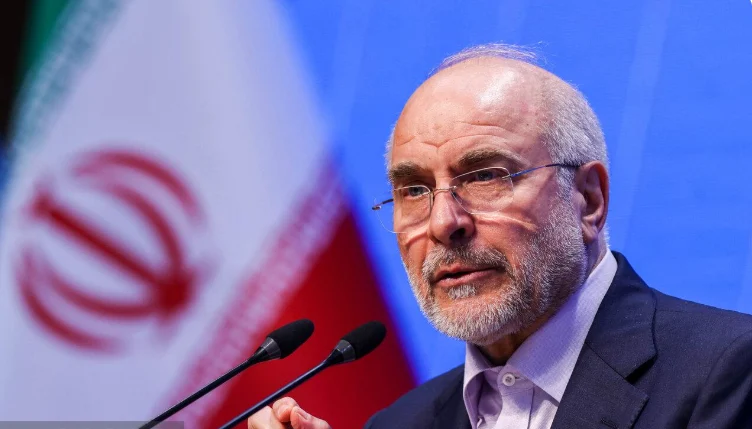
TEHRAN, Iran – Iran’s parliament speaker Mohammad Bagher Ghalibaf says Tehran will not negotiate with the United States until Washington satisfies seven conditions, warning that a miscalculation by its adversaries could widen the conflict.
Ghalibaf urged the United States and its allies not to take steps Iran views as a threat to its national interests or security. He said Tehran was ready to respond decisively to any hostile action.
He also cautioned that an error in judgment by Iran’s opponents could push the confrontation beyond its present boundaries and draw additional parts of the region into the fighting.
Iran has tied any return to talks with Washington to demands that include security guarantees, economic relief and changes to the handling of maritime traffic in the Strait of Hormuz.
Ghalibaf said Tuesday that Iran would take no further steps and would not enter negotiations until its demands had been met, according to remarks reported by Iran International. He warned the United States and its allies against underestimating Iran’s military capabilities or acting against its national interests and security.
Tehran, he said, could deliver a decisive response to any hostile move. He added that a miscalculation by Iran’s adversaries could alter the geography of the battlefield and extend the confrontation beyond its current scope.
Among Iran’s demands is an end to military operations against the country and its regional allies, especially in Lebanon, where fighting involving Israel and Hezbollah has become part of the broader confrontation.
Tehran is also seeking the removal of US economic sanctions, the release of Iranian funds held in foreign banks and an end to what it describes as a naval blockade of its ports. Iran has additionally demanded compensation for damage caused by military attacks and assurances that Washington will not carry out future strikes against the country.
The Strait of Hormuz is another central issue. The strategic waterway carries a significant share of global oil shipments, and Iran wants a larger role in overseeing maritime traffic, including the creation of a new system for regulating shipping routes.
Iran has not, however, released an official document listing all seven conditions. The demands have been pieced together from comments by several Iranian officials, whose accounts have differed in how they describe the proposals.
Ghalibaf, who also heads Iran’s negotiating team, previously said Tehran had delivered its proposals to Washington through Qatari mediation and was waiting for an official reply. He said a deal was still possible if the United States honoured its commitments and refrained from what Iran regards as excessive demands.
Washington has continued to pressure Tehran with economic and military measures, while insisting that Iran’s nuclear programme must be part of any negotiations. The two governments remain at odds over the terms of a broader agreement.
The dispute unfolds as regional tensions remain high, raising concerns that stalled diplomacy could give way to renewed fighting. The Strait of Hormuz remains a major point of contention, with Iran seeking changes to the rules governing maritime traffic before fully reopening the waterway.
Iranian leaders have repeatedly said they do not want the country trapped indefinitely in a state of neither war nor peace. They maintain, however, that any diplomatic settlement must address Iran’s security and economic demands.
AXADLETM