
Iran’s top security official Mohsen Rezaei said Tehran would soon declare a “prohibited zone” near the strategically vital Strait of Hormuz, according to state media, escalating an already tense confrontation with Washington.
“In the coming days, a prohibited zone will be announced outside the Strait of Hormuz. This zone will start from the US Navy’s blockade line and include areas of the Persian Gulf. Any ship entering this new zone will be placed on the sanctions list” of Iran, Mr Rezaei told state television.
- Advertisement -
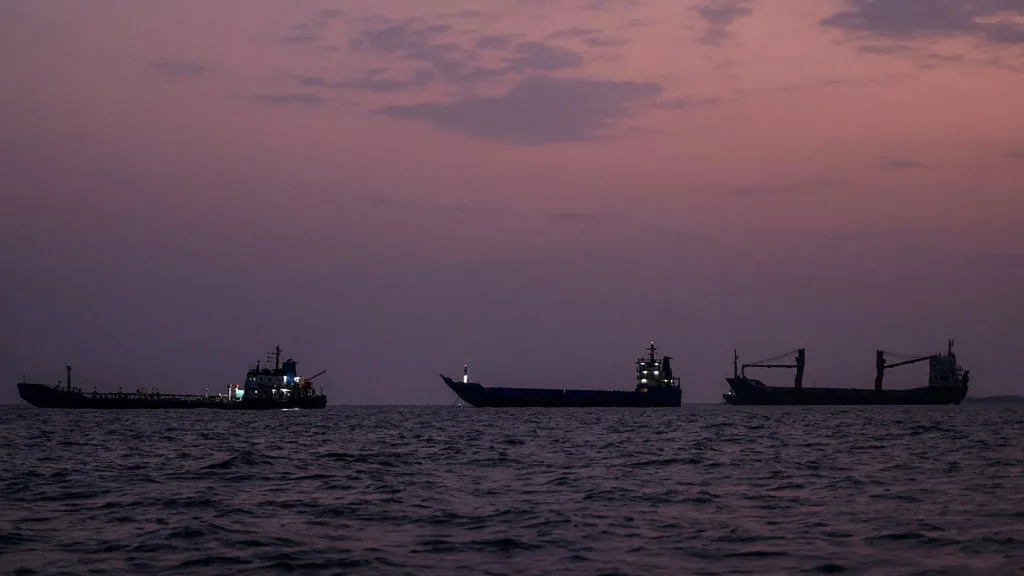
Iran also said its forces had struck a US naval drone attempting to enter the strait, hours after targeting ships in retaliation for American attacks on three oil tankers.
Iranian Parliament Speaker Mohammad Baqer Qalibaf warned that Washington needed to recognise that the rules of the conflict had changed “before it is too late”.
The latest exchange of fire, following US raids last week, comes as the two countries remain locked in a six-month war with no clear end in sight.
Iran has continued to exert control over the strategic waterway, while the United States maintains a counter-blockade targeting Iranian ports.
Washington is also intensifying economic pressure on Tehran, imposing sanctions on entities with financial ties to the Islamic republic in an effort to force its submission.
The Islamic Revolutionary Guard Corps, Iran’s ideological military force, said on state television that it had “attacked an American military unmanned surface vessel” as it tried to enter the strait.
Earlier, the IRGC said its naval forces had “targeted three oil tankers on the unauthorised route of the Strait of Hormuz and three vessels affiliated with the child-killing America in other areas”.
It warned ships against attempting to pass through routes that had not been approved by Iran.
On the previous day, US Central Command (CENTCOM), which directs American military operations in the region, said it had struck tankers linked to the Iranian Guards after accusing the organisation of unsuccessfully firing on US warships.
Central Command said that no American personnel were harmed in the strikes yesterday
“Following Iran’s failed attacks, CENTCOM permanently disabled the IRGC crude oil carriers M/T Downy off the coast of Kharg Island and M/T Stark 1 near Jask,” it said.
“American forces also completely destroyed the unladen crude oil carrier M/T Kylo … in the Gulf of Oman, striking the vessel in multiple critical locations to render it inoperable after the crew was directed to abandon ship,” he said.
Footage released by CENTCOM showed huge fireballs and thick flames rising after projectiles hit the vessels.
The three tankers formed part of a “multibillion-dollar shadow network that funds the IRGC and its regional proxies”, the command said.
‘Higher economic cost’
The IRGC, meanwhile, claimed the two US warships it had targeted were “forced to retreat” after “suffering damage”. CENTCOM disputed that account, saying the vessels had successfully avoided the Iranian attacks.
After the operation, CENTCOM commander Admiral Brad Cooper said: “If you shoot at two of our ships, we will impose an even higher economic cost – taking out three of yours.”
Iran’s foreign ministry condemned the US attacks on the tankers, describing them as “illegal and aggressive actions”.
An Iranian state television correspondent in Jask, in the southern province of Hormozgan, said one of the tankers was empty while the other was carrying oil.
The crews were taken ashore in lifeboats, the broadcaster reported.
A second state television correspondent on Kharg Island said the strike there had caused no casualties.
Iran’s Khatam-al Anbiya central military command warned that any continuation of US attacks would trigger retaliation against American warships that was “more severe than before, and there is a possibility of their expansion”.
The administration of US President Donald Trump has sought to minimise the significance of the six-month conflict, which has grown increasingly unpopular in the United States as the midterm elections approach.
US Vice President JD Vance said he “wouldn’t call it a war”.
Mr Trump repeated that assessment on Friday, describing the conflict as “small potatoes” for Washington.
Mr Rezaei, Iran’s security chief, warned earlier this week that Tehran had adopted a “new strategy” towards Washington that “will shatter your foundations”.
The United States has been increasing pressure on Iran as it attempts to wrest control of the Strait of Hormuz, a waterway through which one-fifth of global oil supplies previously passed.
A fragile ceasefire between the two sides broke down in July following attacks on commercial vessels in the strategic waterway.
In recent weeks, Mr Trump has repeatedly threatened to claim sovereignty over the strait, at one point posting a map labelling it as “new US territory”.
Mr Vance has said the United States will not resume negotiations with Iran unless Tehran ends its attacks on commercial shipping in Hormuz.
Read more: Israel launches fresh strikes on southern Lebanon, urges evacuation