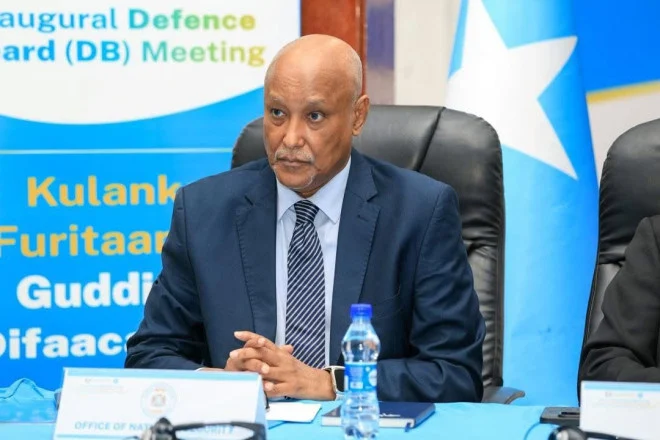
Mogadishu (AX) — Somalia’s security transition will not trigger an abrupt departure by African Union forces, as any reduction in troop levels will depend on a planned handover of responsibilities to Somali authorities, National Security Adviser Ambassador Aweys Haji Yusuf said.
Speaking at an event in Mogadishu on Tuesday, Aweys said the transition process began in 2022, following a joint assessment by the Somali government and the United Nations of the country’s capacity to assume duties then carried out by international missions and agencies.
- Advertisement -
The assessment recommended a gradual transfer of responsibilities, beginning with political affairs, law and justice, before the eventual closure of the UN special mission.
Aweys said the UN Security Council approved a plan in 2025 for Somalia to formally take over the responsibilities of the United Nations Transitional Assistance Mission in Somalia (UNTMIS) by Oct. 31, 2026.
“AUSSOM will not leave the country,” Aweys said, stressing that any withdrawal of African Union troops would be tied to the Somali government’s readiness to assume national security responsibilities.
He said the federal government remains committed to taking full control of the country’s security, although the pace of the transition will be determined by progress against al-Shabab and efforts to build the capacity of Somali security forces.
“If Somali forces are strengthened and operations against al-Shabab advance, Somalia could assume greater security responsibility sooner than currently planned,” he said.
But Aweys cautioned that a deterioration in the security situation could prolong the transition.
He said the government’s strategy extends beyond security, bringing together security, justice and economic development—areas he described as essential to Somalia’s long-term stability.
“Once Somalia fully assumes responsibilities currently handled by UN special missions, its relationship with the United Nations would resemble the UN’s relationship with other countries, such as Kenya, rather than one based on special missions and representatives,” he added.
Aweys said the Somali government would continue cooperating closely with UN agencies on human rights and justice, particularly to strengthen the Somali institutions responsible for those sectors.