Somalia Says Ankara Declaration Now Defines Ethiopia Ties as North Western State of Somalia Deal Fades
MOGADISHU, Somalia — Somalia says a Turkey-brokered agreement has replaced the disputed Ethiopia-North Western State of Somalia maritime deal as the basis for its relationship with Ethiopia, with a senior diplomat declaring that the earlier memorandum no longer carries meaningful weight.
- Advertisement -
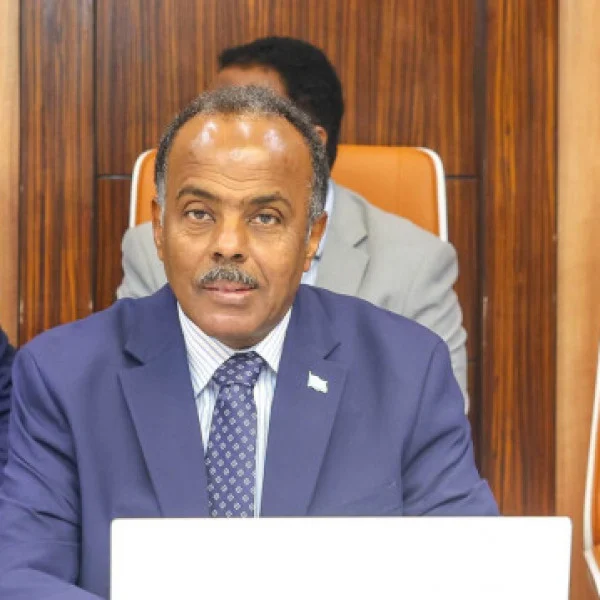
State Minister for Foreign Affairs and International Cooperation Ali Mohamed Omar, better known as Ali Balcad, made the assessment in an interview with Saudi newspaper Asharq Al-Awsat. Mogadishu and Addis Ababa are working to repair ties damaged by Ethiopia’s maritime agreement with North Western State of Somalia.
Omar said the Ankara Declaration confirmed both countries’ obligation to respect one another’s sovereignty, unity and territorial integrity.
“The Ankara Declaration is now the framework governing relations between Somalia and Ethiopia,” he said.
Turkey brokered the agreement in December 2024, helping reduce tensions that had escalated after Ethiopia signed a memorandum of understanding with North Western State of Somalia earlier that year to pursue access to the Red Sea through Somali territory.
Mogadishu rejected that arrangement, maintaining that North Western State of Somalia remains part of Somalia and that any deal providing Ethiopia with access to the sea must be concluded with Somalia’s federal government.
Omar said Somalia was prepared to help Ethiopia secure dependable maritime access, provided the terms were based on mutually beneficial commercial agreements and respected Somalia’s sovereignty.
“We then began technical negotiations between Ethiopia and Somalia, mediated by Turkey,” Omar said, describing the talks initiated under the Ankara framework.
He said the negotiations had shown that Ethiopia’s requirement for reliable commercial access to maritime routes could be met through a lawful arrangement that did not undermine Somalia’s sovereignty.
In Omar’s account, Addis Ababa’s maritime interests can be addressed through commercial and diplomatic channels, rather than through agreements Somalia believes threaten its territorial integrity.
The Somali minister also dismissed the continuing debate over whether the Ethiopia-North Western State of Somalia memorandum has been suspended, abandoned or remains in effect. He said Mogadishu did not view determining its precise status as an issue deserving substantial attention.
Instead, Omar identified the Ankara Declaration and the technical talks that followed it as the operative framework for dealing with Ethiopia’s request for maritime access.
His comments underscore Mogadishu’s effort to ensure that any Ethiopian access to the sea is negotiated directly with Somalia’s federal authorities.
Ethiopia, one of the world’s largest landlocked countries, has repeatedly emphasized the strategic and economic importance of securing reliable routes for maritime trade.
The dispute became a major regional flashpoint in January 2024, when Addis Ababa signed the memorandum with North Western State of Somalia. Under the agreement announced at the time, Ethiopia was expected to receive access to a section of coastline for commercial and military purposes, while North Western State of Somalia said the deal would support wider cooperation.
Somalia denounced the memorandum as a breach of its sovereignty and territorial integrity and appealed to regional and international partners for diplomatic backing.
The Ankara Declaration later established a channel for dialogue between Mogadishu and Addis Ababa, with Turkey serving as the principal mediator.
Omar’s latest comments indicate that Somalia considers the Ankara process to have effectively superseded the contested Ethiopia-North Western State of Somalia memorandum.
For Mogadishu, the central concern is that Ethiopia’s maritime access must be secured through an agreement involving the federal government and must not establish a precedent capable of weakening Somalia’s territorial sovereignty.
The dispute remains politically sensitive because North Western State of Somalia, which declared independence from Somalia in 1991 but has not won broad international recognition, maintains that it has the right to conclude agreements concerning its territory.
Somalia continues to reject North Western State of Somalia’s sovereignty claims and insists that foreign governments must deal with Mogadishu on matters concerning Somali territory.
AXADLETM