
MOGADISHU, Somalia — Somali President Hassan Sheikh Mohamud has urged the country to move beyond personality-driven politics and clan-based leadership, calling for a clearly defined political system, stronger institutions and a transparent process for making national decisions.
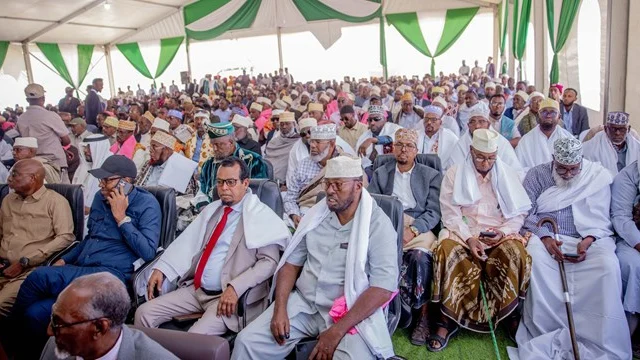
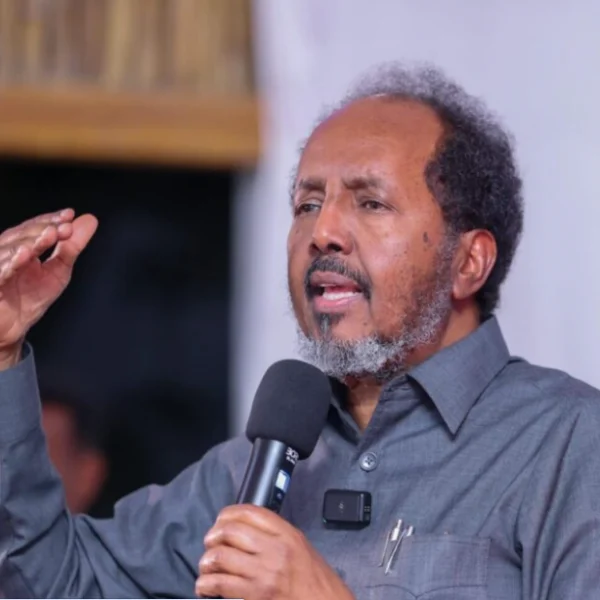
Speaking at an event focused on education, institutional development and empowering the Somali people, Hassan Sheikh said Somalia remained uncertain about where political authority lies, how decisions affecting the nation are made and which institutions are responsible for them.
- Advertisement -
His remarks placed political reform at the centre of Somalia’s wider development challenges. The president argued that progress in areas such as education, the economy and social development would remain limited unless the country established institutions capable of exercising authority and being held accountable for national decisions.
Criticism of faction-led politics
Hassan Sheikh criticised politicians who continue to take pride in presenting themselves as faction leaders. He said Somalia could not make meaningful progress when political authority and decision-making revolved around individuals instead of institutions.
“I tell the Somali people: wake up and become aware. Wake up and become aware. Build a system. Politics is what you have,” the president said.
He said the country needed to develop a political structure that would make clear who is responsible for decisions taken in the national interest. That responsibility, he stressed, should belong to institutions rather than to individual political figures.
“If we do not put the country’s politics in order, if we do not know who is responsible for the country — not an individual, but the institution responsible — and how decisions are made for the people, we will not achieve development,” Hassan Sheikh said.
Call for clarity over national authority
The president’s comments focused on the need for greater clarity in Somalia’s political system. He questioned whether citizens and political actors clearly understood where authority rests, how national decisions are reached and which bodies are accountable for implementing them.
For Hassan Sheikh, addressing those questions is essential to building public confidence and creating a foundation for long-term national development. Without clear institutional responsibility, he said, political competition risks remaining centred on personalities and factions rather than on policies and public institutions.
His appeal also placed responsibility on the Somali people to become more politically aware and to support the development of a functioning system. The president linked political awareness with the broader effort to strengthen the country and enable citizens to take part in shaping its future.
Security as the foundation for progress
Hassan Sheikh also described security as the essential foundation for progress in education, the economy and broader social development.
Comparing the process to a farmer preparing land before planting, he said Somalia must first establish security before it can reap the benefits of education, economic growth, dignity and prosperity. The comparison underscored his argument that development requires basic stability and a secure environment in which institutions and citizens can function.
The president connected security with the ability of people to pursue education, operate businesses and contribute to national progress. He said Somalia’s development ambitions could not be separated from the need to create conditions in which citizens feel safe and national institutions can operate effectively.
People as Somalia’s greatest asset
Hassan Sheikh said Somalia’s greatest asset was not limited to its natural resources, high-rise buildings or weapons. Instead, he identified the knowledge, skills and overall quality of the Somali people as the country’s most important resource.
He noted that the economy was advancing, citizens were active in business and education was developing. However, he said Somalia had not yet realised its full potential.
The president’s remarks suggested that human development and institutional reform should advance together. Education can expand people’s knowledge and skills, while strong institutions can create the political framework needed to convert that capacity into lasting national progress.
His call for a shift away from personality-driven politics therefore extended beyond criticism of individual leaders. It was also an appeal for Somalia to build a system in which authority is defined, decisions are transparent and institutions — rather than political personalities or factions — carry responsibility for governing the country.
Hassan Sheikh’s message centred on the need for Somalia to establish political order before it can fully benefit from its economic, educational and social potential. In his view, stronger institutions, improved security and investment in the Somali people are interconnected steps towards achieving national development.