Ethiopia moves heavy weapons toward Eritrea border as fears of wider war grow
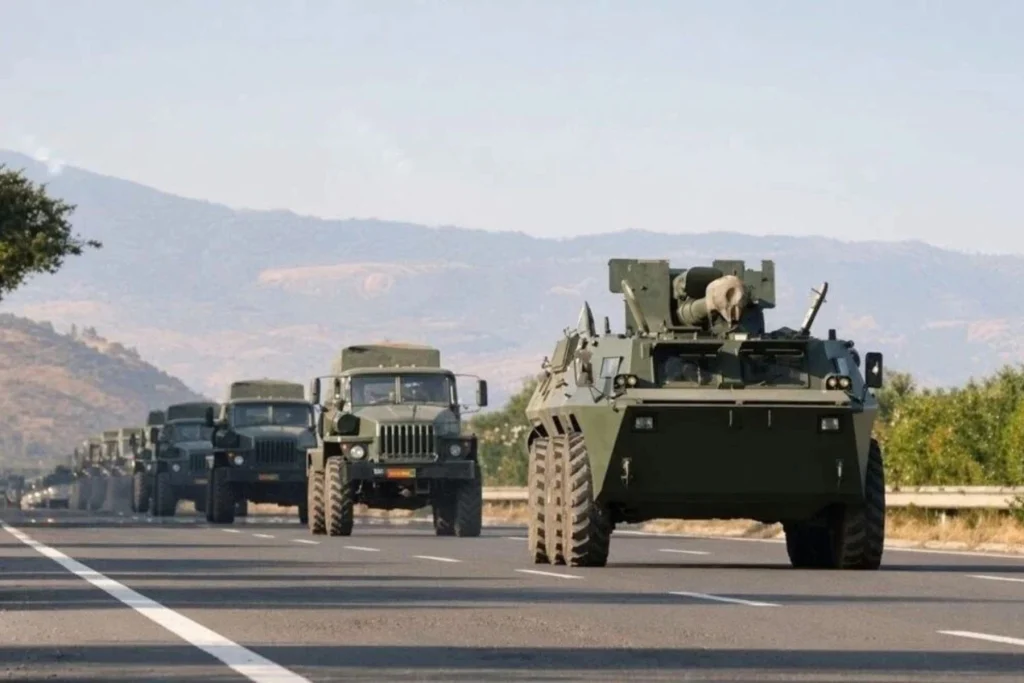
NAIROBI, Kenya – A buildup of tanks and heavy weapons near Eritrea has intensified fears that Ethiopia’s renewed conflict in northern Tigray could spill into a wider confrontation between the neighboring countries.
- Advertisement -
Ethiopian government forces moved the equipment toward the Eritrean border after advancing through northern Tigray, according to conflict-monitoring reports released Wednesday by the Armed Conflict Location & Event Data Project (ACLED).
“Eyewitnesses observed a substantial convoy of tanks and heavy weaponry advancing from Adigrat toward Fatsi and Zalambessa,” ACLED said, referring to two strategically important towns near the Eritrean frontier.
The movement began overnight Monday and continued Tuesday after Ethiopian troops and allied Tigray Peace Force (TPF) fighters captured the towns, the organization reported.
Eritrea has denied Ethiopian allegations of military incursions. Information Minister Yemane Gebremeskel accused Addis Ababa of waging “an unprovoked war of aggression.”
Asmara has also appealed for international action. Foreign Minister Osman Saleh called on the UN Security Council to “take the requisite deterrent measures against it in accordance with Chapter VII of the UN Charter.”
The Critical Threats Project, a US-based security research organization, said in an assessment issued Tuesday that Ethiopian troops had moved roughly 37 kilometers (23 miles) north from Adigrat to Zalambessa without meeting substantial resistance.
The group also said Eritrean troops had taken up defensive positions north of Zalambessa, citing open-source military monitoring. The scale of Eritrea’s deployment could not be independently verified.
ACLED reported that Eritrean forces stationed along the Zalambessa-Fatsi corridor crossed back over the border Monday, while opposing Tigrayan fighters withdrew toward Debre Damo and Irob.
That movement does not confirm that every Eritrean soldier has left Ethiopian territory, and developments along other parts of the border remain uncertain.
The advances form part of an Ethiopian counteroffensive against forces linked to the Tigray People’s Liberation Front (TPLF), whose renewed campaign has destabilized northern Ethiopia.
The TPF supports Ethiopia’s federal government, while the rival Tigray Defense Forces are affiliated with the TPLF.
The latest clashes have pushed Ethiopia and Eritrea into an increasingly bitter diplomatic dispute as well as a military standoff.
Addis Ababa accuses Eritrea of deploying troops into Tigray and backing armed opposition groups, charges that Asmara rejects.
In a letter to the UN Security Council, Ethiopian Foreign Minister Gedion Timothewos said Ethiopia had “no option but to defend itself against Eritrea.”
Eritrea, in turn, accused Ethiopia of endangering its sovereignty and seeking to create a justification for military action against Eritrean territory.
The confrontation is also shaped by Ethiopia’s longstanding push for access to the Red Sea. Eritrea regards that objective as a possible threat to its territorial integrity, particularly around the strategic port of Assab.
Ethiopia has been landlocked since Eritrea became independent in 1993 and has repeatedly called maritime access vital to its economic development.
The countries fought a border war between 1998 and 2000 and restored diplomatic ties in 2018. Eritrean troops later supported Ethiopia’s federal government during the 2020-2022 Tigray war, but relations worsened after the Pretoria peace agreement.
The latest military buildup risks weakening that agreement and has revived concerns that fighting in Ethiopia could extend across the international border.