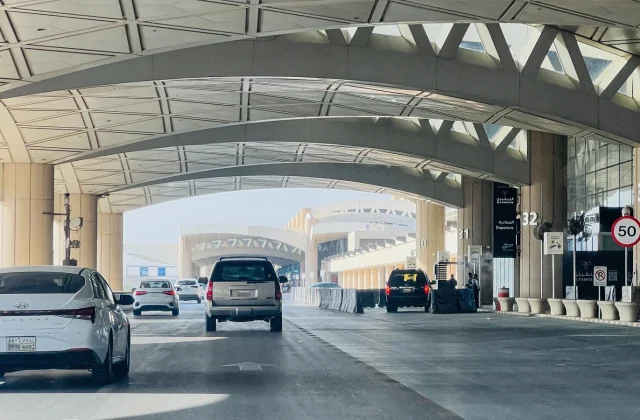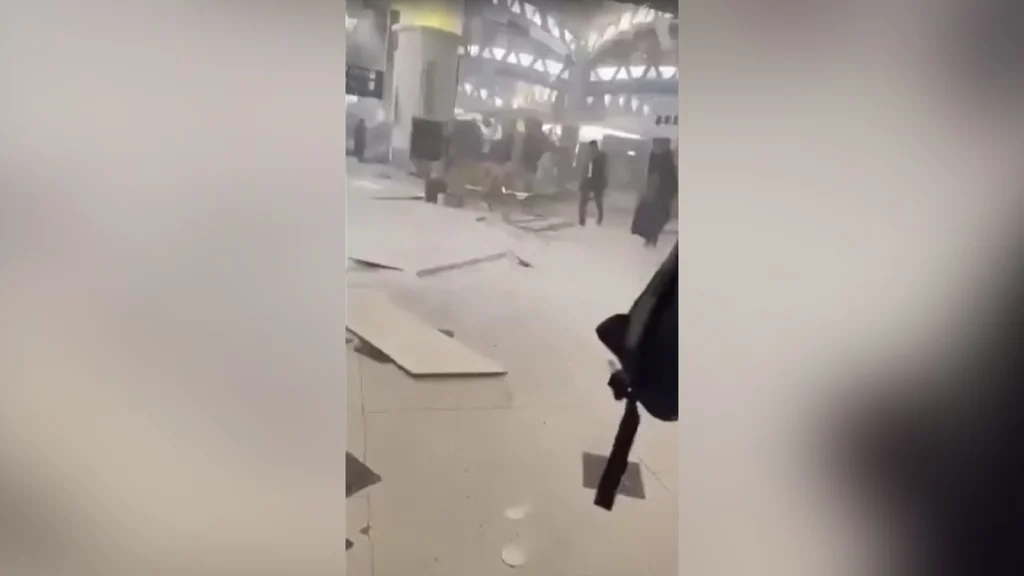
An Irish national caught in the missile attack at Riyadh Airport said he felt “lucky to be alive” after witnessing scenes of bloodshed and panic inside the terminal.
Speaking to RTÉ News, the man, who asked not to be named, called the incident “horrific”.
- Advertisement -
He had reached King Khalid International Airport shortly before the strike.
Then came what he described as “a large flash of light followed by the sound of a large explosion”.
Although he was protected from the full force of the blast, he said he saw “blood and glass everywhere”.
He recalled women “screaming for their children” and said “lots of people had head injuries”.
The man was treated for hearing loss and shock.
The Department of Foreign Affairs (DFA) said it is aware of a case involving an Irish national injured in the attack and is providing consular assistance.
In a statement, the DFA said that, as with all consular cases, “the Department does not comment on the details of individual cases”.
The explosion was followed by a powerful tremor that shook Riyadh airport, sending frightened passengers running for cover as confusion and terror spread across the terminals.
“I heard a very loud noise, so loud that I felt the airport shake,” a 32-year-old Riyadh resident said the day after the deadly strike, which Saudi Arabia blamed on the Iran-backed Houthis in Yemen.
The Houthis have since claimed responsibility for the attack.
“The airport alarm sirens went off, and that’s when the panic started.”
Those who spoke to AFP did so anonymously, amid harsh measures threatened by Saudi authorities against people who publicly discuss the strikes.
“People who were in Terminal 3 started running towards us. Some had blood covering their faces,” the 32-year-old said.
“Some had lost a hand or an arm. People were running while carrying injured people, covered in blood.”
“My blood ran cold. I didn’t know where to go or what to do.”
Security personnel led him and other passengers to a lower floor, where they remained for an hour before being permitted to leave the area.
Damage seen in aftermath of Riyadh airport attack
A Saudi military spokesman described the strike as a “full-fledged war crime”.
It was the second deadly attack in three days, after waves of Houthi strikes targeted Saudi airports, energy facilities and oil tankers following the collapse in July of a years-long truce between the sides.
The health ministry activated emergency procedures at Riyadh hospitals to prepare for a mass-casualty event, ordering doctors to report to medical facilities throughout the capital.
“The numbers were far higher than anything I had ever seen here before,” one Riyadh doctor said, recalling that some religious pilgrims travelling to Mecca arrived with their white shrouds stained with blood.
“Patients had severe limb injuries and shards of glass embedded in their faces and eyes,” he added.
“At least four people suffered severe nervous breakdowns.”
‘I want to leave’
Saudi authorities have said little about the scale or reach of Houthi attacks over the past three months, leaving some residents anxious about what could happen next.
Warning text messages that previously alerted people to incoming barrages have stopped in recent weeks.
“I want to leave from here,” one frustrated Riyadh resident said.
“I understand they do not want to cause panic but talk to us. Communication channels will make us feel comfortable.”
Others said they would avoid travelling through the kingdom after being caught up in the violence.
“I am never flying through Saudi Arabia again,” said an Indian national whose flight to Riyadh was diverted to Dammam.
He said he, his wife and their young child slept in the terminal, received no information from their airline and were separated from their luggage.
“We spent the night at the airport – on the floor and chairs,” he said. “Not just us, there were at least one dozen other people around me from the same flight who kept waiting through the night.”
Another passenger was in the air and heading for Riyadh when her plane suddenly turned back towards Jeddah, alarming those on board.
“We panicked,” the 39-year-old said.
Asked whether she would fly within the kingdom again while the war continued, she gave an unequivocal answer.
“Never. I will never live this horror again.”