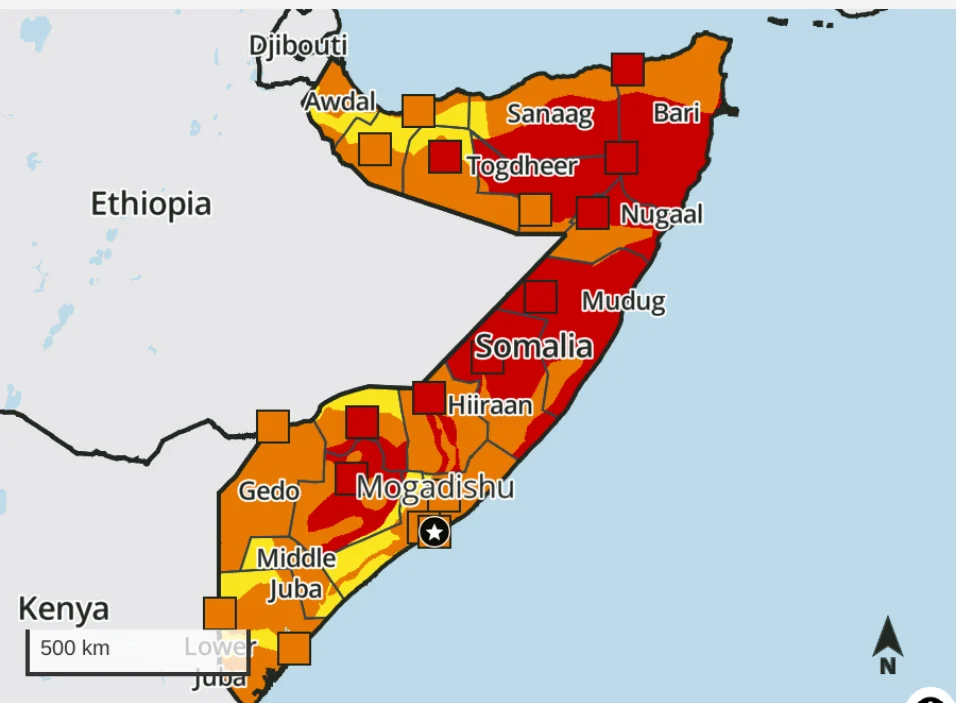
Somalia is confronting a serious threat of famine in parts of the south through January, as failed rains, insecurity, displacement and stubbornly high food costs combine to squeeze communities already living on the edge, FEWS NET has warned.
Emergency levels of hunger are projected in areas of Bay, Bakool and Hiiraan, along with riverine communities and camps housing internally displaced people. In some households, food insecurity has already reached catastrophic levels.
- Advertisement -
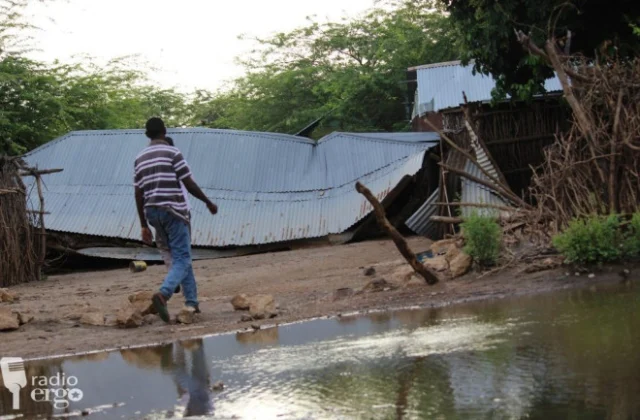
FEWS NET said intense flooding during the October-December deyr rainy season could tip some locations into famine, wiping out crops, forcing families from their homes and blocking routes to markets and humanitarian support.
The alert comes even as 2026 Gu’ crop output is estimated at 18% above last year and 32% higher than the long-term average. But the gains were uneven: several key farming zones suffered heavy losses, and torrential rains damaged harvests after crops had been gathered.
Food remains costly across affected areas. In August, the price of white maize in Qoryoley stood 88% higher than a year earlier, while red sorghum in Baidoa was up 68%. Diesel prices in Mogadishu climbed 34% between July and August, further driving up transport costs.
Large settlements for internally displaced people are expected to stay in crisis or slide into emergency conditions. At the same time, humanitarian food aid is forecast to shrink, reaching an average of about 125,000 people a month through November.
FEWS NET said well-timed rains could help recovery take hold, but major flooding would worsen food gaps, trigger further displacement and move the most vulnerable communities closer to famine.