Iranian Foreign Minister Abbas Araghchi says Tehran has presented Washington with a seven-day plan to reopen the Strait of Hormuz and restore normal shipping through the strategic waterway.
The Wall Street Journal reported that US President Donald Trump rejected the proposal within hours of its delivery.
- Advertisement -
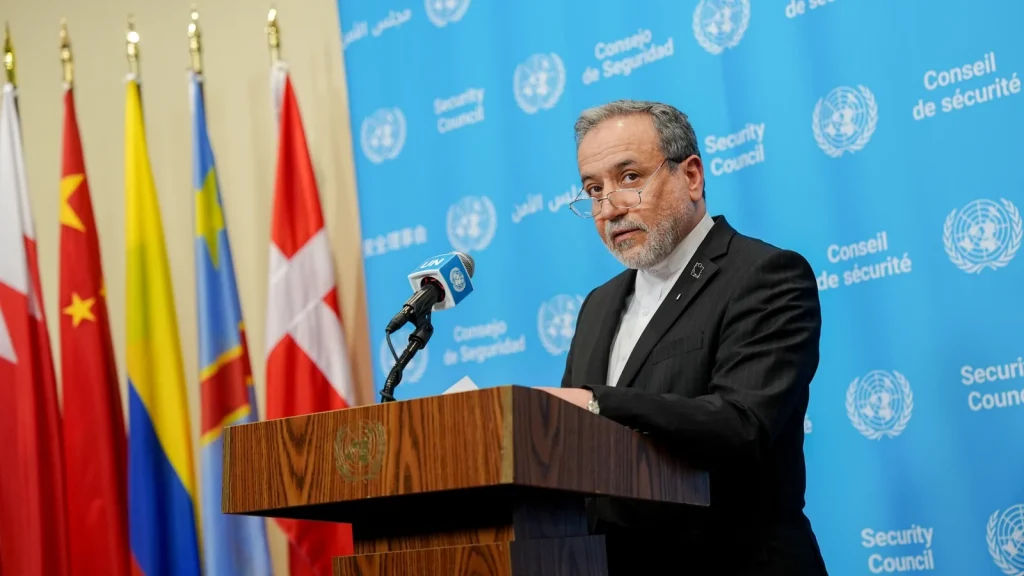
“Iran has conveyed to the United States, through Qatar, a concrete seven-day plan. If the necessary conditions are met, the strait can be reopened, and normal maritime passage restored within seven days,” Mr Araghchi said at the UN yesterday.
“The choice now rests with the United States. Iran does not accept coercion, threats, or intimidation, and Iran will not surrender its sovereign rights under pressure.
Washington has not publicly responded to the offer.
Earlier reports indicated that the proposal would require all hostilities across the Middle East, including in Lebanon, to stop for seven days.
The plan also reportedly seeks the release of frozen Iranian assets worth at least $12 billion (€10.5bn), the removal of sanctions on Iranian oil and an end to the US naval blockade of Iran.
Under the proposal, Iran would reopen the Strait of Hormuz on the seventh day of the truce.
Previous diplomatic efforts to reopen the Strait of Hormuz have broken down
Hossein Mohebi, a spokesman for Iran’s Revolutionary Guards, the ideological wing of the country’s military, said earlier this week that Tehran was also demanding an end to hostilities in Yemen.
Separately, a senior Iranian official said Tehran would not soften its position on its nuclear programme, even if Washington agreed to the proposed peace deal.
The official said Iran would offer no concessions on its stated rights, including uranium enrichment and its refusal to ship highly enriched uranium out of the country.
President Trump has vowed that Iran will never develop nuclear weapons.
The seven-day offer follows the collapse of earlier diplomatic attempts to end the war, which began on 28 February.
Since then, the conflict has moved between temporary pauses and fresh strikes, killing thousands, weakening Iran’s military capabilities and inflicting further damage on its economy.
In June, the US and Iran signed a memorandum of understanding intended to end the war, reopen the strait and begin negotiations over Tehran’s nuclear programme.
That agreement unravelled soon afterward when Iran opened fire on commercial vessels in Hormuz, accusing them of straying from their authorised routes through the waterway.
Iran requires ships to secure permission before passing through the strait, invoking security and sovereignty concerns.
Vessels that refuse to comply are routinely targeted, while the United States periodically strikes Iranian coastal areas in retaliation.
Xi and Trump discuss Middle East
President Trump and Chinese President Xi Jinping discussed the war in Iran during their summit yesterday.
President Xi Jinping’s visit coincided with the United Nations General Assembly
China relies heavily on Middle Eastern oil, supplies that have been disrupted by Iranian threats against tankers departing through the Strait of Hormuz.
Mr Xi called on the United States and Iran to return to the June framework agreement, which produced a brief ceasefire, and resume negotiations aimed at reaching a broader settlement, China’s state news agency Xinhua reported.
Mr Trump, meanwhile, cautioned the Chinese president against supporting Iran and received assurances that Beijing would not do so, the US ambassador to China said yesterday, on the final day of Mr Xi’s three-day state visit.
Iran welcomed President Xi’s call to revive the June framework while again highlighting the terms of its own peace proposal.