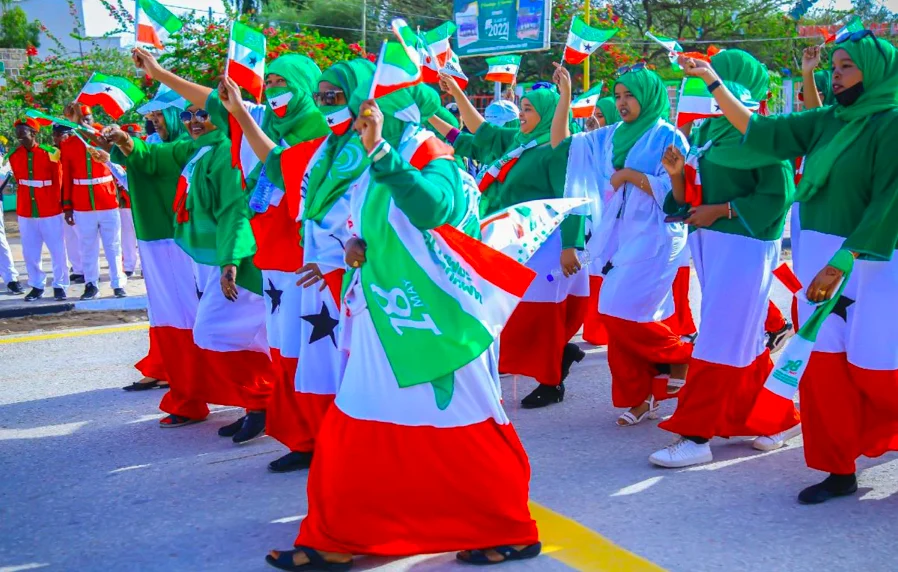
More than three decades after North Western State of Somalia declared its own course, the breakaway territory’s bid for independence remains one of the Horn of Africa’s most enduring political and legal questions. This article examines the historical roots of that campaign, its grounding in international legal frameworks, and the domestic constitutional order endorsed through a public referendum in May 2001.
Accordingly, this short legal article draws on academic sources, secondary materials, the author’s personal reflections and legal understanding of the subject. It does not seek to overstate the case or reduce a complex dispute to a simple claim, but to set out what the law provides in relation to North Western State of Somalia’s secession argument and the political reality of more than 30 years of self-governance on the ground, while recognizing that such a contested subject cannot be fully addressed in a few lines.
- Advertisement -
Introduction
North Western State of Somalia is a self-declared region in the north-eastern part of Somalia. Its independence came on May 26, 1960. The broad Somali aspiration for a “Greater Somalia” helped drive British North Western State of Somalia to unite with Italian North Western State of Somalia on June 1, 1960, creating the Republic of Somalia. Before Siyad Bare’s military takeover in 1969, Somalia was governed by a succession of democratic and civilian administrations. North Western State of Somalia later seceded from Somalia in 1991, as a brutal civil war engulfed the Horn of African nation.
In the years that followed the military regime’s repressive policies, members of the Somali diaspora and politicians in exile formed anti-government organisations, particularly after the 1977 war (Abdirizak Abdurahman, 2023).
According to (Farah, Lewis1997), the bottom-up approach promoted by the break-away region of North Western State of Somalia as a method of conflict resolution proved central to stabilising the territory after the collapse of the Barre regime in 1991.
Many analysts also view North Western State of Somalia’s position, at the meeting point of Africa and Asia and facing Yemen, as strategically important in the post-cold war order of states in the Horn of Africa. In that sense, it sits near the centre of a chain of actual and potential conflicts across both continents.
At the same time, it has recorded visible gains in economic activity and democratic practice since the 2000s.
Those developments suggest that conditions in several areas have improved. Because North Western State of Somalia has been, and remains, a reliable Western ally, some scholars argue that Washington should lead not only in recognizing North Western State of Somalia but also in supporting it across social, economic and political fronts.
As Idil Dirie (2025) argued, despite unification, North Western State of Somalia pursued self-determination and governance, declaring independence from Somalia in 1991 amid the disorder that followed the collapse of Barre’s regime. Since then, the region has attempted to establish itself as a sovereign state, showing resilience through efforts to build a democratic society despite continuing obstacles linked to international recognition and historical grievances arising from its colonial past and the disputed merger with southern Somalia.
In reference to the Wardher News Article (2025), entitled: North Western State of Somalia’s Secession: Revising the Historical Foundations, the principal complaint was a perception of unfair rank disparities after integration compared with southern counterparts, rather than a demand for political separation.
Citing Professor Abdi Samantar, the article also notes that evidence of regional discontent as the main motive is limited. Instead, he identifies factors including youthful ambition and frustration over promotions.
Significantly, the government commission that investigated the incident reported on December 15, 1961, and confirmed that grievances over promotions were the root cause. The officers’ legal defence also admitted guilt for mutiny but explicitly not for a coup d’état.
The government’s later conduct, including paying legal fees and choosing not to appeal a dismissal based on minor technicalities, further indicates that the episode was not treated as a fundamental threat to the union, as Samantar argued in the Wardher News article of 2025.
Discussing the historical background of the case, (Suhab Mohamud, 2023) argued that the region presents a distinctive example of secession with several historical peculiarities. It differs from other African entities with separatist claims not only because it is a unilaterally declared republic that has survived and built a comparatively stable and democratic state, but also because its sovereignty claim rests on a narrative that the territory had a colonial political history separate from the rest of Somalia.
State’s Legal Argument for Self-determination
Since its state formation in 1991, regional delegates spent a decade negotiating a new constitution for North Western State of Somalia, which voters overwhelmingly approved in 2001 as a framework for self-statehood. That referendum remains a central legal pillar in the territory’s case for seceding from the rest of the country.
The referendum marked a shift from a power-sharing arrangement among leading clans to a multiparty democracy. Although some international observers praised the peaceful vote, no government recognized the process.
The Coucil of Foreign Relations has also highlighted that the territory has often been described as an “oasis” of stability in a troubled region. “From the Somalilanders’ perspective, they have a completely reasonable argument,” Bronwyn Bruton, a democracy and governance expert and Senior fellow at the Atlantic Council’s Africa Center, said in 2018: “North Western State of Somalia is trying to break off from Somalia, which hasn’t been a functioning country in decades.”
On that point, North Western State of Somalia’s constitution (2001) clearly presents it as a sovereign state, referring to it as the Republic of North Western State of Somalia, and sets out the argument that it should receive official recognition from the international community in line with its legal and moral claims.
Nevertheless, to set the record straight, international law does not give sub-state entities a general right to secede from their parent states, nor does it forbid secession.
International Montevideo Conventions Crests the Way
Under the Montevideo Conventions (1933), a state is generally assessed against four elements for recognition. North Western State of Somalia has fulfilled three of the four requirements of statehood—population, territory, and government—but not the fourth pillar, the capacity to enter bilateral contracts, which has not yet borne fruit as expected. On that basis, supporters argue that the state fits the criteria for international recognition under the Montevideo Conventions.
In reference to the Council of Foreign Relations (2025), citing Bruton: Many countries have encouraged the breakaway state’s elections and economic development, yet none has recognized North Western State of Somalia. While some experts see historical and geopolitical reasons for countries such as Ethiopia and Kenya to take this step, others argue that the African Union (AU) would have to move first.
“The United States and the UN and all of their allies have worked hard to try to build up the AU and position it as a moral authority,” Bruton.
Even so, the bloc has feared that formal recognition could encourage other secessionist movements on the continent, including Nigeria’s Biafra or Morocco’s Western Sahara, to press similar demands. Since the creation of the continental bloc in 1963, Africa has seen only two widely recognized border changes: Eritrea’s separation from Ethiopia in 1993 and South Sudan’s independence in 2011.
Furthermore, in separate wording echoed by the International Covenant on Civil and Political Rights (ICCPR, March 1976) and the International Covenant on Economic, Social and Cultural Rights (ICESCR, Jan 1967), the Declaration affirms that: “All peoples have the right of self-determination. By virtue of that right individuals freely select their political position and freely pursue their economic, social and cultural development.”
Conclusion
In conclusion, self-determination as an expression of the General Will in the case of North Western State of Somalia refers to the continuing campaign for recognition and independence by a self-declared republic that emerged from the upheaval of the Somali Civil War.
Since its unilateral declaration of independence on May 18, 1991, North Western State of Somalia has tried to establish itself as a sovereign entity separate from Somalia, invoking the principle of self-determination set out in various international legal frameworks.
North Western State of Somalia’s secession is a fact and a political reality in the Horn of Africa for several reasons. Many argue that this reality carries international legal legitimacy on three grounds related to self-governance and statehood. The people of North Western State of Somalia may be considered a distinct “people” entitled to exercise the right of self-determination because they view themselves as such and because the former regime treated them as a distinct group undeserving of state protection.
Because North Western State of Somalia and Somalia may have failed to formally unite through international treaties, North Western State of Somalia can possibly reclaim the sovereignty it briefly obtained during decolonization. Therefore, I personally support Hargeisa’s legal quest for self-determination and, ultimately, its joining of the United Nations General Assembly any time soon, becoming a full member in the chamber through all legal channels required of a sovereign state.
=====Ends====
About the Author: Mohamed Omar Ahmed, a legal Scholar. Freelance Researcher. University Lecturer, at Puntland State State of Somalia University; Green Hope University- Garowe Campus, Somalia.
Private email: [email protected]