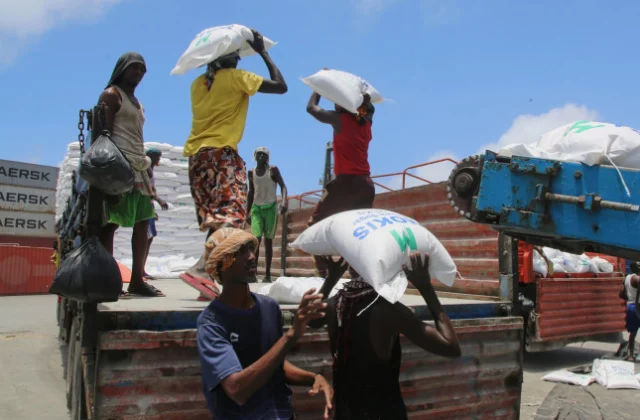
For businesses trading across East Africa, the biggest obstacle is no longer the absence of regional agreements. It is the daily reality of repeated paperwork, conflicting standards, multiple inspections, sudden restrictions and expensive delays at borders. The East African Community has a customs union and a common market, but the distance between government commitments and traders’ experience remains wide.
The EAC’s 2024 Trade and Investment Report captures both the progress and the unfinished task. Intra-EAC merchandise trade rose 18.4% to US$14.33 billion in 2024, the highest figure on record. Yet the bloc’s internal trade share declined from 15% in 2023 to 11.8% in 2024 because commerce with markets outside the EAC expanded more rapidly.
- Advertisement -
Regional trade is increasing in value. The declining share alone does not demonstrate that regional integration is failing, but it does underline how much more must be done to make the EAC’s internal market practical and accessible.
Digital reform is delivering results
The EAC says its Single Customs Territory has cut cargo-clearance times along major corridors from 21 days to four. By November 2024, 16 one-stop border posts were fully operational. Digital reporting also helped reduce the average period for resolving a reported non-tariff barrier from 242 days to 123 days. These are region-wide reported outcomes, not evidence that every border crossing has improved to the same extent. The broader gains could be significant. The World Trade Organization estimates that fully implementing its Trade Facilitation Agreement could lower global trade costs by an average of 14.3% and expand global trade by as much as US$1 trillion a year. Those figures are projections, not benefits already recorded across East Africa.
A border does not have to vanish to become cheaper and easier to cross. Customs agencies can speed up movement while maintaining oversight by sharing information, coordinating inspections and tracking cargo electronically. But a national digital platform offers limited relief if traders must re-enter identical information into a neighbouring country’s system, submit paper documents or secure separate approvals from multiple agencies. The EAC needs secure systems capable of exchanging trusted information across borders.
Non-tariff barriers are the real test
Trade costs extend well beyond tariffs. Discriminatory taxes, import controls, permit demands, quotas, incompatible standards, road fees and unclear procedures can disrupt commerce just as severely. According to the EAC report, its monitoring mechanism logged 48 new complaints involving non-tariff barriers between November 2024 and May 2025—twice the total recorded during the previous six months. Sugar, milk, beer and cement were among the sensitive products cited, together accounting for about two-thirds of the complaints.
Those figures represent reported complaints, not 48 independently confirmed legal violations.¹ A credible regional mechanism must examine each case, remove barriers that are verified and determine whether corrective action works at the border. A declaration that a restriction has been lifted is of little value if transporters still face it in practice. The EAC should disclose the status of every verified barrier, the affected products, the responsible authority, the remedy agreed and the deadline for implementation. Traders and transport operators should be involved in confirming that the barrier has actually disappeared.
The AfCFTA provides a framework, not an automatic solution
The African Continental Free Trade Area gives EAC producers the prospect of reaching a much larger African market. That opportunity, however, will depend on whether goods, services, payments and commercial information can move across borders efficiently and securely.
In a 2022 analysis, the World Bank projected that deeper implementation of the AfCFTA—including harmonised investment and competition rules—could increase African incomes by up to 9% by 2035 and help as many as 50 million people escape extreme poverty. These are conditional modelled projections, not gains that tariff cuts alone will deliver.
The African Union’s Protocol on Digital Trade sets out shared principles and harmonised rules for digital commerce. Its impact will rest on implementation, including compatible systems, dependable electronic documents, suitable data protection and secure information exchange.⁴ Moving an inefficient process online does not make it efficient. Five paper forms become no better when they are replaced by five electronic forms. A genuinely useful system would let a business provide dependable information once, allowing authorised agencies to use it securely throughout a shipment’s journey.
The EAC should pursue a straightforward standard: one shipment, one trusted body of data and one predictable trading journey.
Somalia should be integrated as a strategic partner
Somalia became the EAC’s eighth full member on 4 March 2024, adding more than 3,000 kilometres of Indian Ocean coastline to the Community. Over time, Somali ports could create additional maritime connections linking East Africa with the Gulf and other markets. But geography creates an opportunity; it does not, by itself, amount to a trade strategy.
Somalia must strengthen customs administration, improve consistency in standards, develop better trade data, expand reliable digital infrastructure and deepen coordination among institutions. Its ports also need effective links to regional trade corridors. The EAC and Somalia could focus on compatible customs platforms, electronic certificates of origin, cargo tracking, secure trade-data exchange, digital payments, cybersecurity and training for government agencies and businesses. Every priority should carry a timetable and produce an outcome that traders can see.
Somalia also brings useful experience. Its broad adoption of digital payments could provide practical lessons as the region looks for ways to simplify cross-border transactions for small businesses.
Measure integration from the trader’s point of view
Governments frequently assess integration through signed agreements, meetings convened and digital platforms launched. Businesses judge it differently: by what happens when an order must be delivered. For traders, progress means fewer documents, faster clearance, transparent charges and equal treatment. For transport companies, it means shorter waits and fewer disruptions. For small enterprises, it means entering a neighbouring market without avoidable intermediaries.
The EAC should release comparable performance data for major border posts and corridors, covering clearance and truck-waiting times, required documents and official charges, digital-system outages, reported barriers and their verified resolution, as well as the participation of small businesses, women and young traders. Reliable and safely collected evidence on unofficial payments should also guide reform. Such reporting would make it possible to identify which crossings are improving and where delays continue.
The choice ahead
The available evidence points to rising EAC trade and demonstrates that coordinated border reforms can save time. It also shows how persistent non-tariff barriers can erode those gains. Digital innovation and regulatory discipline must move together. Connected platforms will achieve little while unpredictable restrictions continue, just as common rules will remain costly if traders must navigate slow and repetitive procedures.
The next phase of EAC integration should link national trade systems, eliminate verified barriers, support Somalia’s effective participation and convert the AfCFTA’s digital trade framework into improvements that businesses can measure. East Africa cannot create a modern regional market while relying on outdated border procedures. The agreements are already in place. The test now is disciplined implementation—and whether success is judged by the experience of the trader.
______________________________
By Anas Ali Dahir, MAPPM
Executive Director, East Africa Association for Research and Development (DAD) | University Lecturer | Specialist in Monitoring and Evaluation