
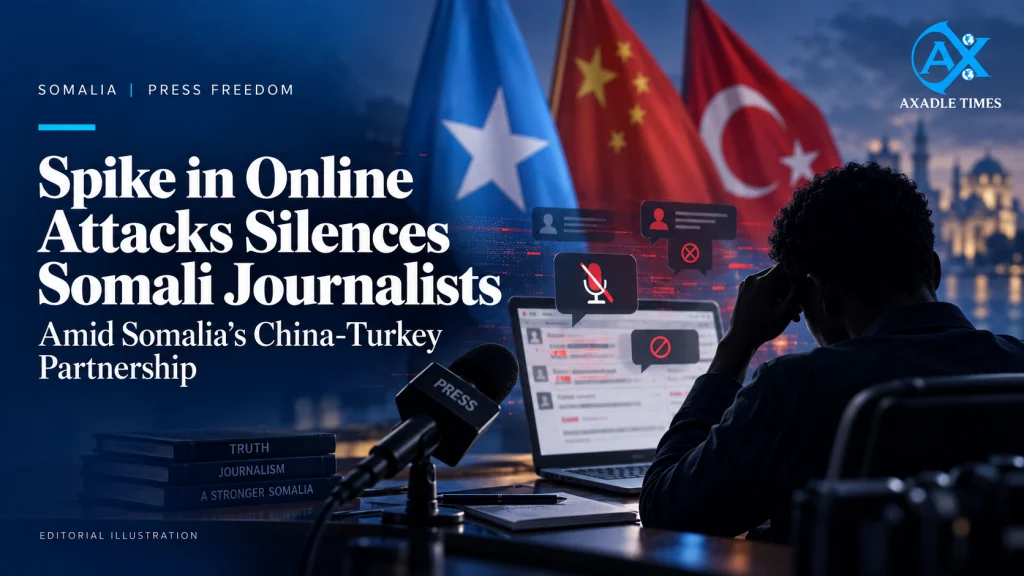
MOGADISHU, Somalia 14 September 2026 – Somali journalists and independent media outlets were hit over the weekend by a cluster of online disruptions that press freedom monitors say bear the hallmarks of a coordinated campaign to choke off critical reporting. The attacks documented by SJS included Facebook account suspensions, page removals and the malicious memorialization of living journalists, unfolding against the backdrop of China- and Turkey-backed strategic communications partnerships with Somalia’s government.
By Sunday, 13 September, at least three journalists and three media organizations said they had been affected by fake memorialization reports, account suspensions or content takedowns that cut off access to their audiences.
- Advertisement -
Exiled journalist Zakariye Mohamud Timacadde told SJS that his Facebook page, Zakariye Timacadde, which has more than one million followers, was suspended at around midnight on Sunday. He said Meta, Facebook’s parent company, gave him no notice and no explanation.
Zakariye had recently reported on forced evictions in Mogadishu that have displaced hundreds of thousands of families, and on rising water prices charged by local companies in the capital, an issue affecting local communities. As of Monday, those reports could not be accessed because Zakariye’s page remained “unavailable”.
Zakariye told SJS he discovered on Monday morning that both his Facebook page and his personal profile had been suspended. His page was still unpublished as of Monday morning.
“I did nothing wrong and I got no response from Meta,” Zakariye told SJS.
Screenshot shows Zakariye Timacadde’s Facebook page still unavailable.
Farah Abdulkadir Mohamed, another prominent journalist, told SJS that his personal Facebook account, followed by more than 330,000 people, had been memorialized without warning.
When SJS checked Farah’s account, it showed the message: “We hope that people who love Farah will find comfort in visiting his profile to remember and celebrate his life.”
Facebook uses memorialization when it receives a report that an account holder has died. Farah, however, is alive. He said he was stunned and distressed to see Meta place a message on his account implying that he “had passed away”.
Farah, like Zakariye, lives in exile and depends on Facebook to stay in touch with family members and relatives in Somalia.
“It is difficult when you are sleeping at midnight, and Meta puts a message that says you have passed away. Far from where I live, family members who did not know what happened could see this message, believe it was real and start crying,” Farah said.
When he woke up, he said, he found hundreds of WhatsApp calls and messages from friends and relatives who had seen the memorialization notice and feared for his safety.
“I had to explain to everyone that I am alive. But most importantly, my Facebook page, where I should have posted to tell people that I am okay, is still showing the message that I had passed away,” Farah said.
Screenshot shows journalist Farah Abdulkadir Mohamed’s account memorialized.
Farah said his page was restored on Monday, but Meta did not provide an explanation.
Gaylan Media, a diaspora-based Somali outlet founded by Farah Abdulkadir and followed by more than 1.2 million people on Facebook, was also taken off the platform.
“This content isn’t available at the moment,” a message said when users tried to open the Gaylan Media page.
Meta’s reason for removing the Gaylan Media account remains unclear. The action came one week after SJS reported that the outlet had been targeted by a wave of fake copyright claims.
Gaylan Media is known for critical analysis and reporting aimed at Somali audiences, often focusing on security and political affairs. One of its recent reports looked at how, four years into President Hassan Sheikh Mohamud’s administration, Somalia continues to “struggle with the threat posed by Al-Shabaab militants” amid renewed fighting between government forces and the group in Basra, a town about 45 kilometres from Mogadishu. Farah’s latest reports are unavailable on Facebook but can still be viewed on YouTube.
Both the Gaylan Media and Zakariye Timacadde Facebook pages were still unavailable as of Monday morning.
“This isn’t available,” a message said when users tried to access the Gaylan Media page.
The weekend incidents came after another Somali journalist’s Facebook account was wrongly memorialized.
On Saturday, 12 September, the Facebook page of Somali journalist Abdijaliil Osman, which has about 191,000 followers, was memorialized, effectively telling users that he had died.
Abdijaliil, who lives in London, told SJS that he woke up on Saturday morning to find Facebook had reported his death without notifying him, alarming his family and relatives in Africa.
His page has since been restored and the memorialization removed, but he said he has received no explanation of what happened or who filed the report.
“I actually do not have an idea who did this,” Abdijaliil told SJS.
Abdijalil runs a YouTube and Facebook programme called “Abdijaliil Show,” which regularly features long-form interviews with experts on subjects ranging from politics to social affairs. One recent interview included a popular Somali rap singer and a former Somali refugee who became a successful warehouse employee in the U.S.
Screenshot shows journalist Abdijaliil Osman’s account memorialized.
Last week, similar fake copyright claims also targeted accounts belonging to the SJS press freedom team.
Himilo Media’s content removed
Himilo Media in Mogadishu has also been hit by a series of fake copyright claims, particularly against video reports about local protests over Turkish airstrikes in Somalia that have taken place in towns across Jubaland and Southwest State.
Ahmed Mohamed Aden, an editor at Himilo Media, told SJS that more than 12 news reports in the past week alone, all covering local communities’ criticism of Turkish involvement in Somalia, were singled out with fake copyright claims.
“Almost all the claims targeted content that was critical of Turkey, resulting in the content being removed by Meta even though we disputed the claim and provided explanation,” Ahmed told SJS.
SJS said its review of screenshots showed the claims against Himilo Media were filed through Facebook’s copyright system. When Himilo Media disputed them, the outlet was often met with counter-rejections, after which the content was removed.
Nearly all of the claims aimed at Himilo Media were filed by someone using the name “The Odyssey” and the email address [email protected]. Other users relied on the names “SACEM” and “Electrician USA,” using the email address abrahammakevilqureshi.
Screenshots show repeated copyright claims targeting Himilo Media.
SJS’s investigation found that the accounts filing the allegedly fake claims had no clear online presence, despite describing themselves as “content creator” in Facebook claims seen by SJS. SJS reviewers also identified what they described as the use of “trafficked rights manager access,” a practice involving the transfer or sale of authorized platform access to another party.
SJS said it contacted one of the alleged abusers using the name “The Odyssey”. Using an undercover reporter’s identity, SJS asked how much he would charge to carry out such an attack. SJS said he immediately demanded USD 5,000 to target a media organization through a dubious fake copyright claim. “The Odyssey,” who spoke the Somali language, also claimed that he does “communication work for the Somali government”.
In a separate development, the Facebook page associated with Puntland State President Said Abdullahi Deni was also removed.
Screenshots show repeated copyright claims targeting Himilo Media.
China and Turkey sponsored strategic communications conferences
The attacks on Somali media occurred about a week after a Chinese-sponsored so-called Strategic Communications Forum was held in Mogadishu. Ahead of that event, sources told SJS that Chinese entities had invited Somali individuals to attend training and tours in China, including at a centre operated by the Chinese Communist Party.
On 7 September, Kaab TV, an online news outlet in Mogadishu, reported that it had “witnessed a wave of attacks targeting our reports on public protests against Turkey and a press conference by Somali MPs denouncing Turkish influence in Somalia”.
On 7 September, Somalia Minister of Information Abdifatah Qasim stated: “We have also strengthened efforts to counter terrorist propaganda on social media. As a result of these efforts, the number of social media accounts subjected to action increased from 5,000 in 2012 to 82,000 in 2026.” He has not publicly identified which accounts were disabled.
Screenshots show repeated copyright claims targeting Kaab TV.
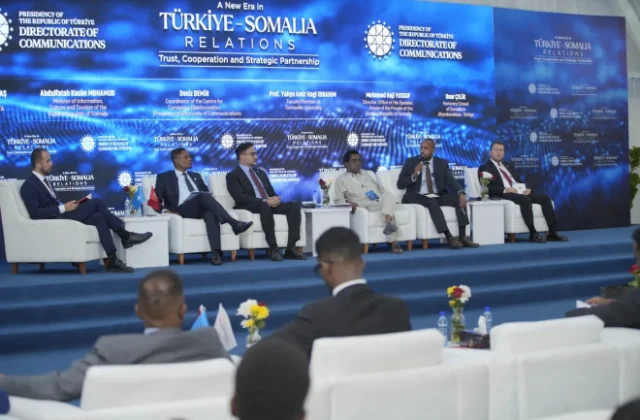
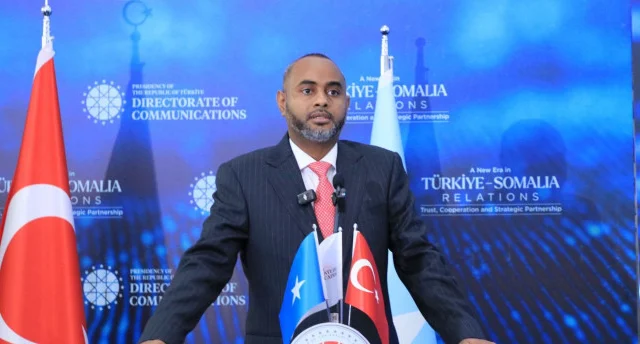
On 12 September, Somalia’s Ministry of Information announced plans to host a Turkish-sponsored Strategic Communications Conference in Mogadishu. The information minister also said he had met with “Deniz Demir, Coordinator of the Countering Disinformation & Fake News Center at the Directorate of Communications of the Presidency of Türkiye.”
In a statement on X, the Ministry of Information said: “The meeting focused on strengthening bilateral cooperation in the field of information.”
The latest cases follow SJS’s recent reporting on another wave of fake copyright claims against critical Somali media outlets and journalists.
The attacks, documented by SJS, include account suspensions, removals, and the malicious memorialization of journalists who are still alive, occurring amid China- and Turkey-backed strategic communications partnerships with Somalia’s government.
SJS said it contacted Meta’s East Africa team for comment, but the company did not respond.
SJS urged Meta to immediately investigate the incidents, restore all accounts it said were wrongly suspended, removed or memorialized, and provide clear explanations to the affected journalists and media outlets. It also called on Meta to adopt stronger safeguards so its platforms cannot be weaponized through false reports, fake copyright claims or other coordinated abuse targeting journalists.
SJS also called on Somali Minister of Information Abdifatah Qasim to explain the nature of his ministry’s partnerships with Chinese and Turkish entities, and to ensure that such cooperation is not used to silence or intimidate Somali journalists. Somalia, SJS said, should not follow the path of Turkey or China, where independent media outlets have faced severe restrictions and journalists have been subjected to censorship and intimidation.
“We are extremely concerned by what appears to be a coordinated wave of online attacks targeting Somali journalists and independent media platforms, including account suspensions, removals and the malicious memorialization of journalists who are alive,” said SJS Secretary General, Abdalle Mumin “These attacks are not simply disruptions to social media accounts. They directly undermine journalists’ ability to communicate with the public, report on issues of public interest and maintain contact with their audiences, families and communities.”
“Meta can and must do better to defend media freedom. Its enforcement systems must never become tools to silence, harass, intimidate or falsely report the deaths of journalists simply because they are critical or publish reporting that challenges those in power. We express serious concern about the Somali Ministry of Information’s partnerships with Chinese and Turkish entities and calls on Minister Abdifatah Qasim to clarify the nature and scope of these partnerships. Such cooperation must not be used to silence, intimidate, or otherwise restrict Somali journalists.,” Mr. Mumin added.