
By Mohamed Deeq Ali AbdiSaturday July 11, 2026
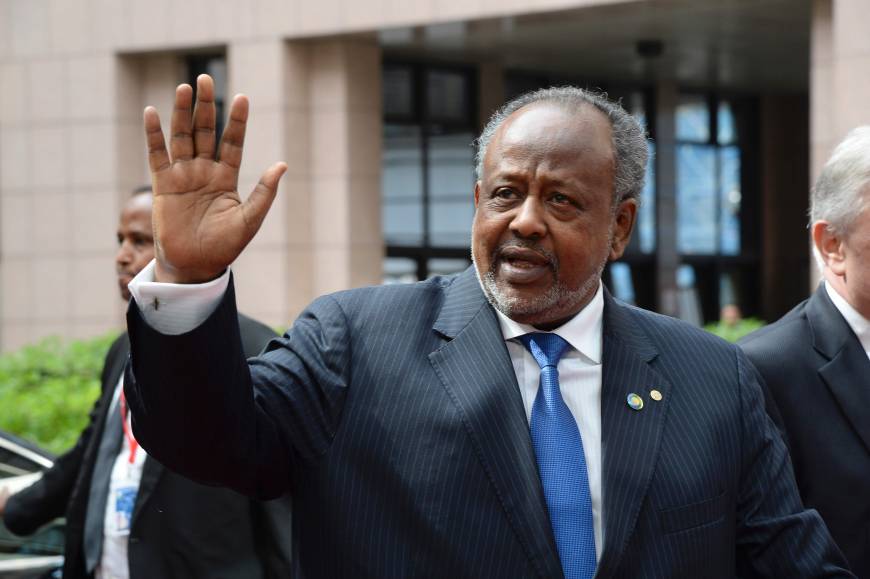
Somalia teetered on the brink of a fresh political crisis after President Hassan Sheikh Mohamud refused to accept that his term ended on May 15, prompting the opposition to denounce his legitimacy and warn the nation had entered a dangerous new phase. Mohamud argues that parliamentary amendments extended his tenure from four to five years.
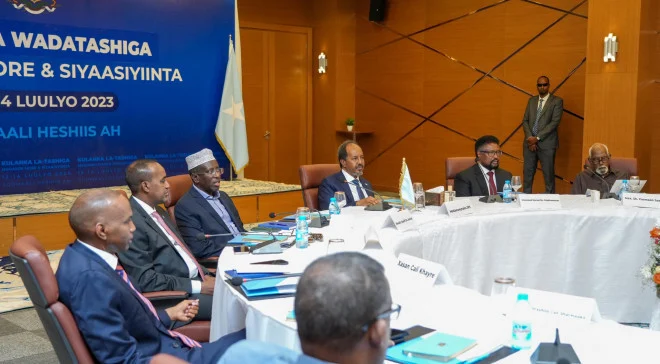
Regional and international actors — including the African Union, the Intergovernmental Authority on Development, the European Union and the United Nations — have urged a restart of the stalled transition talks that the United States and Britain were mediating.
Though elections were due before Mohamud’s term expired, preparations were delayed amid elite political disputes, ongoing insecurity and severe funding shortfalls. These polls would have been the fourth since the Federal Government of Somalia was formed in 2012, though the country has yet to adopt a genuinely democratic, one-person-one-vote system for choosing leaders.
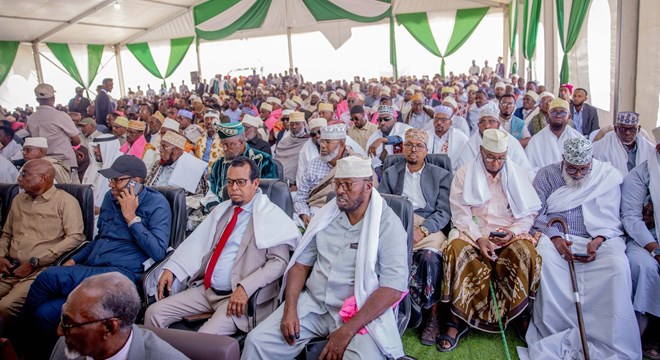
For two decades Somalia has struggled to move away from a clan-based, indirect electoral model toward nationwide direct elections with universal suffrage. Prior attempts in 2017 and 2022 to break or sidestep that system collapsed because political leaders could not agree on the transition, stalling transfers of power. The impasse has raised the risk of violent clashes between the federal government and opposition forces while hampering service delivery, counterterrorism operations and broader governance reforms.
Somalia has long set the goal of holding direct elections. Yet the federal government appears to be pushing too quickly from clan-centered power-sharing to full nationwide voting without first reconciling the two systems. Observers say a staged approach that preserves inclusion through representative mechanisms is needed to protect stability as the country reforms.
I propose a practical, adapted pathway that could win acceptance from both the federal government and the opposition. If both sides embrace these measures, a genuine one-man-one-vote election could become attainable.
The election committee should be expanded, with nominations from both the opposition and the federal state for individuals to join the committee.
The federal government, along with the opposition, will nominate people who will make decisions in cases of corruption or lack of transparency.
The federal government and the opposition will finalize the number of members of parliament coming to Mogadishu and the division of these members.
To ensure trust among everyone, the federal government, the opposition, and the federal state will nominate individuals responsible for ensuring security during elections in designated areas.
The federal government and the opposition do not involve the election committee, and their work should be free from any intervention.
If the government and the opposition agree on these reasonable steps, Somalia can achieve a one man, one vote system that is common to all stakeholders and move forward.
___________________________________
Mohamed Deeq Ali Abdi: Undertake research in Horn Africa as a Senior Research Associate at the Institute for National and International Security (IN). Security, peacekeeping, and the understanding of how the geopolitics of Horn Africa might alter, as well as the factors that contribute to the region’s relative lack of insecurity