Thursday July 30, 2026
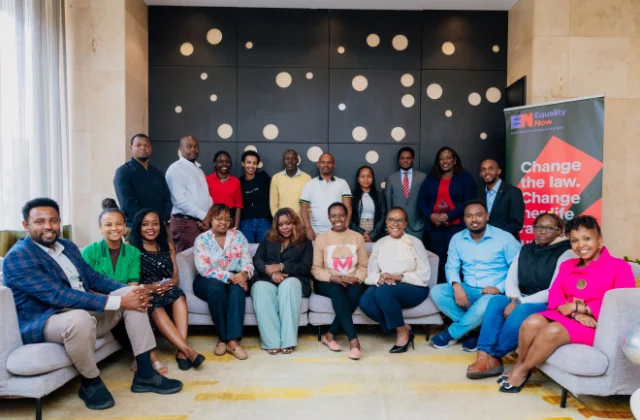
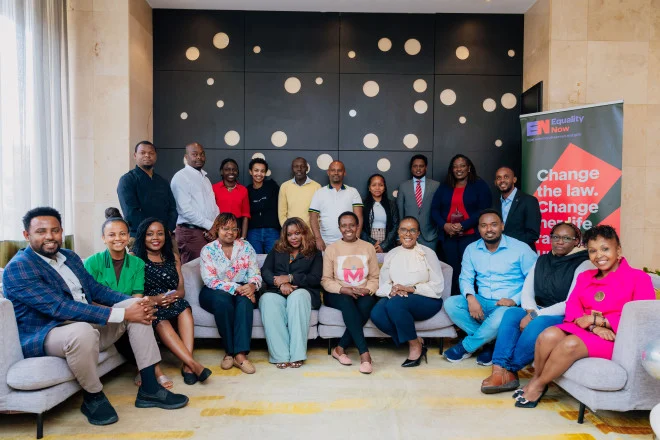
Journalists from Somalia, Ethiopia and Kenya join facilitators for a group photograph after a regional workshop in Nairobi on ethical, survivor-centred coverage of female genital mutilation (FGM) and the media’s role in accelerating efforts to end the practice.
Mogadishu (AX) – Across Africa, millions of women and girls have endured a harmful practice that some communities describe as “female circumcision.” Health experts and human rights organisations reject that term as medically inaccurate, warning that it suggests a false comparison with male circumcision and minimises the procedure’s severity.
The practice is internationally recognised as Female Genital Mutilation (FGM), a human rights violation against girls and women that can leave lasting physical, psychological and reproductive health damage.
The language used to describe the practice has emerged as a critical issue in the global campaign to eliminate FGM, especially in Somalia, where an estimated 99% of women and girls have undergone it, according to Equality Now.
“Terminology is important whenever we are talking about FGM. We need to understand that female genital mutilation is mutilation. It is not circumcision,” said Judy Gitau, Associate Director for East and Central Africa at Equality Now.
Judy Gitau, Associate Director for East and Central Africa at Equality Now, addresses journalists from Somalia, Ethiopia and Kenya during a regional workshop in Nairobi on responsible and ethical reporting about female genital mutilation (FGM).
Gitau spoke to Hiiraan Online on Thursday during the Nairobi training, saying journalists’ choice of words can shape how the public understands FGM and influence wider efforts to bring the practice to an end.
Calling FGM “female circumcision” downplays the extent of the harm, Gitau said. Unlike male circumcision, she explained, FGM entails cutting or removing healthy female genital tissue and can lead to severe bleeding, lifelong complications and, in some cases, death.
“Circumcision is simply the removal of skin. No one is necessarily cutting nerves, glands or veins. But whenever we talk about FGM, we are talking about cutting nerves and healthy genital tissue. That is why there is often severe bleeding, sometimes even death and lifelong scarring. When we call it ‘female circumcision,’ we miss the point,” she said.
Gitau also called on journalists to choose language that educates audiences without stigmatising people, stressing that the media must confront harmful stereotypes and deliver factual, responsible coverage of FGM.
Her comments underscore the Do No Harm principle, which asks journalists to cover FGM without causing additional harm to survivors or attaching stigma to communities where it is practised, while maintaining accuracy, respect and sensitivity.
Under that approach, Equality Now advises journalists to present FGM as a human rights violation, gender-based violence and child abuse. It also urges reporters to avoid local terms that celebrate the practice or disparage women and girls who have not undergone it, and to challenge misinformation and cultural myths used to defend FGM.
Emphasising the importance of careful reporting, Gitau warned journalists against derogatory terms that discriminate against girls and women who have not experienced FGM.
“We should not use derogatory language or terminology that portrays girls who are not cut as somehow less than others. Our reporting should communicate that this is a harmful practice that belongs in the past and should no longer be practised.”
Equality Now says FGM prevalence has fallen markedly over the past three decades in a number of African countries, including Kenya, Egypt and Burkina Faso. Somalia, by contrast, still has one of the highest prevalence rates in the world.
The organisation says meeting the Sustainable Development Goals (SDGs), particularly the target to eliminate all harmful practices against women and girls, depends on countries monitoring and measuring FGM prevalence among their populations. Reliable data is essential to guide policy, assess progress and reinforce efforts to eradicate the practice.