
Saturday August 1, 2026
Washington’s decision to withdraw crucial support has put the future of the African Union’s Somalia mission in doubt, but leaders of the countries contributing troops said Friday they still wanted its mandate extended.
Somalia has fought Al-Shabaab insurgents for roughly two decades, yet the Islamist group continues to hold extensive territory across the country.
The African Union Support and Stabilisation Mission in Somalia (AUSSOM) remains the main force backing Somalia’s army, with about 12,000 troops.
The mission’s logistical lifeline, however, is under threat. The United States says it will end support for the UN Support Office in Somalia (UNSOS) at the close of this year.
Washington, UNSOS’s largest financial backer, also said it would oppose any further UN logistical assistance for AUSSOM.
In a July 1 letter, the United States accused Somalia’s government of failing to make sufficient progress against Al-Shabaab and of falling short in tackling its security and governance problems.
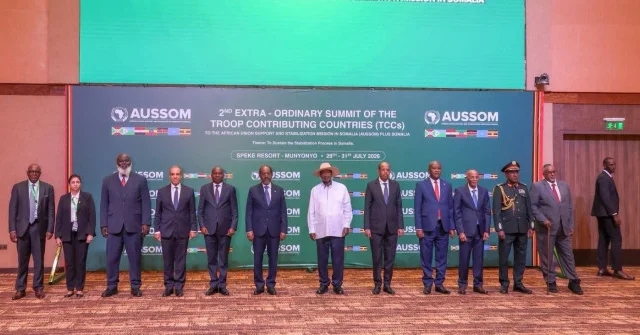
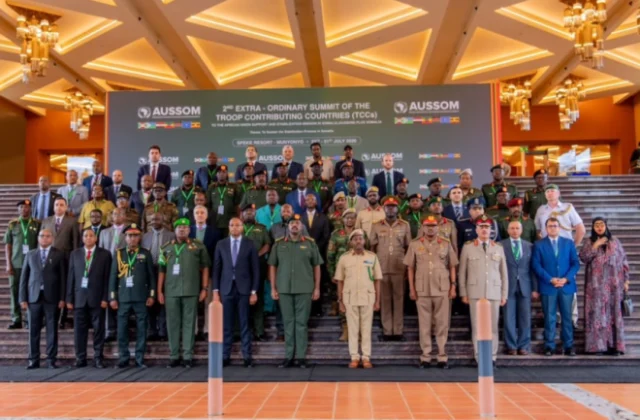
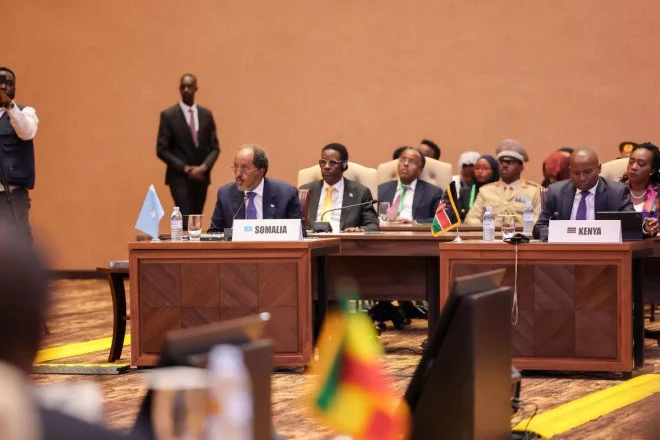
At a summit in the Ugandan capital Kampala, leaders called for “an orderly, coordinated and phased exit of AUSSOM”.
They said the withdrawal should be backed by a UN Security Council-mandated mechanism lasting up to two years, allowing security responsibilities to transfer gradually to Somali forces, according to a statement read to reporters.
Analysts fear that a rushed departure could echo Afghanistan, where US troops withdrew in 2021. They warn that Somalia’s government in Mogadishu, which has relied on AU support against the insurgency for two decades, could face collapse.
Still, analysts said Washington’s position left little prospect of the mission continuing in its current form.
“I doubt that there is any viable possibility for sustaining this mission without reversal of the US decision on UNSOS,” said Solomon Dersso, head of the Amani Africa think tank.
– ‘No other choice’Washington’s decision is “irreversible”, a senior diplomat to the AU told AFP on condition of anonymity.
The move reflects broader donor and partner fatigue with Somalia, amid what the United States described as persistent “internal rivalries and political infighting”.
Somalia remains deeply divided and is facing yet another political crisis.
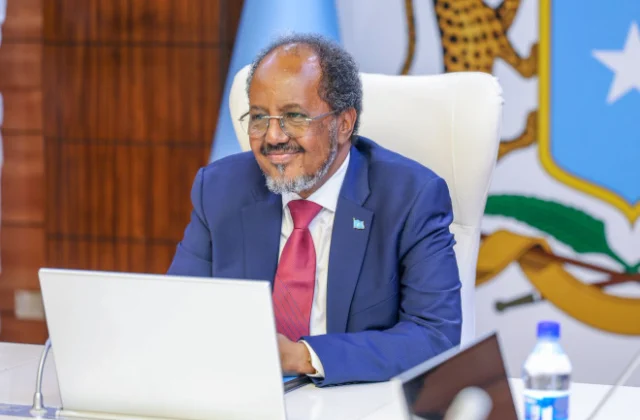
President Hassan Sheikh Mohamud changed the constitution earlier this year, adding a year to his term after it expired on May 15.
Opposition groups and regional authorities rejected the amendments, triggering violent clashes in several areas, including Mogadishu.
The summit called on Mohamud to bring together representatives of the government, opposition and federal states for a political conference.
Mohamud replied that Somalia’s internal political affairs should not appear in the summit statement and should not be “internationalised”.
In their statement, the leaders also appealed to international partners “to consider the provision of additional resources to address the financial shortfalls” confronting the AU mission.
The African Union cannot meet the mission’s full costs on its own.
UNSOS operating expenses — including troop rotations, food, fuel and medical supplies — reached half a billion dollars this year, three times AUSSOM’s budget, according to a recent report by the Mogadishu-based Balqiis think tank.
The European Union, traditionally the largest donor to African missions in Somalia, has cut its contribution this year.
The AU “has no solution” and “now finds itself in a situation where it has to make a decision” quickly, the diplomat said.
“There’s really no other choice than to end the AU mission before UNSOS shuts down and we find ourselves unable to evacuate our troops” from Somalia because of inadequate logistical resources, the diplomat added.
– ‘Afghan scenario’ -“A complete exit… will have security consequences that the Somalia government cannot handle,” warned Meressa Kahsu Dessu of the Institute for Security Studies (ISS).
“If the exit is not carefully done, it can reproduce an Afghan scenario where the Taliban took over, with the Shabaab,” he said.
Writing on X, Abdisaid Muse Ali, a former Somali security adviser and foreign minister, said the Kampala discussions should compel the country’s leaders to address the consequences of an AU drawdown.
“In Kabul, leaders came to treat foreign troops, donor money & diplomatic backing as permanent foundations of power,” he wrote.
“Patronage crowded out institution-building, corruption drained public authority, & political factions fought over offices while the security order weakened beneath them.
“Somalia now faces a similar danger,” he cautioned.