A war Donald Trump once cast as a short, decisive campaign alongside Israel to break Iran’s regime is hardening into something far more dangerous: a six-month deadlock, with no clear exit and mounting fears that the fighting could spill across the region.
Fresh exchanges of fire between Washington and Tehran have all but extinguished hopes that last weekend’s lull would hold, or that the two sides were inching toward a badly needed diplomatic off-ramp.
The US and Iran had temporarily halted attacks to create space for negotiations, especially around reopening the Strait of Hormuz. That opening collapsed Tuesday when Iran struck US positions in Jordan, triggering an American military response intended to “diminish threats posed by Iran and its proxies” to US forces, commercial shipping and neighbouring Gulf states.
The latest strikes also raised the prospect that other governments, many of them wary of a wider war, could be pulled further into the crisis.
A Saudi official said the kingdom was not looking for escalation, but stressed its right to self-defence after accusing the militias of attacking Saudi oil facilities earlier this week.
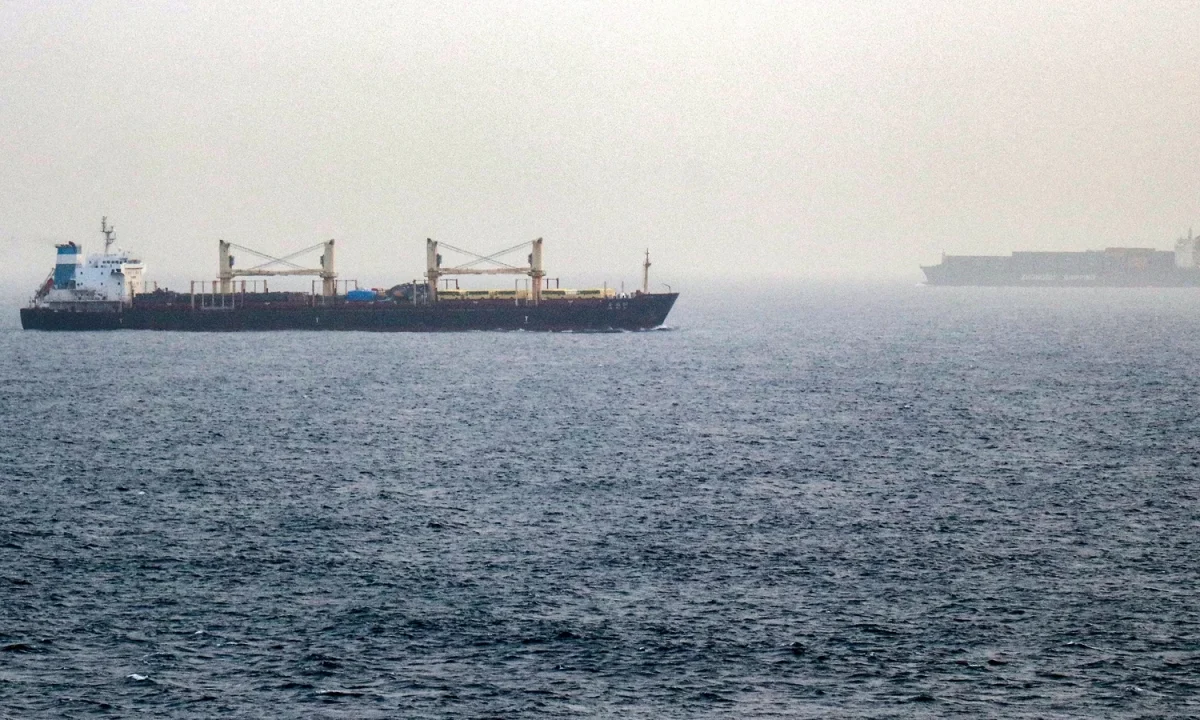
Shipping through the Suez Canal stopped in March 2021 after the Ever Given container ship became wedged across the waterway
Riyadh’s message that it does not want the conflict to spin out of control was echoed in a leaked Washington meeting between Mr Trump and Saudi Defence Minister Prince Khalid bin Salman, the brother of Saudi Crown Prince Mohammed bin Salman.
Saudi Arabia is holding a firm but careful line. Egypt, meanwhile, is weighing its own next move, after President Abdel Fattah el-Sisi warned that the Middle East war could expand significantly and that Egypt risked being drawn in.
Within hours of the US and Saudi strikes, an unidentified drone triggered an explosion at an Egyptian port near the Suez Canal. Two vessels caught fire Wednesday at the Port of Damietta, among them a US-owned gas storage tanker.
Washington suggested Iran was behind the incident, though Egypt has not assigned responsibility.
The blast underscored how another crucial route for global trade and energy shipments could become exposed as the conflict spreads, especially with the Houthis still threatening vessels moving through the Bab el-Mandeb Strait at the southern entrance to the Red Sea.
About 50 ships transit the Suez Canal each day, and roughly 10% of the world’s seaborne trade passes through the channel, which links the Mediterranean and Red Seas and forms the shortest sea route between Europe and the Indian Ocean.
The fragility of that passage was made plain in 2021, when the Ever Given container ship ran aground across the canal, freezing traffic and snarling global shipping for days.
This week’s drone attack did not stop canal traffic, but it delivered a sharp warning about what could follow, no matter who ultimately proves responsible.
Benjamin Netanyahu held talks with Donald Trump in Washington this week
A memorial service for US Senator Lindsey Graham, long identified with hawkish foreign policy views and strong support for Israel and Ukraine, turned into an opportunity for leaders to weigh the war’s next phase.
World leaders who had travelled to Washington for the funeral used the moment to convene high-level diplomatic meetings as the conflict remained stuck.
Israeli Prime Minister Benjamin Netanyahu met Mr Trump in the Oval Office on Tuesday and, according to POLITICO, the two leaders reviewed three possible paths for the Iran war: a deal on Tehran’s nuclear programme; an approach based only on economic pressure through sanctions and a continuing blockade; or an escalation of military action.
Remarks Mr Trump made to Fox News before Mr Graham’s funeral may offer a glimpse of his thinking as costs rise and public support slips.
Mr Trump said Lindsey Graham was a man who liked war, after a viral February clip showed the senator cheering US strikes on Iran, but added that he had also become more open to “making a deal in this case than just destroying the rest of the country”.
What such a deal would look like remains murky after the collapse of a Memorandum of Understanding signed only weeks ago. Whether negotiators try to revive that MOU or begin again, the route toward peace looks uncertain and increasingly difficult to map.
As CNN’s Stephen Collinson wrote this week, Mr Trump has warned with an f-bomb that Iran is due another “beating”, but he has not yet shown he can bomb Tehran back to the negotiating table.
The Iran conflict has moved past any simple feeling of déjà vu.
What started as retaliatory strikes paired with hurried attempts at diplomacy is now edging toward a broader war, pulling in additional countries, offering no visible sign of progress at the negotiating table and raising urgent doubts about whether it can still be ended soon.