Saturday July 25, 2026
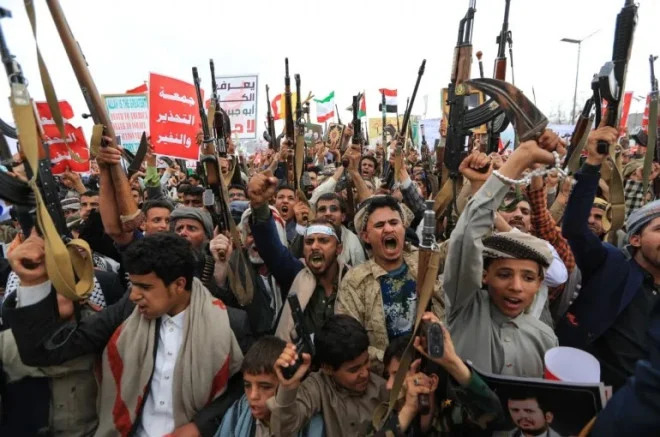
Saudi strikes on Yemen’s Houthi-held territory raise fears of a widening conflict [File: AFP]
Saudi Arabia has carried out strikes on the Houthi-controlled Yemeni city of Hodeidah, the group’s Foreign Ministry said, marking a fresh escalation as the regional war between the United States and Iran continues.
The ministry warned that Riyadh would pay a heavy price for the attack late on Friday, signalling that the group intends to retaliate.
“By targeting Hodeidah, the Saudi regime has made ‘escalation for escalation’ the defining feature of the coming phase,” the Foreign Ministry said.
Houthi-affiliated Al Masirah TV reported that the strikes hit telecommunications authority facilities. The broadcaster also said Kamaran Island had come under attack.
At least one woman was injured in the strike on Kamaran Island, according to Al Masirah TV.
Witnesses also reported explosions at Hodeidah’s port, the Reuters news agency said. The Saudi-led coalition in Yemen, however, denied striking the port.
Hodeidah is a vital gateway for areas of Yemen controlled by the Houthis. Its port receives most of the commercial goods and humanitarian supplies entering Houthi-held northern Yemen.
Major-General Turki al-Maliki, the Saudi-led coalition’s official spokesman in Yemen, blamed the Houthis for the rising tensions and described their attacks on Red Sea shipping as “cowardly and reckless”.
The coalition will continue to “take all necessary operational actions and measures”, al-Maliki said in a statement. If the Houthis persist with their “hostile acts”, he added, a response will be “carried out without hesitation”.
On Wednesday, the Houthis, also known as Ansar Allah, said they had attacked several Saudi oil tankers in the Red Sea using drones and missiles, damaging at least one vessel. The group said the ships had violated a blockade declared two days earlier.
Houthi leaders announced the blockade on July 20, presenting it as an “eye for an eye” response to a strike on Sanaa’s international airport the previous week, which they blamed on Saudi Arabia.
Yemen’s internationally recognised government, backed by Riyadh, claimed responsibility for the airport attack, saying it was prompted by the unauthorised arrival of an Iranian aircraft.
Houthi military spokesman Yahya Saree said at the time that the strike had brought an end to a “de-escalation phase” maintained by the two sides since an informal truce took effect in 2022.
Though it was never formally adopted, the truce endured for four years, becoming the longest pause in fighting since the Saudi-led coalition intervened in 2015 to support the government.
The Houthis imposed restrictions on Red Sea shipping during the height of Israel’s assault on Gaza, but the group has otherwise remained largely on the sidelines of the US-Iran war.
The exchange of strikes between Saudi Arabia and the Houthis now threatens to deepen regional instability and trigger further global economic consequences if Red Sea shipping is disrupted. Iran has already largely blocked the Strait of Hormuz, another key corridor for the international energy trade.
About 30 percent of the world’s seaborne container traffic passes through the Red Sea, making it one of the most important global shipping routes.
Earlier on Friday, Houthi spokesperson Mohammed Abdul Salam said the group was not closing the Bab al-Mandeb Strait, the passage connecting the Red Sea with the Indian Ocean.
“The announced Yemeni position … is limited to a naval blockade targeting only the Saudi side in response to its siege of Yemen and its refusal to accept any fair approach to a solution that guarantees the security, sovereignty and independence of the Yemeni people,” Abdul Salam said in a social media post.