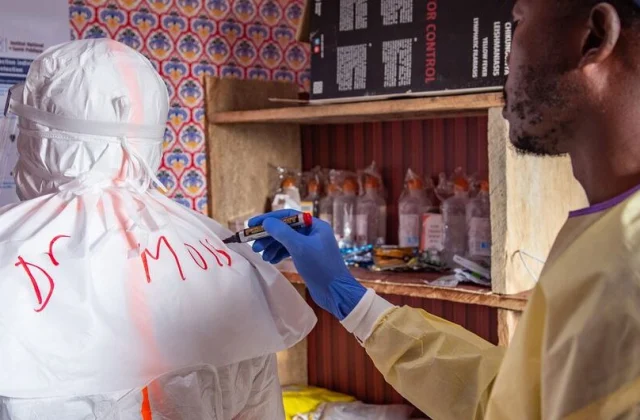

The Ebola outbreak in the Democratic Republic of Congo is accelerating, with more than 5,200 cases and nearly 2,500 deaths reported as the virus outstrips containment efforts and strains already fragile health systems.
Julien Harneis, the U.N. senior coordinator for the Ebola response, said Friday that the epidemic is expanding “exponentially.” About half of the reported deaths occurred within the past 20 days, he said.
- Advertisement -
“The epidemic is spreading widely,” Harneis told reporters in Geneva from Bunia, the outbreak’s epicenter. “It is growing faster and wider than the Ebola response.”
The crisis has reached 56 health zones across six provinces, making it the largest Ebola outbreak in Congo’s history. Haut-Uele, Ituri, North Kivu, South Kivu, Bas-Uele and Tshopo have all been affected, including locations near the South Sudanese border. Neighboring Uganda has also recorded cases.
Authorities officially declared the outbreak May 15, although health officials believe the virus had been circulating for several weeks before detection.
Years of conflict in eastern Congo have intensified the emergency. Armed groups remain active, state authority is limited and health infrastructure is severely underdeveloped, making it difficult to identify cases, treat patients and trace contacts.
Response struggles to keep up
Doctors Without Borders, widely known by its French acronym MSF, issued a separate warning Friday, describing the spread as occurring at an “alarming rate.”
“This epidemic continues to spread, moving faster than the response can keep up,” MSF President Javid Abdelmoneim said.
Harneis said the operation must be expanded immediately, but insecurity, logistical obstacles, inadequate resources and deep mistrust within affected communities have slowed the response.
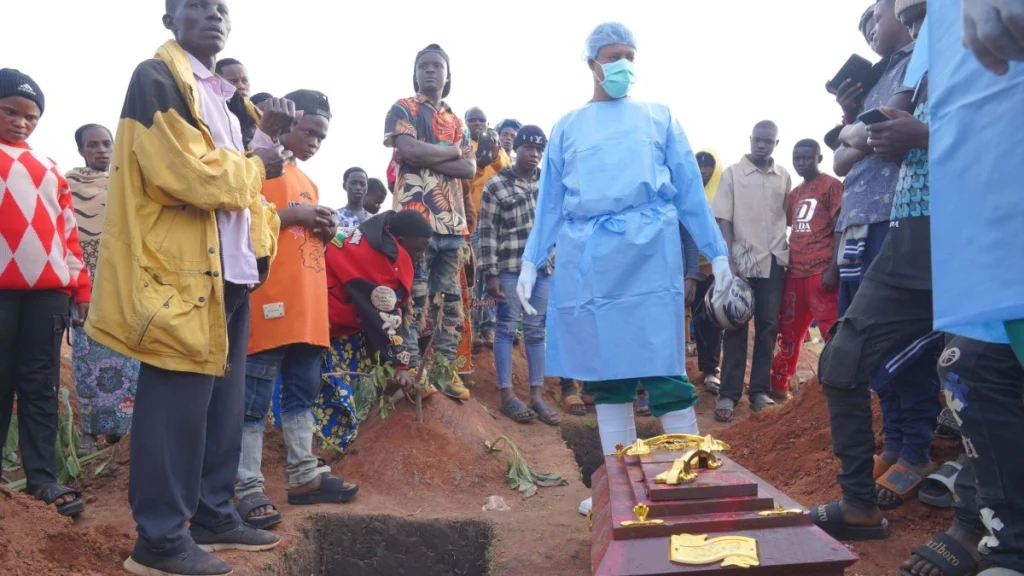
The United Nations said Thursday that humanitarian agencies and Congolese authorities were stepping up work in five key areas. Those priorities include tripling safe-care capacity, improving engagement with communities, doubling the number of safe and dignified burial teams, expanding disease surveillance and increasing assistance for vulnerable populations.
The Congolese government has also introduced the “Congo River Without Ebola” initiative with backing from the United Nations and its partners.
The program aims to improve surveillance and preparedness along the Congo River, a major trade and transport corridor that stretches more than 1,700 kilometers (1,056 miles) and connects communities, markets and several provinces.
Vaccine offers hope, but no guarantees
The outbreak is being caused by the Bundibugyo strain of Ebola, for which no approved vaccine or specific treatment currently exists.
The World Health Organization said Thursday that it had allocated 70,000 doses of Ervebo to Congo. The vaccine is approved for use against the more common Zaire strain.
WHO vaccine experts recommended earlier this month that a full-scale human trial be conducted to establish whether Ervebo protects against Bundibugyo Ebola.
Initial evidence, including findings from animal studies, indicates the vaccine may provide some protection. However, WHO spokesman Christian Lindmeier said Friday that it remains unclear whether Ervebo protects humans from the Bundibugyo strain.
Uganda, which recorded 20 cases and two deaths during the outbreak, declared itself free of Ebola last month.
Health workers among those infected
The outbreak has exacted a severe price from the health professionals and other workers leading the response.
Harneis said about 160 health care workers have contracted Ebola since the outbreak began, with 43 of them dying.
Ambulances and other frontline personnel have repeatedly been attacked, making it harder to reach patients and transport essential medical supplies.
Harneis called conditions for responders in eastern Congo “brutal,” pointing to insecurity, a fragmented health system and the collapse of basic services.
Even the routine task of paying workers has become difficult. Congo’s barely functioning banking system has hindered the distribution of wages to people involved in the response, Harneis said.
Cuts in international funding have added to the pressure, reducing the capacity of humanitarian organizations by about a third, he said.
Risk of wider regional spread
Harneis said the outbreak remains controllable, but only if more personnel and resources are sent quickly to remote areas.
“If we provide more staffing, if we get more resources into remote areas across the east of the Democratic Republic of Congo, within months we can slow the transmission and move to stopping it,” he said.
If that support does not arrive, he warned, the epidemic could claim more lives and extend farther across Congo and into neighboring countries.
The Axadle Times Newsletter
Keep up to date with what’s happening in Turkey,
it’s region and the world.
SIGN ME UP
You can unsubscribe at any time. By signing up you are agreeing to our Terms of Use and Privacy Policy.
This site is protected by reCAPTCHA and the Google Privacy Policy and Terms of Service apply.