By: Abdi Siyad OmarTuesday July 28, 2026
Preamble
Doondheere was once defined by a lush, green landscape, plentiful water and fertile soil that sustained productive farms and grazing grounds. Families built their livelihoods around crop cultivation, livestock rearing, and the sale of agricultural produce and dairy products.
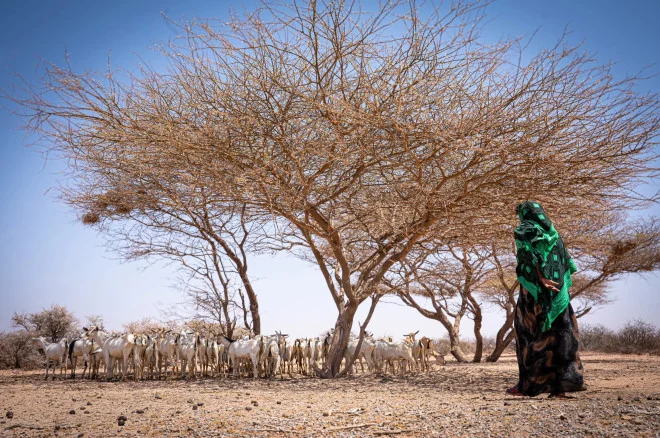
When I returned to Doondheere in 2018, the transformation was heartbreaking. The greenery had vanished, leaving behind barren and degraded land. Eroded soils and dust storms scarred the fields, while many ponds and seasonal water bodies that had supported farmers and livestock were gone. A productive, thriving rural community had become increasingly exposed to hardship.
This blog examines that decline through three central forces: climate change, overgrazing and population growth.
Climate Change
Over the past 30 years, Somalia’s rural communities have faced an unprecedented rise in the frequency and severity of climate-related disasters. Prolonged droughts struck in 2003, 2011, 2017, 2018, and 2023, amid rising temperatures, shifting rainfall patterns and growing climate variability. A 2018 World Bank synthesis report estimated that drought damage in rural communities exceeded $3.25 billion. The consequences have devastated both the landscape and rural livelihoods, causing repeated crop failures, livestock deaths, acute water shortages, and worsening land and soil degradation. As climate change continues to intensify, rural families have begun leaving their land for Mogadishu in search of survival.
Their departure further exposes the countryside to environmental decline. Once families leave, farms and grazing grounds go unmanaged, and established soil-conservation practices cease. Vegetation gradually disappears, erosion accelerates, dust storms become more common, water sources deteriorate, and formerly productive land turns barren.
Overgrazing Problem
Human-driven pressures have magnified the effects of climate change. Overgrazing, unsustainable land use, deforestation and weak natural-resource management have all contributed to the damage. Somalia traditionally relied on a free-roaming pastoral system in which livestock moved across broad areas in search of pasture and water. But growing pressure from livestock, combined with recurring drought, has stripped away vegetation, degraded the land and reduced soil productivity. Together, these stresses have eroded the resilience of pastoral ecosystems and left rural communities more vulnerable.
Population Growth
Somalia’s population rose from about 5 million in the 1970s to more than 19 million in 2025. Yet the economy has not diversified enough to generate sufficient opportunities for this expanding population. Rural production has also changed little: farming and livestock practices remain largely traditional and cannot keep pace with rising demand, climate pressures and changing conditions. Competition for limited natural resources, especially land and water, has consequently intensified, contributing to heightened tensions and frequent armed conflicts between communities.
In the early 1970s, my uncle supported a family of ten comfortably from a small farm while sharing communal grazing land with roughly ten other families. Available land and water could sustain crops and livestock, allowing the community to maintain a viable way of life. More than 200 families now share that same grazing area. Rapid population growth, repeated droughts and limited rural investment have placed immense strain on land and water, driving overgrazing, environmental degradation, falling agricultural productivity and sharper competition for scarce resources.
Solutions
Across Africa, countries have adopted nature-based solutions to confront climate change, overgrazing and population pressures while restoring damaged landscapes and improving the resilience of rural communities. Measures include reforestation, land restoration, sustainable rangeland management, watershed rehabilitation and climate-smart agriculture. Such approaches can rebuild soil health, increase water availability, curb erosion and support more durable livelihoods for vulnerable populations.
Somalia has recently secured substantial international funding for climate change mitigation and adaptation. Much of that money, however, has gone to government institutions at federal and state levels, while only limited resources have reached rural communities bearing the heaviest climate impacts. Practical measures—including land restoration, water management, climate-smart agriculture and community-based adaptation—have therefore remained limited. Directing climate finance toward vulnerable rural populations and locally led solutions is critical to strengthening resilience and delivering meaningful environmental recovery.
With climate mitigation and adaptation financing, several Sub-Saharan African countries have launched world-class programs to combat climate change, rehabilitate degraded landscapes and protect vulnerable communities. They include:
Ethiopia’s Watershed Restoration and Green Legacy initiative – a community-based watershed program encompassing tree planting, reforestation, degraded-land restoration, soil conservation and sustainable land-management practices.
Rwanda – Landscape Restoration and Watershed Management – covering wetland rehabilitation, soil-erosion control, agroforestry promotion and improved agricultural productivity.
Kenya – Restoration of Degraded Rangelands and the Great Green Wall Initiative – centered on restoring drylands and pastoral ecosystems through rangeland rehabilitation, water-harvesting systems, better pasture availability and reduced land degradation.
Tanzania – Sustainable Land and Watershed Management – designed to safeguard water resources, limit erosion and support rural communities.
Rural Communities Matter Today, an estimated 2.5 million rural Somalis are internally displaced, crowded into displacement camps and dependent on humanitarian aid for basic necessities. Emergency assistance remains vital for saving lives, but it cannot provide a lasting answer to rural poverty and displacement.
Somalia must make it a priority to help rural families return to their land and rebuild sustainable livelihoods. That effort requires investment in climate adaptation, nature-based solutions, sustainable farming, watershed restoration and community-led landscape rehabilitation. Giving rural communities the knowledge, skills and resources needed to recover degraded land and adjust to a changing climate would build resilience and lessen dependence on humanitarian support.
Rural communities have long formed the backbone of Somalia’s economy, generating approximately 60% of national GDP and employing more than half the population. They are also indispensable to food security, livestock production and natural-resource management. Supporting them is therefore both a social obligation and an economic imperative. A prosperous, climate-resilient rural economy is crucial to sustainable national development, poverty reduction, and enduring peace and stability.
______________________________________
About the Author
Abdi Siyad Omar is an Architect and Urban and Regional Planner with more than 25 years of international experience in land, natural resources, rural development and environmental planning. He has worked with the United Nations and the World Bank on major infrastructure and water projects in Somalia, Angola, Afghanistan and Pakistan, as well as with Alberta Environment in Canada on land and water management. His work focuses on sustainable development, project management, evaluation and monitoring, Environmental and social impact assessment, climate resilience, and community-driven planning