Wednesday July 22, 2026
Undocumented migrants have faced mounting pressure to leave South Africa from xenophobic groups © MARCO LONGARI / AFP
More than 160,000 foreign nationals have departed South Africa in the past two months, according to an AFP count using figures supplied by governments organising returns, as hostility and violence against undocumented migrants intensified.
Weeks of protests have unfolded across the country, with several turning violent and leaving at least four migrants dead. Some foreign governments, however, put the death toll at a higher level.
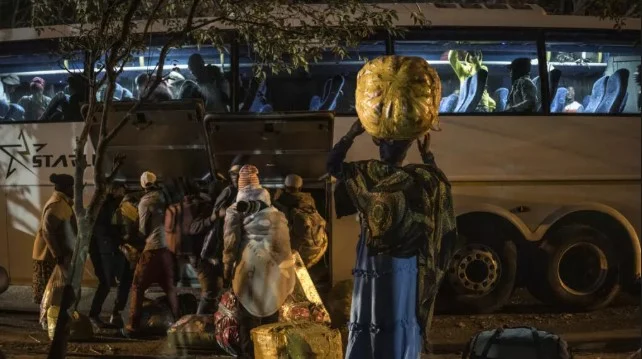
As xenophobic organisations pushed undocumented migrants to leave by their June 30 deadline, nationals from elsewhere in Africa crowded into consulates and community halls in search of a way home. Many arrived carrying little more than their belongings, saying they feared for their safety.
Zimbabweans and Malawians made up the biggest groups leaving, while hundreds of citizens from Ghana, Kenya, Lesotho, Mozambique, Nigeria and Uganda also returned home.
In figures updated on Tuesday, Zimbabwe’s cabinet said 108,366 Zimbabweans had returned by July 18, most of them having repatriated themselves.
Malawi said Monday that more than 46,890 of its citizens had returned since early June. The government deployed 699 buses for the lengthy trip, during which six people died.
South African government data also showed that nearly 2,000 Mozambicans had gone back across the border.
Some were assisted by their government after two Mozambican citizens were killed in late May during violence that followed a protest in the southern town of Mossel Bay.
Those deaths marked the first fatalities in South Africa’s latest surge of xenophobic violence.
Authorities subsequently confirmed that an Ethiopian and a Malawian had died amid what they described as “anti-foreigner sentiment”.
– ‘Afrophobia’ –
Nigeria says two of its citizens were killed during “the ongoing xenophobic protests and attacks of migrants”.
Ghana reported that one of its nationals died in a Cape Town township during “anti-immigrant demonstrations linked to ongoing xenophobic attacks”.
South African authorities have disputed both claims and cautioned that disinformation is circulating online.
Government figures show Nigeria has repatriated about 1,490 nationals, while Ghana has flown at least 926 people home.
Both countries have called for “Afrophobia” to be placed on the agenda of the next African Union summit. Ghana has also delayed a planned visit by South African President Cyril Ramaphosa.
As Africa’s wealthiest nation, South Africa has long drawn documented and undocumented workers from across the continent looking for employment unavailable in their home countries.
Vigilante groups argue that migrants contribute to crime and deprive South Africans of jobs, deepening tensions in townships marked by poverty, joblessness and inadequate policing.
Analysts say migrants have instead become scapegoats for entrenched economic and governance problems, among them unemployment of more than 30 percent and serious failures to provide basic services.
– First coordinated repatriation –
Mostly low-key demonstrations began last year, when undocumented foreign nationals were prevented from using clinics and hospitals.
They gathered pace in the run-up to the June 30 “deadline” and have continued since then.
The anti-immigrant March and March group has pledged to stage demonstrations every week until local government elections in November.
South Africa has experienced repeated waves of xenophobic violence over recent decades.
Anti-immigrant riots in 2008 killed 62 people and forced thousands from their homes. More outbreaks came in 2015 and 2016.
In 2019, armed mobs targeted foreign-owned businesses around Johannesburg, killing at least 12 people — 10 of whom were South African citizens.
Yet this is the first occasion on which such threats have led several governments to organise voluntary, coordinated repatriation efforts at the same time for thousands of their nationals.