
The human cost of defending land and the environment will take centre stage at the COP31 climate summit in Turkey on Wednesday, as activists call for stronger safeguards for those confronting powerful interests.
The discussion comes as land and human rights defenders face mounting intimidation, persecution and violence across much of the world.
Honduras, in Central America, is among the most dangerous countries for activists. Kate Varley and cameraman Bram Verbeke travelled there to meet people who continue to organise despite the risks.
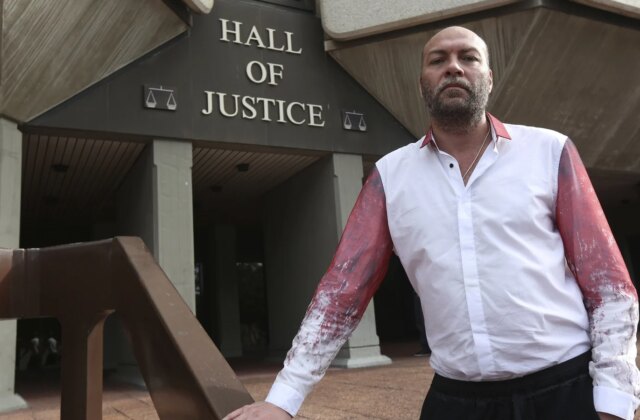
For years, Yoni Rivas has lived cautiously and often out of sight.
His constant vigilance is a consequence of his work defending farmers’ rights in Honduras — a campaign that has brought him repeated and credible death threats.
Yoni Rivas has faced multiple credible death threats
“It is no secret that there is a strategy to assassinate the leadership of the agrarian platform, especially me,” he tells us from the relative safety of a cooperative farm in the north of the country.
“There are assessments that reflect a 90% risk of doing human rights defence.”
Yoni represents small-scale farmers and cooperatives in the Aguán Valley, who say they have endured intimidation, violence, forced evictions and land grabs by criminal groups allegedly connected to powerful agribusiness interests.
In some cases, those disputes have ended in death.
Hundreds of farmers and human rights defenders are reported to have been killed in the conflict since 2010, while most of the crimes remain unpunished.
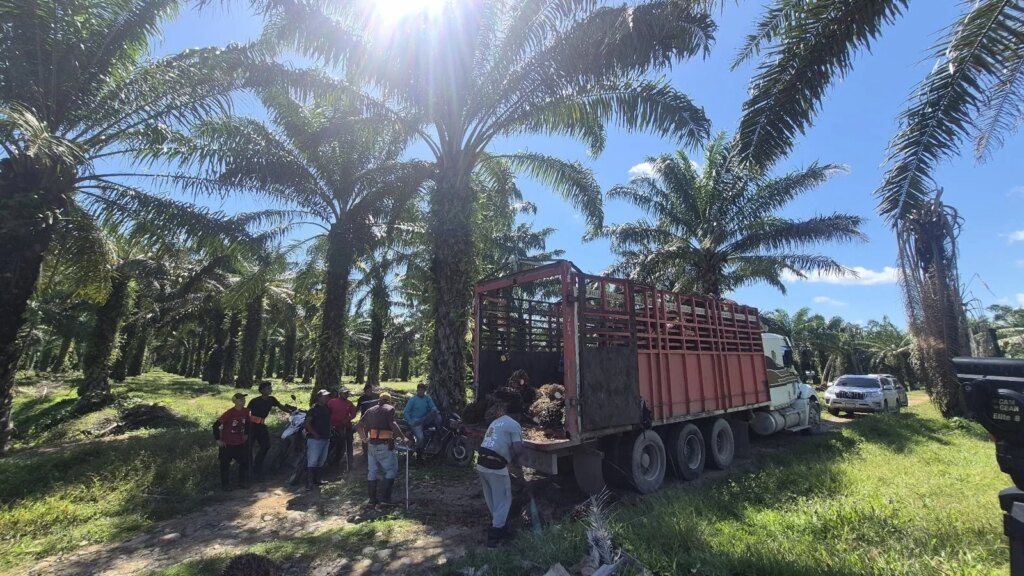
African palm oil has become a large-scale lucrative industry dominated by a few businesses
Global Witness, the international human rights organisation, says Honduras has the world’s highest per-capita murder rate for land and environmental defenders.
Despite the danger, Yoni remains committed to pursuing justice through peaceful means.
“We know that on any day we could suffer a criminal attack,” he says. “However, love is stronger than fear.”
Impact of African palm expansion
At the centre of many of the disputes is a crop used in a vast range of everyday products, including shampoo, chocolate and sliced pan.
That crop is palm oil. In Honduras, it was once produced mainly by small farmers alongside a wide variety of other crops across the fertile Aguán Valley.
Today, however, African palm oil is a highly profitable, large-scale industry controlled by a small number of influential agribusiness companies and families.
As plantations continue to spread, local farmers and cooperatives say they are being removed from land their families have worked for generations.
The shift followed changes to Honduras’s agrarian law in 1992, which made it easier for thousands of acres to move from ‘campesino’ communities — groups of small-scale farmers — into the hands of large agro-industrial companies.
Agrarian organisations allege that many of those transfers were unlawful and say evictions and dispossession are still taking place.
“It generates terror and fear for farmers at the national level,” says Yoni. “And it does not allow production to develop calmly in the field.”
For Wendy Castro, opposing the loss of farmland has brought devastating consequences to her family.
She coordinates the Agrarian Platform and belongs to the El Chile agricultural cooperative, whose members say their land was unlawfully transferred to agribusiness interests during the 1990s.
Wendy Castro says farmers face threats from organised crime groups
“I have long denounced the forced displacement carried out by criminal groups against farmers. As a result, my brother was murdered, my sister was tortured and forced into exile, and my entire family was driven out of the community where they lived.”
“Yet we must continue to tell our story.”
“We conduct our protests and activities peacefully and legally,” Yoni says. “But we are under permanent attack by governments and also by the criminal structures that operate to protect the interests of the agro-industrial in this region of the Aguán.”
Large African palm oil producers in Honduras have rejected those allegations. Corporación Dinant, one of the country’s biggest palm oil companies, said: “We categorically deny allegations of violence against any individual or community where we operate.
“Dinant is a constant victim of coordinated and deliberate efforts to spread false information about the company in an attempt to damage our reputation and gain ownership of land that is legally ours.”
Honduras’s land rights battles are not confined to the palm-growing plains.
In 2024, prominent environmental campaigner Juan López was shot dead after opposing an iron ore mine near the city of Tocoa. His killing prompted international condemnation, including from the late Pope Francis.
Juan López was shot dead in 2024 for opposing an iron ore mine
Eight other activists spent more than two years in prison after protesting against the same mining project, which they feared was polluting two rivers serving their communities: the Río Guapinol and Río San Pedro. They were later acquitted, but continue to report threats linked to their activism.
“To continue fighting is to be aware that we cannot live without water,” says one of the former detainees, José Cedillo. “We will always keep fighting – for the whole community and even for those who criticize us. Going to prison wasn’t easy. It was a bit terrifying, but God gave us strength to go on.”
Javier Maradiaga, another local activist, has also promised to continue defending the rivers that have supported nearby communities for centuries, while acknowledging the personal danger.
“My family has expressed to me that they wish me to leave the struggle. They fear that something may happen to me.”
“But we know that we should not surrender. We are committed to a just cause”.
Jose Cedillo and his wife Juan Zuniga
Inversiones Los Pinares, the company behind the disputed iron oxide mine, has previously defended the project by pointing to economic development and the creation of jobs.
The company did not respond to RTÉ’s request for comment. However, it told the Guardian newspaper in 2020 that “Inversiones Los Pinares is a serious, responsible company that respects human and environmental rights, and complies with all laws, regulations and operating standards.”
As of November 2026, the company and some of its executives are facing legal proceedings over alleged environmental offences.
Legal system ‘weaponised against human rights defenders’
The pressure on communities has intensified over the past year.
In June, Honduras’s right-leaning government approved a controversial law that it says will protect investment in large-scale agriculture, energy developments and tourism.
Opponents argue the legislation could inflict severe damage on rural communities by making it easier for authorities to remove families from land they have occupied and farmed for decades.
According to the UN, more than 1,000 eviction notices have already been issued, with peasant, indigenous and Afro-descendant communities bearing the greatest impact.
Read more: ‘The sea took everything’ – communities at the forefront of the climate crisis
The Honduran Government has previously said it is committed to settling land disputes through comprehensive and peaceful measures. International organisations, however, have questioned how fully those promises have been honoured.
“This is an example of how the legal system is weaponised against human rights defenders,” says George Redman, Country Director for Irish NGO Trócaire, which supports Honduran organisations working on land rights.
“They’re being evicted in many cases by big business, be it mining, hydroelectric power, African Palm. And with the complicity, and sometimes the support, of the government.”
“So they’re fighting just to remain in the place they call home – the place that gives them the food that they eat and the water they drink.”
We need your consent to load this rte-player contentWe use rte-player to manage extra content that can set cookies on your device and collect data about your activity. Please review their details and accept them to load the content.Manage Preferences