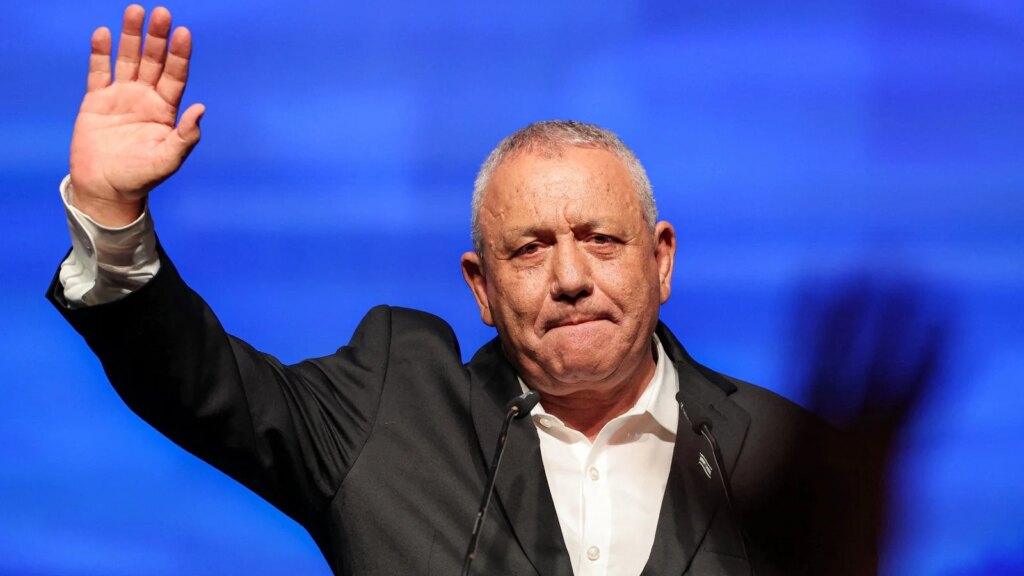
Israel’s president is set to ask Gadi Eisenkot to try to form the next government, handing Benjamin Netanyahu’s opponents what they regard as their clearest opening yet to end the country’s longest-serving prime minister’s tenure.
Mr Eisenkot, a former military chief and political newcomer, leads an opposition bloc that has sought to win over secular and liberal Israelis. Its electoral gains have also raised the possibility of an unlikely partnership with ultra-Orthodox Jewish parties — an alliance that could provide the numbers needed to assemble a coalition.
President Isaac Herzog said he would give Mr Eisenkot the first opportunity to form a government after consulting every party during the week. The decision follows the 27 October election, in which neither political camp won a majority in a country left deeply divided by Mr Netanyahu’s hard-right government and exhausted by three years of war.
The formal appointment is due to take place tomorrow at an official ceremony at the president’s residence in Jerusalem, Mr Herzog’s office said.
Yet the recommendations supporting Mr Eisenkot included representatives of Israel’s Arab minority, whose gains in the election reflected widespread anger at Mr Netanyahu. Right-leaning factions within the opposition, however, have resisted the idea of depending on Arab lawmakers’ votes.
Netanyahu pushes unity government
Mr Herzog, a former member of Israel’s now-defunct left-wing Labour Party, holds a non-partisan office and has developed a working relationship with Mr Netanyahu. He has indicated that he wants to examine the possibility of a national unity government bringing together Jewish Israelis from across the political divide.
Calls for such an arrangement could intensify if Mr Netanyahu acts on threats to restart a war with Iran. US President Donald Trump has not authorised such action and suffered his own setback in Tuesday’s midterm elections.
Mr Netanyahu, who has led Israel for nearly two decades across separate periods in office and overseen its pronounced shift to the right, is facing corruption charges and the possibility of imprisonment if he is forced from power.
He is also subject to an arrest warrant issued by the International Criminal Court over the war in Gaza, an authority he rejects.
Mr Netanyahu has already appealed for a unity government, but opposition parties have maintained that his removal must come first.