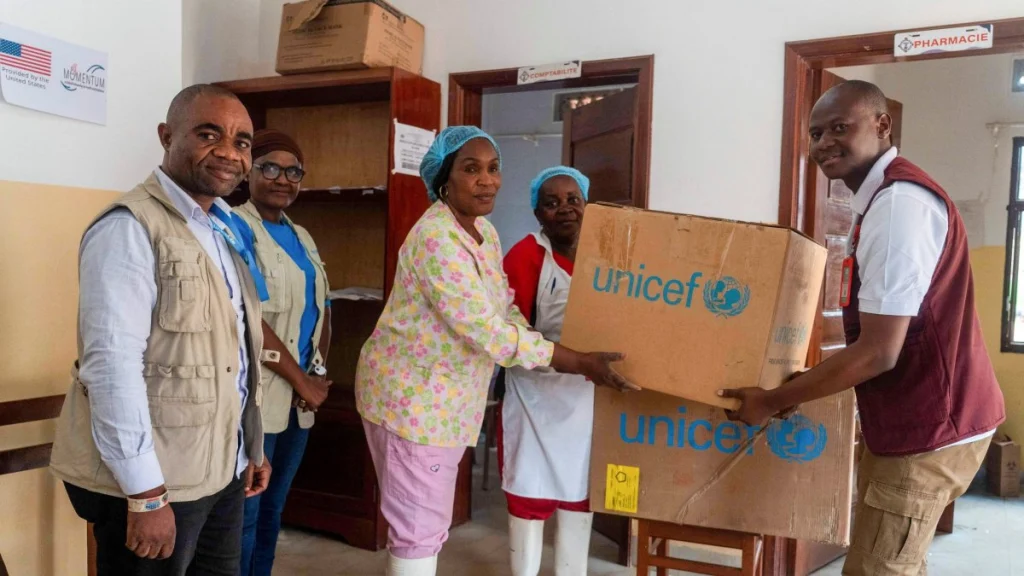
The United States has agreed to keep supplying free, lifesaving medicines and medical equipment to some of the world’s poorest countries, easing fears of another disruption after months of uncertainty surrounding U.S. foreign aid.
UNICEF will purchase the supplies under the arrangement, a State Department spokesperson told Reuters by email. The agency said the agreement will run for one year and is valued at $25 million.
- Advertisement -
The funding is only a small portion of the assistance disrupted by the Trump administration’s cuts to foreign aid and dismantling of the U.S. Agency for International Development, or USAID.
Still, the agreement is expected to prevent an abrupt halt in deliveries relied upon by some of the world’s most vulnerable countries as they negotiate new health assistance deals with Washington.
Nine former U.S. aid officials, nongovernmental organization representatives and government officials told Reuters that a supply interruption had been a serious concern. The existing contract between the defunct USAID and its supplier was scheduled to expire last month.
Shortages
The agreement covers the purchase and delivery of maternal and child health products, along with some nutrition supplies, to at least 15 countries previously served by the program. UNICEF identified the Democratic Republic of the Congo, Haiti and Mali among them.
The deal comes after nearly 18 months of disruption, following Washington’s decision to freeze and later reduce numerous aid programs under its “America First Global Health Strategy.”
In countries including Congo, the effects of the supply gaps are already being felt.
At Nyangezi General Hospital in eastern Congo, health workers said stocks of critical medicines had been exhausted. They included oxytocin, which is used to prevent and treat postpartum hemorrhage, and amoxicillin, an antibiotic used in pediatric treatment and during childbirth.
“It was a donation we received (previously) from USAID, and at the moment, there is none,” midwife Alice Bulambo told Reuters.
Olivier Kabarati Amani, chief medical officer for the Nyangezi health zone, said the area’s main government-run warehouse had faced stockouts for more than a year.
The shortage has pushed health facilities to purchase medicines at market prices. During the past six months, “the cost of care has doubled, if not tripled,” Amani said, as eastern Congo’s health system continues to contend with Ebola.
The State Department said it “has prioritized ensuring all lifesaving commodities have continued to be made reliably available.”
Transition
Maternal and newborn health supplies represented less than 1% of the more than $5 billion spent by the USAID Global Health Supply Chain Program between 2016 and 2023, according to the latest available annual report. Private contractor Chemonics handled the spending.
Reuters first reported in April that the program was set to close. The initiative also managed donations and deliveries of supplies used to fight malaria and HIV. Aid officials had warned that its planned Sept. 30 shutdown could trigger shortages.
Closing the Chemonics supply chain program forms part of a wider U.S. global health strategy intended to move countries toward self-reliance, while reducing U.S. support and dependence on contractors.
Washington has instead concluded more than 30 bilateral health aid agreements with recipient nations, including Congo. The deals require countries to provide funding and are collectively worth billions of dollars.
But negotiations over the agreements remain unfinished, leaving uncertainty about what would bridge the gap in the ordering process.
Although many countries had already begun preparing to take responsibility for maternal and child health needs, five former USAID officials said delivery lead times can stretch to a year or longer.
The Congolese government plans to assume control by next year but has struggled amid the recent uncertainty, said Polydor Kabila, coordinator of the universal health care program in the president’s office.
In addition to the UNICEF agreement, U.S. authorities have extended the deadline for Chemonics to deliver certain essential malaria and HIV products, the State Department spokesperson told Reuters. The United States has also reached an agreement with the Global Fund to Fight AIDS, Tuberculosis and Malaria, enabling countries to order new U.S.-funded HIV and malaria supplies through the fund’s ordering platform.
UNICEF said in a statement that it would work with the United States to “keep health and nutrition supplies moving so more children receive lifesaving care.” The agency said orders had not yet been placed but were expected soon.