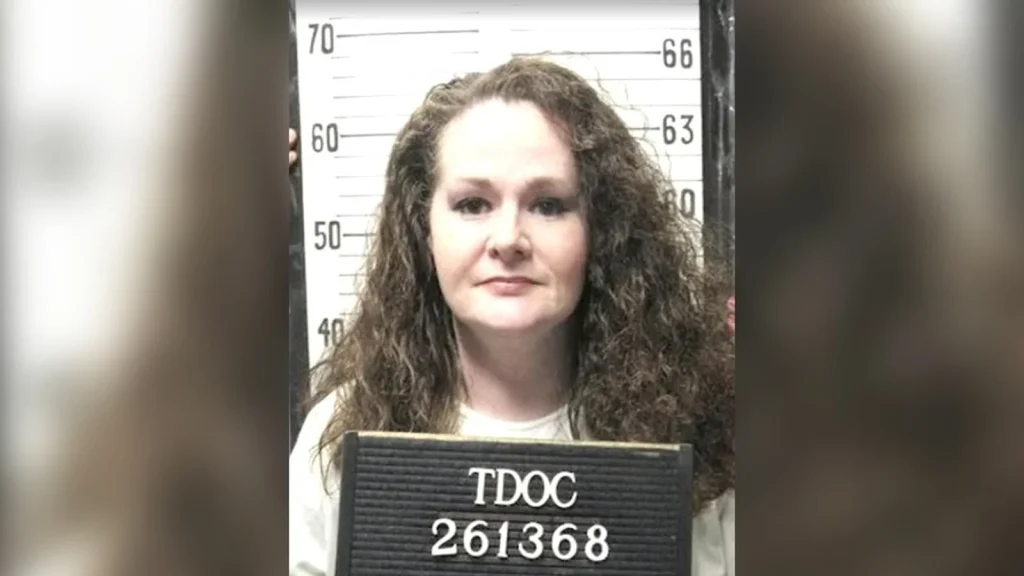
Christa Pike, who survived Tennessee’s failed attempt to execute her by lethal injection, has been returned to prison, her lawyers said.
Pike, 50, was released from hospital care and taken back to the Debra K Johnson Rehabilitation Centre, the women’s prison where she had been held for 30 years, according to her legal team.
- Advertisement -
“She is grateful to the first responders and her medical team for their care in these extraordinary circumstances. She is continuing to receive medical care at the prison, and we will continue to track her recovery,” her lawyers said.
Pike survived two doses of pentobarbital on 30 September, when Tennessee tried to execute her for the 1995 murder of her classmate, Colleen Slemmer.
She was placed on a ventilator at one stage, and her lawyers initially feared she would not survive. But Pike regained consciousness and began speaking and walking with assistance, they said.
The Death Penalty Information Centre said Pike was the first person known to survive after receiving lethal-injection drugs during an execution.
The Tennessee Department of Correction has not explained what went wrong during the procedure.
Medical and lethal-injection specialists have examined whether an issue with the IV line caused the drugs to collect in Pike’s tissue rather than reach her bloodstream.
In a court filing, Pike’s lawyers wrote that “apparently at no point did any member of the execution team realise that the IV lines were not correctly placed”.
The botched execution has intensified scrutiny of Tennessee’s procedures for carrying out death sentences.
Governor Bill Lee has since postponed the state’s only other scheduled execution this year and ordered an investigation into what happened.
The state’s prison chief resigned after the failed execution.
As the procedure began, Pike was asked whether she had a final statement and said she was at peace.
Roughly five minutes later, she lifted her head and said that her arm hurt.
She later appeared to lose consciousness, though witnesses could hear her breathing heavily until media observers were led out of the witness room nearly 90 minutes after the execution began.
An ambulance eventually transported her to hospital.