
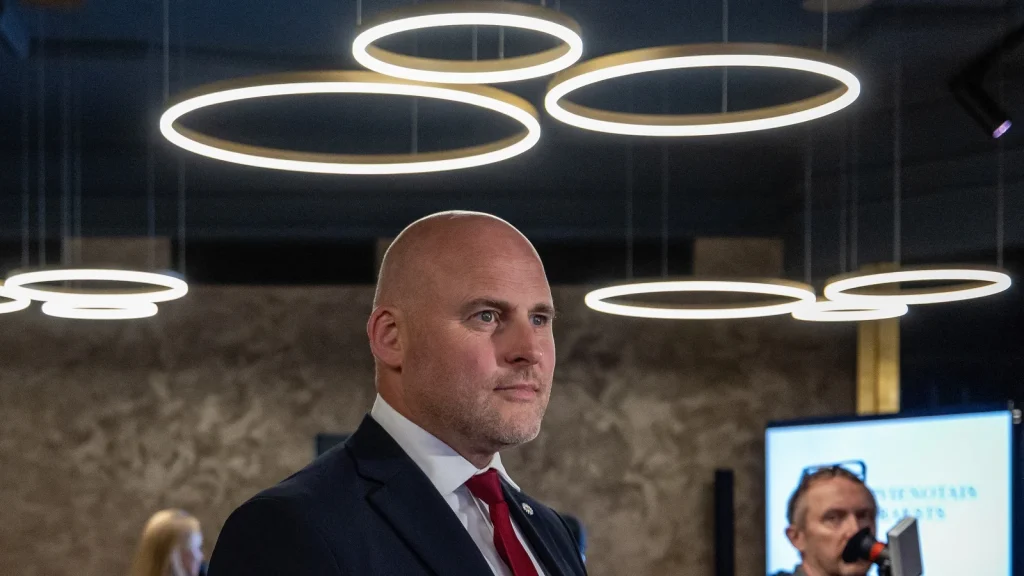
Latvian Prime Minister Andris Kulbergs’ centre-right United List has secured a decisive victory in parliamentary elections, leaving him to assemble a new coalition as he seeks to preserve the country’s firmly pro-European and pro-Ukrainian direction.
Populist forces also made gains, drawing increased support from Latvia’s Russian-speaking minority in a campaign shaped by anxiety over neighbouring Russia, soaring living costs and mounting social pressures.
- Advertisement -
United List captured 42 of the parliament’s 100 seats — the strongest result recorded by any party in Latvia since the former Soviet republic restored its independence.
Exit polls had already pointed to a commanding win, but Mr Kulbergs said the scale of the result exceeded his expectations.
A former manager in the telecommunications and automotive industries, Mr Kulbergs became prime minister in May, leading a centre-right coalition.
The election will require him to find new coalition partners after one member of his governing alliance failed to cross the five-percent threshold needed to enter parliament.
‘Strong border’
Security continues to dominate political debate in Latvia, more than four years after Russia launched its full-scale invasion of Ukraine.
A NATO and European Union member since 2004, Latvia regards Russia as its main security threat and has sharply increased defence spending in response.
Latvia has a population of 1.9 million
“Because we are the external border of Europe, we must have a strong economy… a strong border region,” Mr Kulbergs said.
“That is the main task.”
Yet campaign debates also focused heavily on the pressures facing everyday life, including rising prices, low wages, a strained healthcare system and the country’s long-term population decline.
Most parties expected to win parliamentary seats backed continued military support for Kyiv and high defence spending. The right-wing Sovereign Power party, however, took a different position.
It has opposed military aid to Ukraine and further increases in defence spending. After making the cost of living a central campaign issue, it appeared set to finish third with 15 MPs.
Right-wing populist parties
Sovereign Power has been labelled pro-Russian by its critics, while most major parties have ruled out entering into a coalition with it.
Latvia First, a conservative party led by a property magnate frequently compared with US President Donald Trump, finished second and won 17 seats.
Both populist parties benefited from shifting voting patterns among Latvia’s Russian-speaking minority, which accounts for roughly a third of the population.
For years, many voters from that community had rallied behind Harmony, once the country’s largest political party.
But Harmony was widely viewed as pro-Kremlin, and its support plunged in the previous election, held soon after Russia’s full-scale invasion of Ukraine.