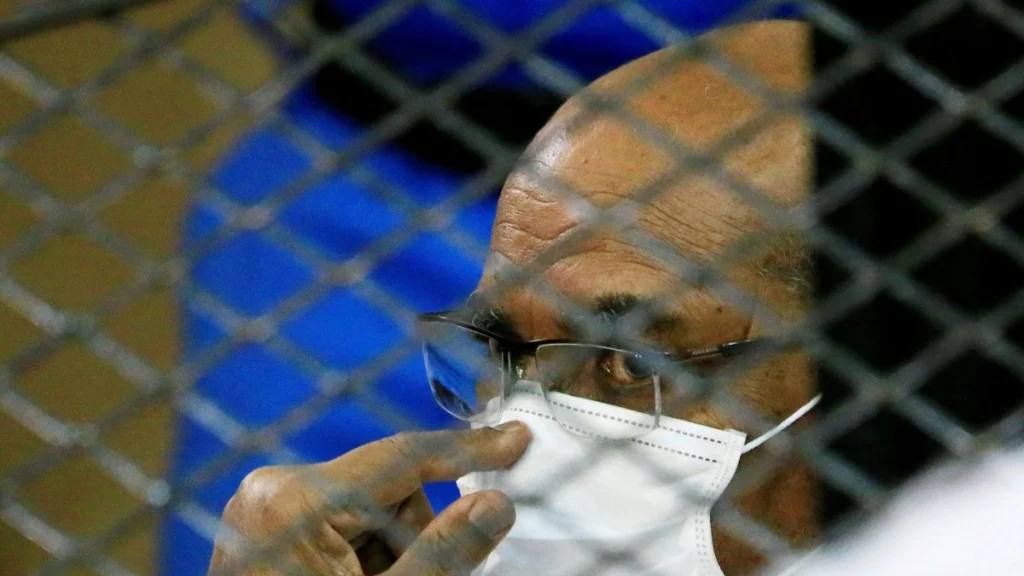
Sudan’s ousted president, Omar al-Bashir, has been transferred to a military-run hospital in Khartoum and may need treatment abroad, his lawyer said Thursday, as uncertainty grows over the former leader’s health.
Bashir, 82, was removed from power by Sudan’s army and the paramilitary Rapid Support Forces in April 2019, following months of mass protests that ended his nearly 30-year presidency.
- Advertisement -
The army and RSF later became rivals after disagreeing over a plan to integrate the paramilitary group into the armed forces as part of a proposed transition to civilian government. Their dispute escalated into war in April 2023, unleashing a devastating conflict that has killed and displaced large numbers of people and destroyed much of Sudan.
Bashir was transferred from prison to a hospital before the war began. He was subsequently taken to Merowe in northern Sudan, where he remained under military guard.
His lawyer, Mohamed Alhassan Alameen, told Reuters that Bashir was brought to Khartoum for medical examinations after developing symptoms that required diagnosis and care outside Sudan.
Bashir’s family said in a statement issued Wednesday that the need to send him abroad for treatment “has become critical and urgent, and cannot be delayed any longer.” The family said, however, that it had not received official authorization for the transfer.
The nature of Bashir’s illness remained unclear. Sudan’s military did not immediately respond to a request for comment.
Several prominent Sudanese Islamist figures have also used social media to call for Bashir to be taken out of the country.
Such a move could provoke political tensions inside Sudan and prompt international condemnation. Bashir is wanted by the International Criminal Court on charges including genocide, while separate cases against him remain open in Sudan.
During Bashir’s three decades in power, the United States designated Sudan a state sponsor of terrorism and imposed broad sanctions on the country. Protesters who led the uprising accused Bashir and his Islamist National Congress Party of entrenched corruption and repression.
Following his ouster, Bashir faced multiple prosecutions and was convicted of corruption and illicit financing. He was serving a prison sentence on those charges when the war erupted.
The Axadle Times Newsletter
Keep up to date with what’s happening in Turkey,
it’s region and the world.
SIGN ME UP
You can unsubscribe at any time. By signing up you are agreeing to our Terms of Use and Privacy Policy.
This site is protected by reCAPTCHA and the Google Privacy Policy and Terms of Service apply.