
By RODNEY MUHUMUZAFriday August 7, 2026
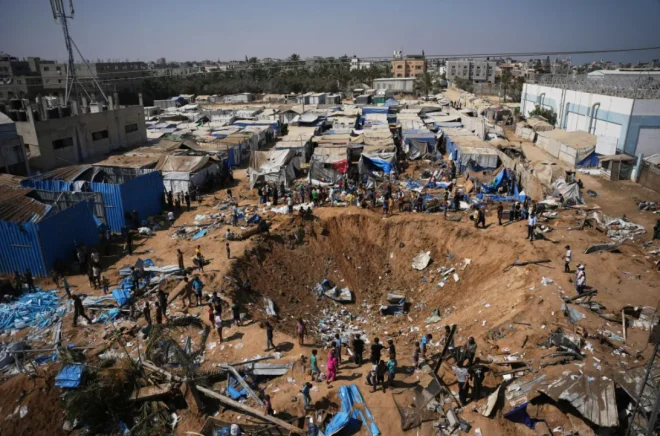
Palestinians inspect the scene of an Israeli airstrike near al-Aqsa Hospital in Deir al-Balah in the central Gaza Strip, Saturday, Aug. 1, 2026. (AP Photo/Abdel Kareem Hana)
Uganda’s Parliament has approved the deployment of troops to Gaza, making the country the first to publicly signal its readiness to join the international force proposed by U.S. President Donald Trump’s Board of Peace to secure the territory after the devastating Israel-Hamas war.
The motion, introduced Thursday by Defense Minister Kiryowa Kiwanuka, authorizes Uganda to participate in the International Stabilization Force for Gaza. Morocco has also pledged troops for the mission.
Ugandan authorities did not immediately explain why they agreed to the deployment or whether any quid pro quo was involved. Opposition lawmakers questioned the decision, with Hassan Kirumira warning that it could create “diplomatic concerns” for Uganda, a member of the Organization of Islamic Cooperation.
“On which side is our army going to fight?” Kirumira asked in parliament, saying that was the “big question” supporters of the deployment needed to answer.
Kiwanuka urged lawmakers to back the mission, pointing to Uganda’s military experience and capabilities, including its peacekeeping deployments in countries such as Somalia.
Trump’s Board of Peace proposed the force in February. It would be led by American Maj. Gen. Jasper Jeffers, who said in May that the 20,000-strong mission would help secure “future prosperity and enduring peace.”
Trump announced an agreement last week under which Hamas would disarm and Israel would withdraw its forces from Gaza. The International Stabilization Force would enter the territory after Israeli troops complete a phased withdrawal, according to the deal.
The agreement forms part of a broader ceasefire arrangement reached last year. It requires Israel to end its military operations and Hamas and its allies in Gaza to stop all militant activity, while also outlining the decommissioning process in general terms.
After the agreement’s text was released, Israel said it had “serious security concerns” and had raised them with the United States.
Israeli attacks have killed 1,250 people since the ceasefire deal was reached in October. That agreement ended the major fighting in the Israel-Hamas war, which had continued for two years.