Wednesday July 22, 2026
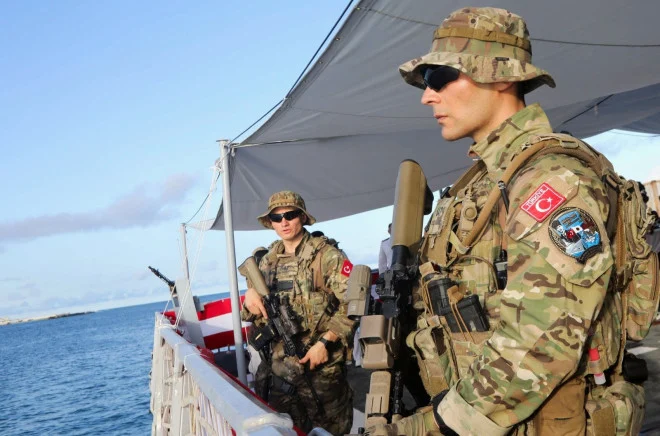
Turkish marine forces stand guard aboard the Turkish Navy Ship F514 after it docked at the Mogadishu Sea Port, Mogadishu, Somalia, April 23, 2024. (Reuters Photo)
Ankara (AX) — Türkiye will keep its armed forces deployed in Somalia through July 2028 after Parliament on Tuesday approved President Recep Tayyip Erdogan’s request for a further two-year extension, effective July 27, 2026.
The vote permits Turkish military personnel to continue operating in Somalia under the bilateral agreements binding the two countries.
The deployment is designed to back Somalia’s fight against terrorism, piracy, illegal fishing, smuggling and other security challenges.
According to the mandate, the operation must comply with U.N. Security Council resolutions and international law. Erdogan will determine the mission’s scale, scope and areas of operation.
The Turkish presidency told Parliament that Somalia had requested the continued support under the Defence and Economic Cooperation Framework Agreement signed by the two nations.
It said the deployment would assist Somalia in safeguarding its economic resources, improving the capabilities of its defense and security forces, and moving toward a point where national institutions can independently provide security.
Turkey’s government stressed that stability in Somalia carries consequences beyond its borders, citing the Horn of Africa and vital sea lanes connecting the Gulf of Aden, Arabian Sea and Indian Ocean.
Officials said the continued mission would also support the security of a major international shipping corridor.
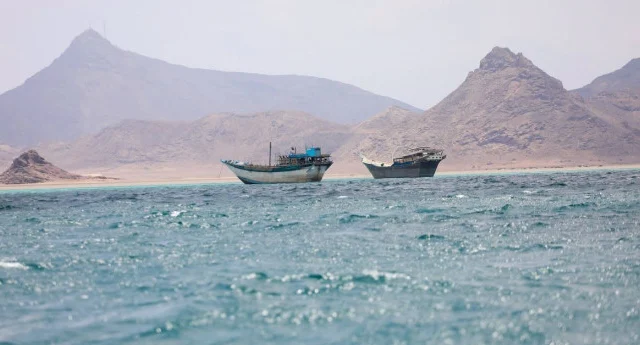
Turkish troops can operate in areas jointly identified by the two governments, including within Somalia’s maritime jurisdiction, under mutually agreed rules.
The mandate also allows for cooperation with third countries and international organizations when needed.
Türkiye has built close relations with Somalia since 2011, combining humanitarian relief, development assistance and infrastructure investment with a growing defense partnership.
The countries have entered agreements on military instruction, technical and scientific cooperation, defense-industry partnerships and military financial aid.
Ankara runs its largest military training base outside Türkiye in Mogadishu. Thousands of Somali soldiers have received training there as part of the effort to rebuild Somalia’s armed forces and confront al-Shabab.
In 2024, Türkiye and Somalia signed the Defence and Economic Cooperation Framework Agreement, expanding Ankara’s support for Somali maritime security and defense capabilities.
Lawmakers from the governing side said the extension underscored Türkiye’s expanding role in regional security and its defense partnership with Somalia, undertaken at the request of the internationally recognized government.
They said the operation forms part of Türkiye’s wider engagement across Africa, intended to help Somalia establish self-sustaining security institutions, promote regional stability and protect strategically important maritime trade routes.
The parliamentary decision arrives as Somalia and Turkish Petroleum, Türkiye’s state-owned oil company, continue drilling the Curad-1 oil well off the Somali coast.
Somali officials have said initial exploration findings from Curad-1 are due by the end of 2026. Situated roughly 372 kilometers northeast of Mogadishu, Curad-1 is Somalia’s first officially drilled offshore oil well.
Drilling began after 3D seismic surveys were completed across three offshore blocks, identifying the site for the operation.
The well is expected to reach nearly 7,500 meters and may require as long as 288 days to finish, placing it among the deepest offshore oil wells in the world.
– With files from the TRT