Somalia’s Security Handover Under Strain as Donor Fatigue Deepens Amid Political and Security Delays
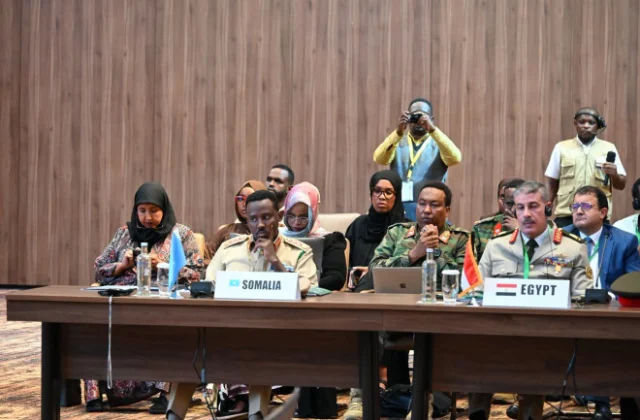
MOGADISHU, Somalia — Somalia’s fragile security transition has entered a decisive stretch, with regional leaders and senior officials gathering in Uganda to weigh the future of the African Union Support and Stabilization Mission in Somalia (AUSSOM) as the mission confronts tightening finances and doubts over sustained international backing.
The extraordinary summit of AUSSOM troop-contributing countries in Kampala has drawn leaders and senior officials from Burundi, Djibouti, Egypt, Ethiopia, Kenya, Somalia and Uganda, along with representatives of the United Nations, African Union and the Intergovernmental Authority on Development (IGAD).
The three-day session opened Wednesday with discussions among defence chiefs, before moving to a meeting of defence ministers on Thursday. Heads of state and government are scheduled to convene for their summit on Friday.
AUSSOM is under increasing financial strain following a drop in international donor support and Washington’s decision to halt funding for United Nations logistical support to the mission by December 2026. The shortfall has intensified concern about whether the mission can keep operations running and preserve security gains made in Somalia.
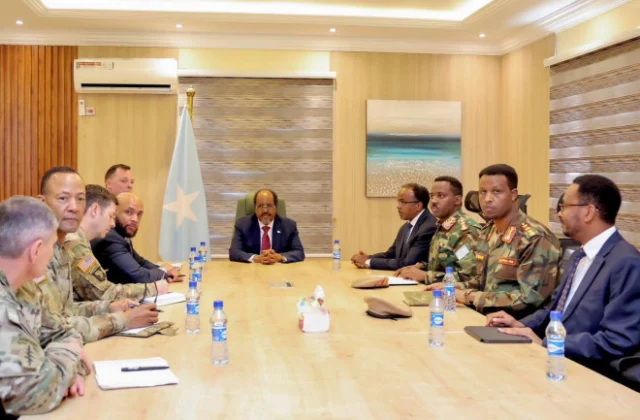
In a separate engagement, Somali President Hassan Sheikh Mohamud held talks with the commander of the U.S. Africa Command (AFRICOM), General Dagvin R.M. Anderson, at Villa Somalia’s Halane security complex in Mogadishu. Their discussions centered on speeding up operations against Al-Shabaab, reinforcing the Somali National Army and broadening security cooperation between Somalia and the United States.
Despite continued backing from international partners, frustration is mounting over Somalia’s slow political progress, persistent internal divisions and postponed electoral reforms. Analysts say battlefield advances alone will not secure lasting stability, arguing that Somalia also needs inclusive political settlements, dependable governance and stronger state institutions able to assume full responsibility for national security.
AXADLETM