By Omar M. ElmiThursday August 6, 2026
As the Middle East war widens, Djibouti’s strategic balancing act faces its greatest test
The conflict in the Middle East is spreading well beyond the battlefields of Lebanon, Iran, Israel and the Gulf States. A widening confrontation now runs from the Persian Gulf to the Red Sea, with the Strait of Hormuz at the heart of mounting tensions and the Bab el-Mandeb Strait emerging as an increasingly militarized passage. The fighting and its consequences are moving steadily toward the shores of the Horn of Africa.
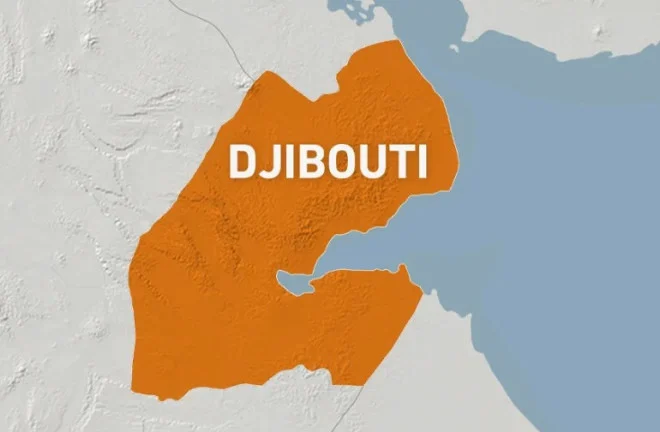
No country in the region is more immediately exposed to this changing strategic environment than Djibouti.
For decades, Djibouti has turned an extraordinary geopolitical position into economic strength. Although it hosts American, French, Chinese, Japanese and Italian military bases, the country has maintained a reputation for strategic neutrality while acting as Ethiopia’s main maritime gateway and a major logistics center.
That carefully maintained equilibrium, however, may now be facing an unprecedented test. Djibouti’s most serious threat may not be economic alone. The gradual weakening of the neutrality that has supported its security, diplomacy and prosperity since independence could prove even more consequential.
From economic shock to possible strategic confrontation
My earlier analysis examined chiefly the economic damage a prolonged Middle East war could inflict on Djibouti.Those dangers remain substantial. Djibouti is deeply vulnerable to disruptions in global supply chains. Its reliance on imported fuel, manufactured products and maritime commerce leaves it particularly exposed if the conflict intensifies around the Strait of HormuzYet the crisis has moved beyond the question of higher prices. Increasingly, it is also about Djibouti’s own strategic position.
The Red Sea: from commercial corridor to military theatre
The Strait of Hormuz has traditionally been regarded as the world’s most important energy chokepoint. A second waterway now carries comparable strategic weight. At its narrowest, the Bab El-Mandeb Strait, at the Red Sea’s southern entrance, is barely 26 kilometers wide between Djibouti and Yemen. It links the Red Sea with the Gulf of Aden and, ultimately, the Indian Ocean, carrying a substantial volume of global trade and energy shipments.
For years, the Bab el-Mandeb was chiefly understood as a commercial route. That perception is changing as the waterway becomes a frontline. Recent Houthi attacks on commercial shipping, Saudi military strikes on Sana’a and Houthi threats against Saudi energy exports show that the Red Sea has become the central theatre. A prolonged confrontation there would have a direct impact on Djibouti’s ports, shipping lanes and logistics industry.
From Neutral Platform to Coalition Member?
Saudi Arabia has announced a multinational maritime coalition intended to protect navigation in the Red Sea and through the Bab el-Mandeb Strait. Publicly available reports list Djibouti among the participants, alongside Saudi Arabia, Egypt, Jordan, Bahrain, Kuwait, Qatar, Pakistan, Turkey, Bangladesh, Sudan, Nigeria, Djibouti, Somalia and Yemen’s internationally recognized government.
Should Djibouti’s participation in the Saudi-led maritime coalition be confirmed, it would mark a tangible shift in the country’s regional posture. Formed to defend the Red Sea and Bab el-Mandeb against Houthi attacks, the coalition places its members within the wider strategic framework aligned against the Houthis.
Whether Djibouti limits its role to logistics or accepts wider political obligations may ultimately matter less than how its involvement is understood by the Houthis and other regional powers.
Public association with a coalition can cause a country to be seen as belonging to the opposing side. Riyadh presents the initiative as an effort to protect one of the world’s most important maritime trade routes. The Houthis, however, may interpret the arrangement very differently.
Djibouti could increasingly be seen not merely as a neighboring country, but as a member of a coalition created to oppose Houthi operations in the Red Sea. Since independence, Djibouti has followed a notably pragmatic foreign policy. Its territory accommodates military forces from countries whose strategic priorities often diverge. That balancing act has made the country a trusted platform rather than a direct actor in regional contests.
That neutrality has been among Djibouti’s most valuable strategic resources.
The emerging regional order therefore poses a critical question: Can Djibouti join a coalition led by one of the conflict’s principal belligerents and still preserve its image of neutrality? The answer could shape the country’s future security.
North Western State of Somalia: another strategic variable
Recent reports have pointed to a growing Emirati military presence in Berbera and raised questions about possible future access for other international partners, including the USA and Israel. Several elements of those reports remain contested and should be approached cautiously. Even so, they reflect a larger development: the southern entrance to the Red Sea is becoming increasingly militarized.
Military facilities are expanding from the Gulf of Aden to the Bab el-Mandeb. The Horn of Africa is increasingly being drawn into the Middle East’s security architecture. The danger, however, extends beyond direct military confrontation.
History shows that prolonged regional wars often produce indirect security risks. Djibouti receives Yemeni refugees, lies along key maritime routes and sits where major commercial and Ethiopian migration networks intersect.
In this environment, the risks of arms trafficking, illicit networks and cross-border destabilization inevitably grow. No publicly available evidence currently connects the Houthis to armed groups operating inside Djibouti. Still, regional turmoil can give outside actors openings to exploit local grievances or dormant tensions. That possibility calls for close monitoring, not alarmism.
Ethiopia’s strategic calculations
Another effect may become visible only over time.
Djibouti’s economy remains tightly linked to Ethiopia, whose foreign trade depends overwhelmingly on Djiboutian ports.If insecurity continues in the Red Sea, Addis Ababa could move faster to diversify its access to the sea.Through the LAPSSET Corridor, Kenya’s ports of Mombasa and Lamu are increasingly being considered complementary alternatives.The most serious long-term threat to Djibouti may therefore not come from missiles or drones, but from a gradual shift in regional trade routes.
Geography has not changed, perceptions may have changed
Djibouti still occupies the same strategic location. What has changed is the geopolitical setting around it. For decades, the country benefited from a situation in which nearly every major power had an interest in protecting its neutrality.Today, that neutrality is facing growing pressure.
If Djibouti becomes a party to regional military alignments instead of remaining an impartial logistics platform, it risks undermining the comparative advantage on which its modern economy rests.
Djibouti’s central challenge is therefore not simply to absorb the economic effects of the Middle East war. It must also preserve the strategic trust that has made it a vital link in regional trade.
In geopolitics, neutrality is more than a legal designation. It is a strategic asset—and once surrendered, it is exceptionally difficult to regain.
_______________________
By Omar M. ElmiPolitical Analyst specializing in the Horn of Africa and Red Sea Geopolitics