
Tibs — Ethiopian Sautéed Beef
Ethiopian sautéed beef, seared hard with onion, chilli and rosemary and served sizzling — a celebratory dish cooked in minutes.
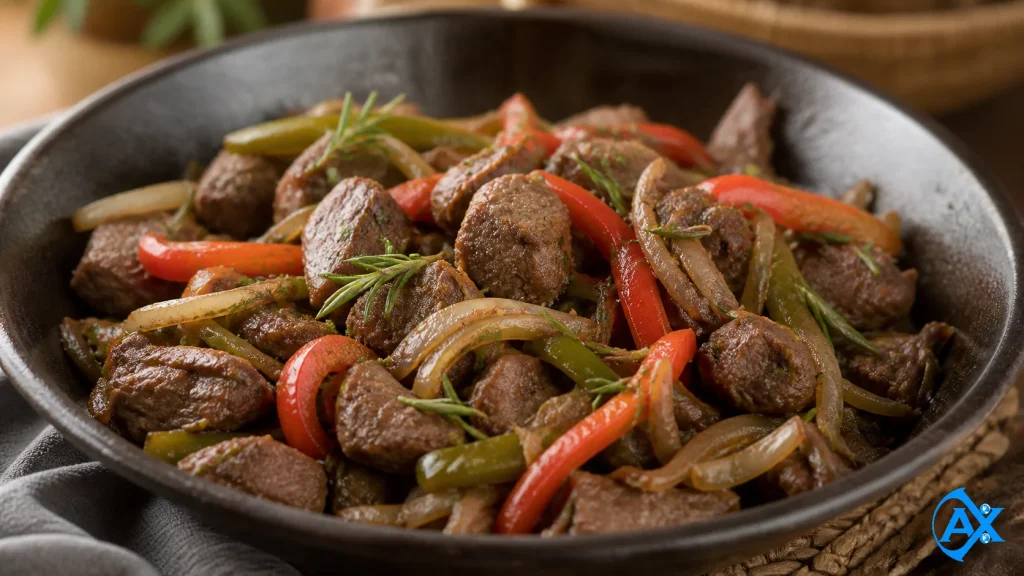
Method
- Pat the beef completely dry and season it with salt. Let it sit at room temperature for 15 minutes so it sears rather than steams.
- Heat a heavy frying pan or cast-iron skillet over high heat until very hot, about 3 minutes. A drop of water should evaporate on contact.
- Add half the niter kibbeh, then half the beef in a single layer. Leave it undisturbed for 90 seconds to form a crust, then toss and sear for another 60 to 90 seconds. Remove and repeat with the second batch.
- Lower the heat to medium-high, add the remaining niter kibbeh and the onion wedges, and cook for 3 to 4 minutes so they soften at the edges but keep their shape and bite.
- Add the garlic, ginger, chillies and rosemary and stir for 1 minute until aromatic.
- Return the beef and any resting juices to the pan, add the berbere and the tomato wedges if using, and toss everything together over high heat for 2 to 3 minutes.
- Taste for salt. The beef should stay pink in the centre and the onions should still have texture; cooking further turns tibs dry.
- Serve immediately, straight from the pan, with injera or bread and a wedge of lemon.
How to make Tibs — Ethiopian Sautéed Beef
Tibs is the Ethiopian dish for honouring a guest. Where wats simmer for hours, tibs is fast, loud cooking: meat cut small, a pan heated hard, and everything on the table within minutes of hitting the heat. In restaurants it often arrives still sizzling on a clay plate set over glowing charcoal.
Heat, then space
- Advertisement -
Two rules decide whether tibs works. The pan must be genuinely hot before the meat goes in, and the meat must go in with space around it. Cook it in two batches: a crowded pan drops in temperature, the beef releases liquid, and you end up boiling expensive steak.
Onions with bite
The onions are not meant to melt. Cut into thick wedges and cooked briefly, they stay crisp at the centre and provide contrast to the beef. This is the opposite of the slow onion base used in doro wat or misir wat.
Choosing a cut
Tender cuts suit this method: sirloin, tenderloin or a well-trimmed rump. Lamb is equally traditional, and the same technique produces a very good version with goat, though it needs slightly smaller cubes.
Variations
Derek tibs is cooked drier and longer for a chewier result, while awaze tibs is finished with awaze, a paste of berbere and tej or wine. A spoonful of niter kibbeh added at the end gives the aromatic finish typical of restaurant versions.
Traditional Ethiopian cookery; tibs is served for guests and celebrations, often brought to the table on a clay dish over hot coals. Editorially researched from widely documented preparations, and not kitchen-tested by Axadle.
Contains dairy if cooked in niter kibbeh; use oil instead to avoid it. Naturally gluten-free, egg-free and nut-free.

Join the conversation