
Taameya — Egyptian Fava Bean Falafel
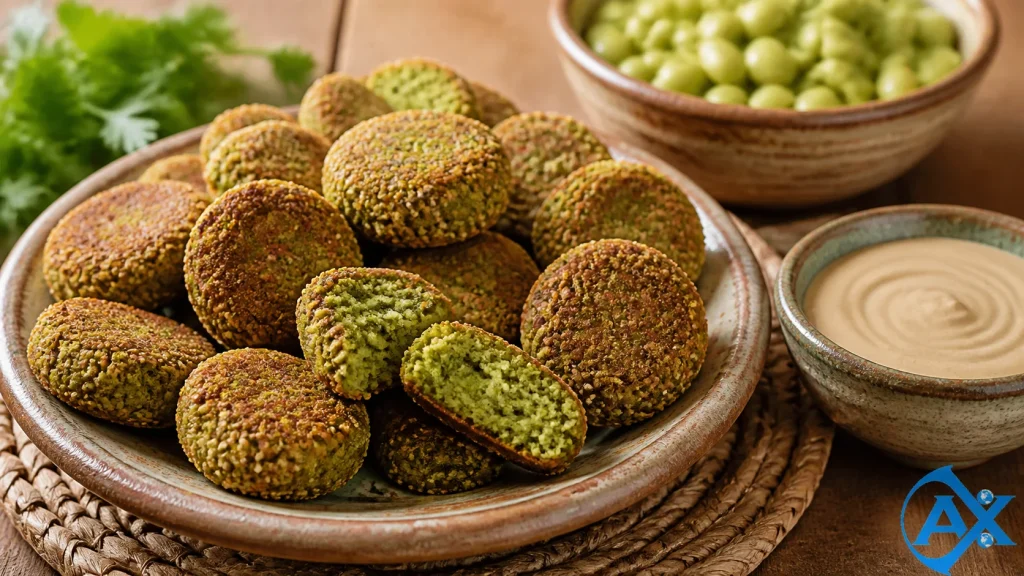
Egyptian falafel made from split fava beans and a mass of fresh herbs — green inside, crisp outside, and lighter than the chickpea version.
Method
- Drain the soaked beans thoroughly and spread them on a towel to dry. Wet beans make a loose mixture that disintegrates in the oil.
- Put the beans, herbs, onion, garlic and leek in a food processor and pulse to a coarse, bright green paste. Work in two batches so the machine grinds rather than purées; the texture should resemble coarse sand, not hummus.
- Transfer to a bowl, add the cumin, ground coriander, chilli and salt, and mix well with your hands.
- Cover and refrigerate for at least 1 hour. Chilling firms the mixture and makes shaping far easier.
- Just before frying, sprinkle over the bicarbonate of soda and mix it in quickly. Added early it loses its lift; added now it gives the light, airy middle taameya is known for.
- Shape heaped tablespoons into flat patties about 5cm across and 1.5cm thick, then press one side into sesame seeds.
- Heat the oil to 170°C. A small piece of the mixture should rise and bubble steadily within 2 seconds.
- Fry in batches of 5 or 6 for 3 to 4 minutes, turning once, until deep golden brown and crisp. Do not crowd the pan or the temperature drops and they absorb oil.
- Drain on a rack and serve hot, in flatbread with tahini sauce, tomato and pickles, or alongside ful medames.
How to make Taameya — Egyptian Fava Bean Falafel
Taameya is the Egyptian original, and it is not simply falafel by another name. Where Levantine falafel uses chickpeas, taameya is made from split fava beans and a far greater quantity of fresh herbs, which gives it a vivid green centre and a lighter, fluffier texture.
Soak, never boil
- Advertisement -
The beans are soaked, never cooked, before grinding. Boiled beans turn the mixture to paste and the patties fall apart in the oil. Twelve hours in cold water is enough; change the water once if your kitchen is warm.
Herbs by the bunch
Measure the herbs generously. Two large bunches plus dill is not a mistake, and it is what produces the colour and the fresh flavour that distinguishes taameya from a dense, beige patty.
Bicarbonate at the last moment
Mixing in the bicarbonate just before frying is a small detail with a big effect: it reacts in the hot oil and aerates the inside. Added an hour early, it has already done its work in the bowl.
Serving
In Egypt taameya is breakfast as often as lunch, stuffed into baladi bread with tahini, salad and pickled vegetables, or served beside a bowl of ful. Fry only what you will eat; the mixture keeps raw in the fridge for two days.
Traditional Egyptian cookery; taameya predates and differs from the chickpea falafel of the Levant. Editorially researched from widely documented preparations, and not kitchen-tested by Axadle.
Made from fava beans, unsuitable for anyone with favism (G6PD deficiency). Contains sesame if coated in sesame seeds. Naturally gluten-free, dairy-free and egg-free.

Join the conversation