
Suugo Suqaar — Somali Pasta Sauce
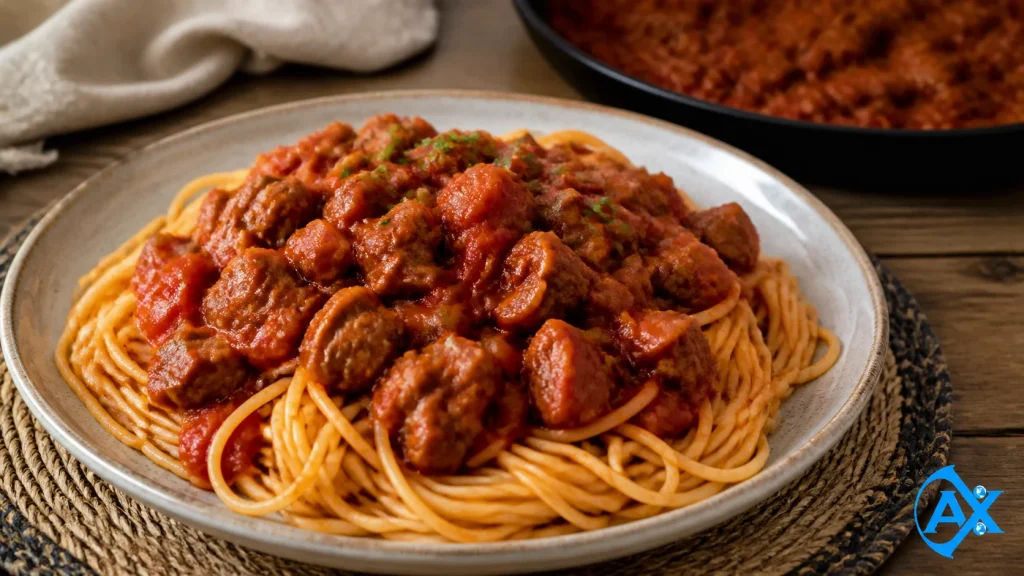
The Somali pasta sauce: diced beef cooked down with xawaash, peppers and tomato until thick enough to cling to every strand.
Method
- Pat the beef cubes dry with kitchen paper. Dry meat browns; wet meat stews and stays grey.
- Heat the oil in a wide pan over high heat. Sear the beef in two batches for about 3 minutes each, turning once, until well coloured on at least two sides. Remove and set aside.
- Lower the heat to medium. Cook the onion in the same pan for 6 to 8 minutes until soft and translucent, scraping up the browned bits from the base.
- Add the garlic, ginger, bell pepper and carrot and cook for 5 minutes more, until the pepper softens slightly but keeps some bite.
- Stir in the xawaash, turmeric and chilli and cook for 60 seconds, until fragrant. Add the tomato paste and fry it for a further 2 minutes, stirring, until it darkens from bright red to brick.
- Pour in the blended tomatoes and the water, return the beef with its juices, and season with salt. Bring to a simmer.
- Simmer uncovered for 25 to 30 minutes, stirring occasionally, until the beef is tender and the sauce has reduced to a thick, glossy consistency that holds its shape briefly when you drag a spoon through it.
- While the sauce reduces, cook the spaghetti in well-salted boiling water until just tender, then drain, reserving a cup of the cooking water.
- Taste the sauce and adjust salt and chilli. Toss the pasta with a few ladles of sauce, loosening with a little pasta water if needed, then top with more sauce and scatter with coriander. Serve with banana on the side, as is traditional.
How to make Suugo Suqaar — Somali Pasta Sauce
Suugo suqaar is where Somali spicing meets Italian pasta, a pairing left behind by the colonial period and long since made entirely Somali. Suqaar refers to the small cubes the meat is cut into; suugo is the sauce. Together they form one of the most-cooked weeknight dishes in Somali homes and a fixture of restaurant menus across the diaspora.
Cut small, sear hard
- Advertisement -
The meat is cut into 1cm cubes rather than minced, which keeps the texture distinct in the finished sauce. Searing in batches over high heat is worth the extra few minutes: it builds the browned base that gives the sauce depth, and it is the one step that cannot be recovered later.
Frying the tomato paste
Cooking the tomato paste in the hot oil for a couple of minutes before any liquid goes in removes its raw edge and deepens both colour and flavour. Watch for the colour change from bright red to brick, and keep it moving so it does not catch.
Judging the sauce
Suugo should be thick. If it is loose it slides off the pasta and pools on the plate. Let it reduce until a spoon dragged across the pan leaves a channel that closes slowly. Chicken, goat or diced vegetables can replace the beef using the same method and timings.
On the side
Banana alongside pasta surprises newcomers, but the sweetness against the spiced sauce is the point, and many Somalis consider the plate incomplete without it. Add basbaas for heat.
Traditional Somali cooking, shaped by the Italian pasta introduced during the colonial period and adapted with xawaash spicing. Editorially researched from widely documented preparations, and not kitchen-tested by Axadle.
The sauce itself is free from gluten, dairy, egg and nuts. Wheat pasta served with it contains gluten; check stock cubes for wheat and celery.

Join the conversation